
Product News

Dash cams are now common across trucking fleets, mine sites, and people-transport operations. They help reconstruct incidents, settle claims, and coach operators. But nearly every safety manager has faced the same moment:
A haul truck has a near-miss.
A pickup carrying contractors drifts in the early morning.
A bus transporting workers brakes hard on a downhill grade.
Everyone rushes to review the footage, but by then, the risk already materialized.
Cameras react. They do not predict.
Whether it’s a Class 8 tractor on a highway, a 240-ton haul truck on a ramp, or a people-transport vehicle navigating rough mine roads, reactive tools only tell you what happened after the danger has already escalated.
Most fleets and mines still rely on reactive safety systems like dash cams that only capture events after risk has already developed.
Reactive tools support claims and investigations but do little to prevent serious incidents, including haul-truck collisions and people-transport vehicle rollovers.
A proactive safety strategy helps both transportation fleets and mining operations identify and reduce risk earlier in the day.
Predictive fatigue management is often the missing upstream indicator that dash cams cannot provide.
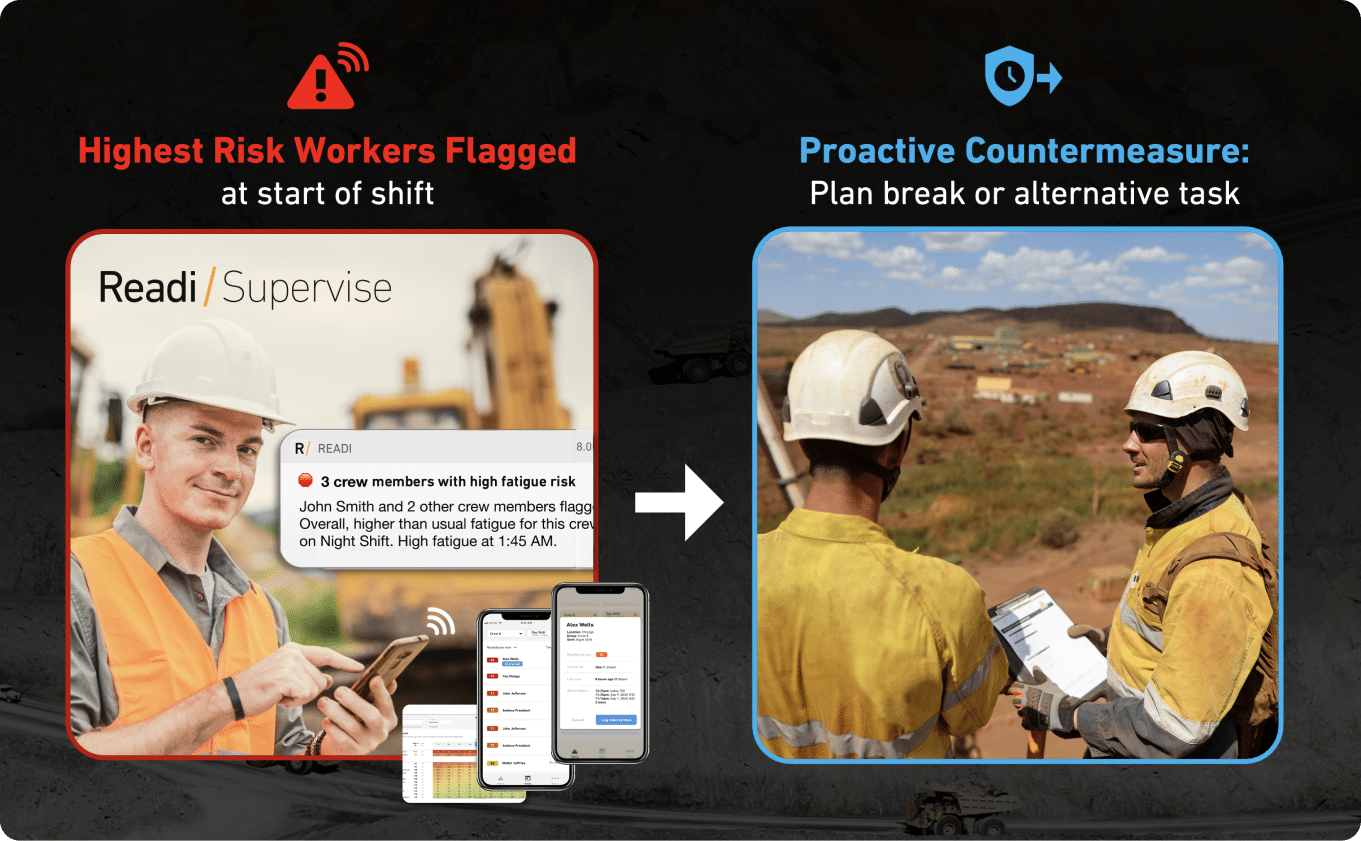
Readi enables fleets and mining operations to shift toward proactive safety by forecasting fatigue risk before the shift begins.
Useful for investigations, but the event already happened. Equipment is damaged, production slows, and the root cause remains unaddressed.
Harsh braking in a haul truck. Cornering too fast in a light vehicle. A drift on a night-shift highway run. Telematics tells you only after the moment of danger.
Coaching might be solid, but it occurs days laterm disconnected from the moment that matters.
This reactive loop is the same whether the vehicle weighs 80,000 lbs or 400 tons.
Safety leaders in both industries are looking for upstream signals that allow intervention long before a camera would ever trigger an alert.
Proactive safety shifts the conversation from:
“What went wrong?” to “What can we prevent tomorrow?”
This approach:
Reduces catastrophic haul-truck incidents
Improves people-transport safety
Protects night-shift haul drivers
Supports shift planning and workforce management
Most importantly, proactive safety allows teams to coach, adjust, and intervene before the operator is in trouble.
Drivers, haul-truck operators, and transport crews receive early-warning signals that help them avoid unsafe scenarios.
Real-time insights let supervisors support operators before a risky behavior turns into a critical event.
Fatigue spikes, distraction patterns, and circadian misalignment become visible in daily planning.
Camera alerts show driver behavior.
Fatigue insights show why the behavior occurred.
This combination is what modern fleets and mines need.
Fatigue is the root cause behind many behaviors that dash cams capture:
Late braking
Wandering lanes
Poor judgment underground
Slow reaction time at intersections
Microsleeps on long haul roads
Inconsistent speed control
Reduced awareness during early-morning personnel transport
In mining, this can be catastrophic. In trucking, it can be fatal.
Dash cams can’t forecast fatigue. HOS compliance can’t guarantee rest.
Fatigue is invisible, unless you predict it.
Predictive fatigue tools help supervisors see which drivers and operators are most likely to experience low alertness during their shift, whether they are:
A haul-truck operator on a 12-hour night shift
A haul driver running an early-morning departure
A people-transport shuttle driver rotating crews underground
A fuel-truck operator servicing a remote pit
A regional freight driver navigating high-traffic corridors
This lets teams make adjustments early:
Reassign a particularly high-risk task
Time breaks to match fatigue windows
Avoid scheduling critical tasks during predicted low-alertness periods
Review chronic fatigue patterns for long-term schedule redesign
This is what it means to shape what happens next, not just document what happened.
Readi brings predictive fatigue management into everyday operations by:
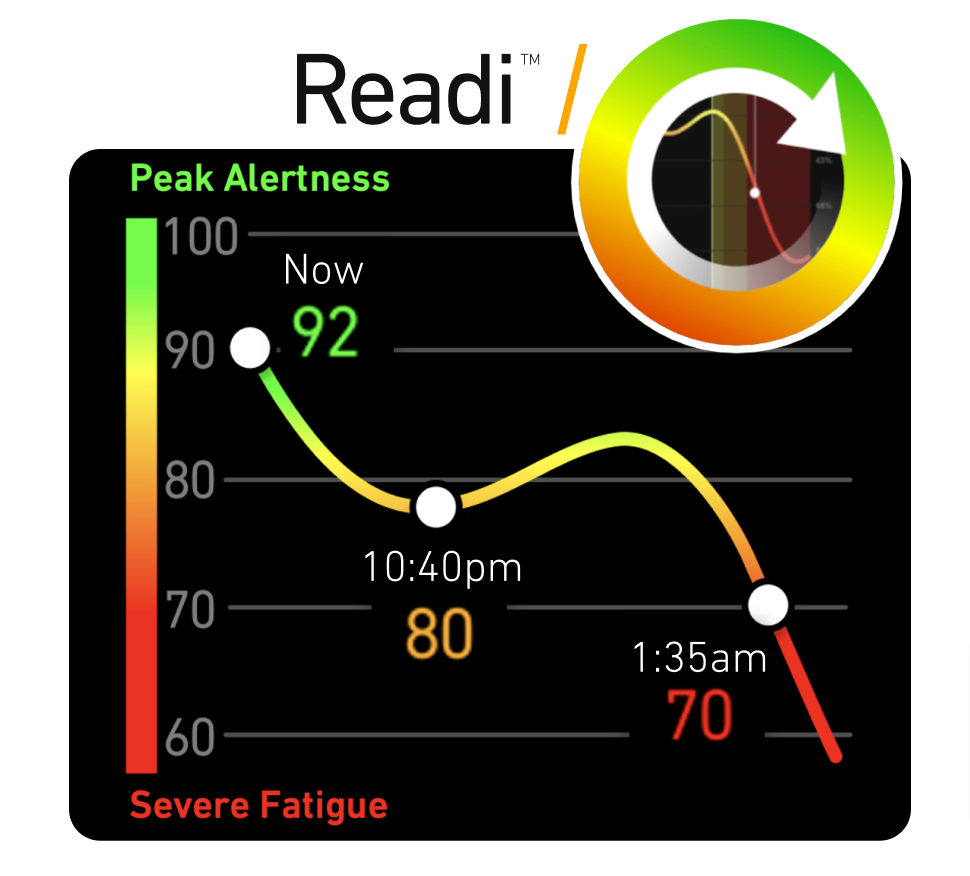
Providing personalized, hour-by-hour fatigue predictions for every driver or operator
Identifying high-risk windows before the shift begins
Giving dispatchers, supervisors, and control-room teams actionable insights
Offering documented intervention logs for audits, insurers, and regulators
Supporting both surface and underground operations without hardware or connectivity requirements
Whether your risk is a highway rear-end collision or a haul-truck drift on a downhill ramp, Readi gives visibility into the human factors that cause the toughest, costliest events.
Dash cams show you the moment. Readi helps you prevent the moment.
Yes. Dash cams remain essential. Predictive fatigue management adds upstream visibility that dash cams alone cannot provide.
Absolutely. Haul-truck fatigue is one of the most documented high-risk categories in mining. Predictive tools give mine supervisors visibility long before an operator sits in the cab.
Yes. People-transport operations often run early mornings, late nights, and long commutes, all prime fatigue conditions. Predictive insights help reduce rollover, drift, and reaction-time events.
No. Readi operates without wearable requirements and uses shift, schedule, and rest opportunity data to provide predictions while respecting privacy.
Insurers increasingly reward fleets and mines that can demonstrate proactive safety controls. Predicting and documenting fatigue risk strengthens renewal negotiations.