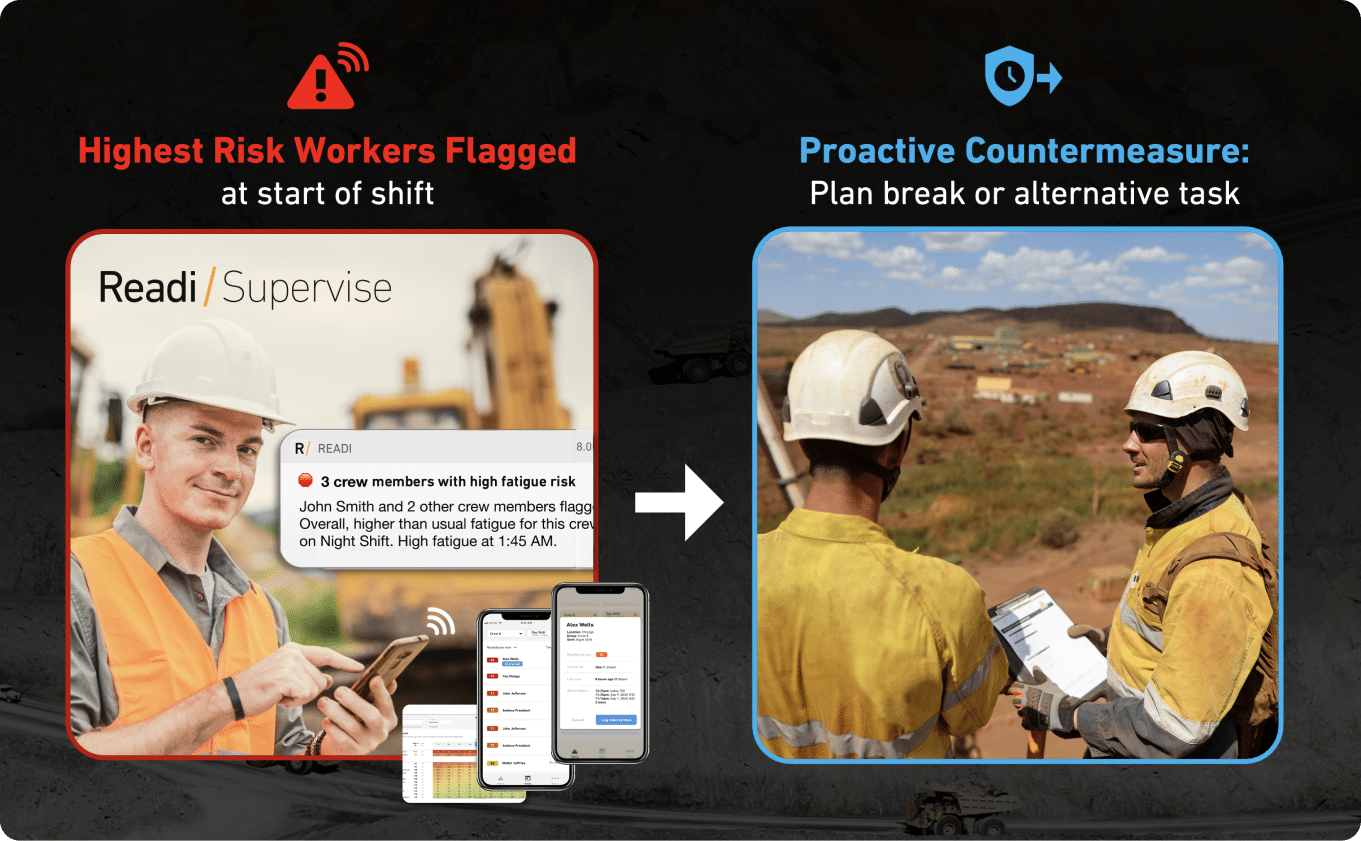


Fatigue Science, the global leader in predictive fatigue management technology, is announcing the results of a new case study revealing a substantial 50% reduction in camera-based fatigue alarms through the use of Readi, its predictive fatigue management platform.
In the case study, a large Central American copper mine implemented Readi alongside their existing reactive fatigue detection system, Caterpillar DSS. The resulting improvements enhanced both safety and productivity by minimizing disruption to ongoing operations.
The case study showcases the synergy between predictive and reactive fatigue management technologies. Readi’s proactive approach, which predicts fatigue hours before it occurs, was deployed as a complement to the mine’s existing Caterpillar DSS system. This combination led to the impressive reduction in fatigue events, minimizing disruption to operations and enhancing safety at the mine.
Following the successful deployment of Readi, the copper mine decided to expand its use of the technology site-wide, across all operators and shift supervisors.
This decision reflects the growing trend in the mining industry towards adopting data-driven approaches, predictive analytics, and machine learning to address and mitigate fatigue. The mine joins a growing list of 20 major mine sites that have recently deployed the technology site-wide across all operators, marking a significant milestone for the industry’s adoption of predictive fatigue technology. Recently, the US National Safety Council recognized Readi’s innovative approach with the prestigious 2022 Green Cross Safety Innovation Award.
To learn more about the benefits of integrating predictive and reactive technologies in fatigue management and how Fatigue Science’s Readi can enhance the safety and productivity of mining operations, download the full case study below.