Product News
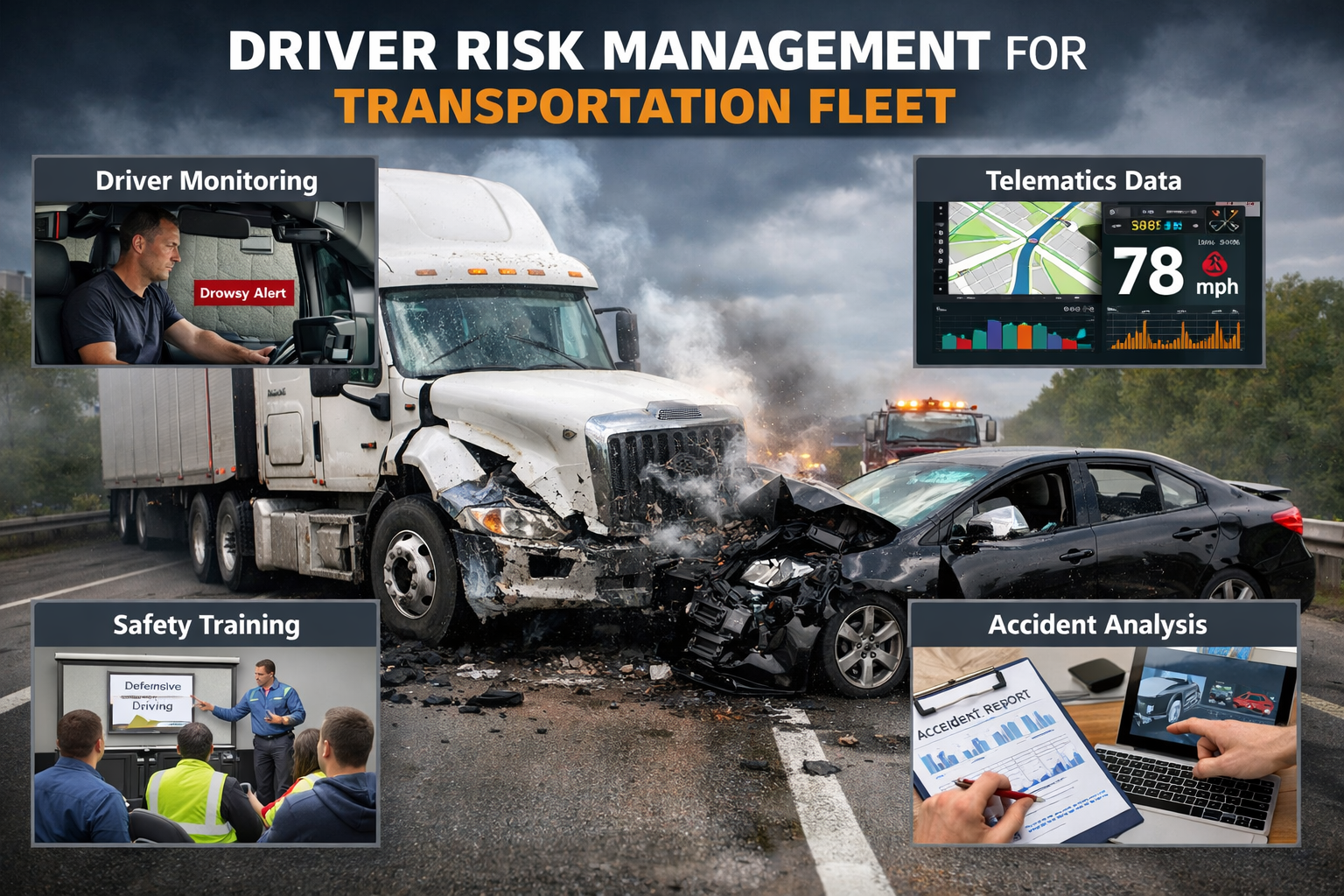

Driver risk management has become one of the most important priorities for organizations that rely on fleet operations. From transportation and logistics companies to utilities, mining, and field service organizations, the ability to identify and reduce driver risk directly impacts safety, operational efficiency, and financial performance.
This comprehensive guide explains what driver risk management is, why it matters, and how modern fleets are using technology and predictive analytics to reduce driver risk. It also explores the key components of a successful program and the tools companies are using to prevent accidents before they happen.
For readers looking for a quick overview, here are the most important insights from this guide.
Driver risk management is the process of identifying, monitoring, and reducing risks associated with drivers operating company vehicles.
Driver risk management is the systematic process of identifying, assessing, and reducing safety risks associated with drivers operating vehicles in a fleet.
It combines policies, training programs, behavioral monitoring, vehicle management, and safety technologies to prevent accidents and protect drivers.
Instead of responding to incidents after they occur, modern driver risk management programs aim to predict and prevent high-risk situations before they lead to accidents.
Organizations implement these programs to address risks such as:
When properly implemented, driver risk management programs create a data-driven safety culture that improves both driver wellbeing and operational efficiency.
Driving is often the most dangerous activity employees perform in many industries. Fleet drivers spend long hours on the road, often under tight schedules and difficult conditions.
Without a structured risk management program, organizations may face:
The financial impact alone can be significant.
| Risk Area | Potential Cost Impact |
|---|---|
| Vehicle collisions | Repairs, downtime, insurance claims |
| Driver injury | Workers compensation and medical costs |
| Liability lawsuits | Legal settlements and penalties |
| Operational delays | Missed deliveries and productivity losses |
| Insurance increases | Higher premiums after claims |
Driver risk management programs help reduce these risks by creating a proactive safety framework that continuously identifies potential issues and intervenes early.
Effective driver risk management programs include multiple layers of safety practices and operational controls. These components work together to create a comprehensive safety strategy.
Driver risk management begins before a driver even gets behind the wheel.
Organizations must ensure that drivers are properly qualified and do not have a history of high-risk driving behaviors. Screening programs help identify potential risk factors early and prevent unsafe drivers from entering the fleet.
Typical screening processes include:
These evaluations help organizations identify drivers who may require additional training or supervision.
Screening also helps ensure compliance with regulatory requirements in industries such as transportation, construction, and energy.
Organizations with strong screening programs reduce risk by starting with safer drivers from the beginning.
Training plays a critical role in driver risk management. Even experienced drivers benefit from ongoing education and coaching.
Effective training programs focus on building defensive driving skills and improving awareness of common hazards.
Key topics often include:
Training should not be limited to onboarding.
The most effective organizations provide continuous safety coaching based on real driving data.
For example, if telematics data shows that a driver frequently brakes harshly or speeds in certain areas, targeted coaching can address that behavior directly.
This approach transforms driver training from a one-time event into a continuous improvement process.
Monitoring driver behavior is essential for identifying risks that may not be visible through traditional reporting methods.
Modern fleet safety programs rely on telematics and behavioral analytics to understand how drivers actually operate vehicles in real-world conditions.
Behavior monitoring systems typically track:
These insights allow fleet managers to identify trends and intervene before unsafe behaviors lead to accidents.
For example, if multiple drivers exhibit aggressive driving behaviors on a specific route, the issue may indicate schedule pressure or poor route planning rather than individual driver negligence.
Behavior monitoring enables organizations to move from guesswork to data-driven safety management.
Driver risk management is not only about driver behavior — vehicle condition plays a major role in fleet safety.
Mechanical failures such as brake problems, tire issues, or engine malfunctions can increase accident risk even when drivers operate safely.
A comprehensive risk management program includes preventive maintenance strategies such as:
Fleet management platforms often provide automated alerts when maintenance is required, helping organizations address issues before they become safety hazards.
Regular inspections also help drivers identify problems early, preventing mechanical issues from escalating into dangerous situations on the road.
Even the best safety programs cannot eliminate all incidents. When accidents or near misses occur, organizations must analyze them carefully.
Incident reporting systems allow fleets to document events and identify underlying causes.
Important data collected may include:
Analyzing this data allows companies to identify patterns and implement targeted improvements.
For example, if accidents occur frequently during overnight shifts, fatigue risk may be a contributing factor.
Incident analysis transforms accidents into learning opportunities and strengthens the overall safety program.
Technology has become one of the most powerful tools for improving driver risk management. Modern fleets rely on multiple technologies to monitor behavior, predict risk, and provide real-time insights.
These tools enable organizations to shift from reactive safety management to predictive risk prevention.
Telematics platforms collect data from vehicles and transmit it to fleet management systems.
These systems provide real-time insights into how vehicles are being driven and how they are performing.
Telematics data commonly includes:
Fleet managers use this data to analyze driver behavior and identify trends that may increase risk.
For example, repeated speeding events may indicate drivers are under schedule pressure or require additional training.
Telematics systems also support route optimization and operational efficiency, helping fleets reduce unnecessary driving risks.
AI-powered dash cameras are increasingly used in driver risk management programs.
These cameras monitor both the road and the driver to detect potentially dangerous behaviors.
Capabilities often include:
When risky behavior is detected, drivers may receive real-time alerts encouraging them to correct the behavior.
Video footage can also provide valuable context during incident investigations, helping organizations understand exactly what happened.
Many fleets use AI cameras as part of driver coaching programs, using footage to provide constructive feedback and improve safety performance.
Fatigue is one of the most significant yet difficult risks to detect in fleet operations.
Drivers may begin their shift already fatigued due to poor sleep, long commutes, or irregular schedules. Traditional safety tools often fail to detect fatigue until it has already impaired performance.
Predictive fatigue management technologies aim to address this challenge.
These solutions analyze sleep patterns, work schedules, and circadian rhythms to determine when drivers may be at risk of fatigue-related impairment.
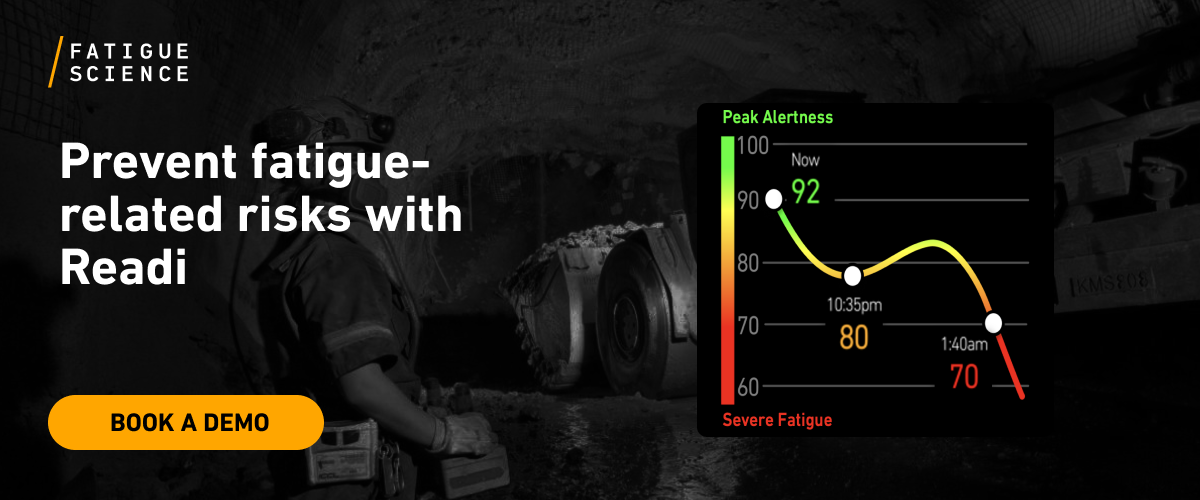
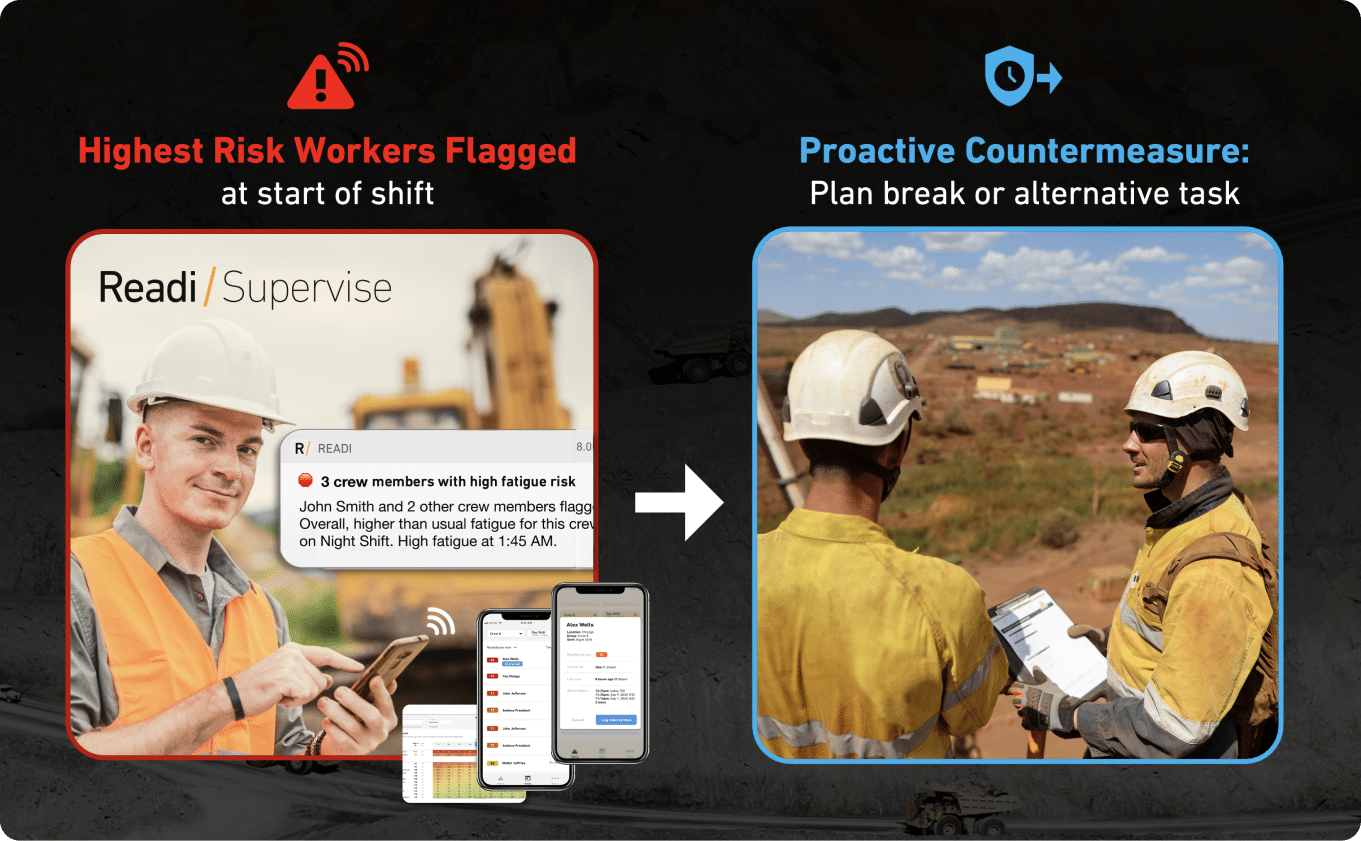
One example of predictive fatigue technology used in fleet safety programs is Readi, a fatigue risk management solution designed to help organizations identify fatigue risk before a driver starts operating a vehicle.
Readi uses biomathematical fatigue modeling and wearable data to estimate cognitive effectiveness and fatigue levels.
Key capabilities include:
Unlike traditional monitoring systems that detect fatigue after it affects behavior, Readi focuses on predicting fatigue risk ahead of time.
This approach enables organizations to:
Fatigue risk management is particularly important for fleets operating:
By integrating predictive fatigue insights into driver risk management programs, fleets can address one of the largest hidden contributors to accidents.
Organizations that successfully reduce driver risk typically follow structured implementation strategies.
Companies should define clear policies covering:
These policies create a foundation for consistent safety standards across the organization.
Driver risk management programs should rely on data rather than assumptions.
Key data sources include:
Combining these insights allows organizations to identify risk trends early.
Coaching is most effective when it focuses on improvement rather than punishment.
Drivers should receive regular feedback and support based on real performance data.
Positive reinforcement and targeted coaching help build a culture of safety.
Tracking performance metrics allows organizations to evaluate the effectiveness of their risk management programs.
Common metrics include:
| Metric | Purpose |
|---|---|
| Collision rate | Measures accident frequency |
| Driver safety score | Evaluates driving behavior |
| Fatigue risk score | Identifies fatigue exposure |
| Claims cost | Tracks financial impact |
| Training completion | Ensures driver education |
Monitoring these metrics ensures safety programs remain effective and continuously improve.
Despite its benefits, implementing driver risk management programs can present challenges.
Common obstacles include:
Organizations that overcome these challenges typically succeed by focusing on education, transparency, and data-driven decision making.
Driver risk management is the process of identifying and reducing risks associated with drivers operating company vehicles through training, monitoring, and safety technologies.
It helps organizations reduce accidents, protect drivers, lower insurance costs, and improve overall fleet safety.
Common risks include:
Driver risk can be measured using:
Modern fleets commonly use:
Fatigue slows reaction time, reduces attention, and impairs decision-making. This makes fatigued drivers significantly more likely to be involved in accidents.
Predictive fatigue tools such as Readi for Fleet help organizations identify fatigue risk before drivers begin operating vehicles.
Driver risk management has become essential for organizations that rely on fleet operations. As safety expectations increase and accident costs rise, companies must adopt proactive strategies to protect drivers and reduce operational risk.
The most effective programs combine:
By integrating these components, fleets can move beyond reactive safety management and toward data-driven risk prevention.
Organizations that invest in modern driver risk management strategies not only reduce accidents but also improve efficiency, protect employees, and build a stronger culture of safety.