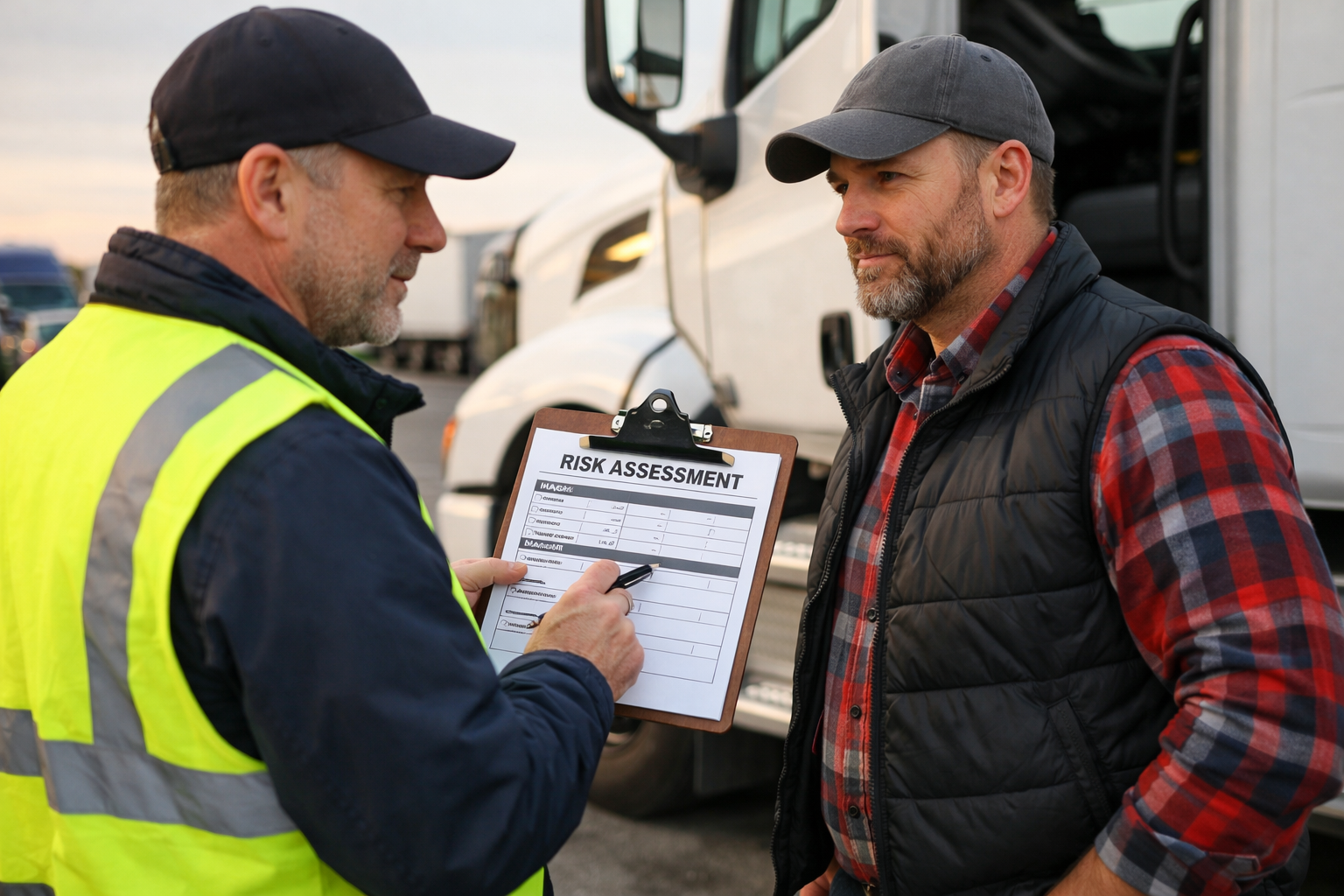

Commercial transportation companies operate in one of the most safety-critical industries in the world. Trucks, buses, and other commercial vehicles travel long distances, often under demanding schedules and challenging road conditions. Because of this, the driver risk assessment has become a core component of fleet safety and operational risk management.
A structured driver risk assessment program allows transportation companies to identify high-risk drivers, understand behavioral and fatigue risks, and implement targeted safety improvements before incidents occur.
This comprehensive guide explains how driver risk assessments work in commercial transportation, what factors should be evaluated, and how modern technologies are transforming how fleets evaluate driver safety.
Key Takeaways
- Driver risk assessment evaluates the likelihood that a commercial driver may be involved in a safety incident.
- Assessments analyze multiple factors including:
- driving history
- behavioral data
- fatigue risk
- training records
- operational conditions
- Modern fleets combine data analytics, telematics, and fatigue prediction tools to assess risk more accurately.
- Driver risk scoring systems allow fleets to identify high-risk drivers and prioritize coaching.
- Fatigue is one of the largest hidden contributors to commercial transportation accidents.
- Predictive fatigue tools like Readi allow transportation companies to assess fatigue risk before drivers begin their shifts.
- Effective driver risk assessments help fleets reduce:
- collisions
- insurance claims
- liability exposure
- operational disruptions
What Is Driver Risk Assessment?
Driver risk assessment is the systematic evaluation of a driver's safety risk based on behavior, history, and operational conditions.
In commercial transportation, these assessments help organizations determine whether a driver presents low, moderate, or high safety risk.
Driver risk assessments are used for multiple purposes, including:
- hiring and driver qualification
- ongoing safety monitoring
- insurance and compliance evaluations
- targeted safety coaching
- fatigue risk mitigation
Rather than relying on intuition or manual reviews, modern driver risk assessment programs use data-driven models to evaluate multiple risk indicators simultaneously.
This allows transportation companies to identify potential safety issues before they result in accidents or regulatory violations.
Why Driver Risk Assessment Is Critical in Commercial Transportation
Commercial transportation drivers often operate under demanding conditions:
- long driving hours
- irregular sleep schedules
- tight delivery deadlines
- complex road environments
These factors increase the likelihood of accidents if risk is not actively managed.
Driver risk assessments allow organizations to quantify safety risk and intervene early.
Benefits of Driver Risk Assessment Programs
| Benefit | Impact on Transportation Fleets |
|---|---|
| Accident reduction | Identifies unsafe driving patterns early |
| Insurance cost control | Reduces claims and liability |
| Regulatory compliance | Helps meet transportation safety standards |
| Targeted coaching | Focuses training where it is needed most |
| Operational efficiency | Reduces downtime and vehicle damage |
Transportation companies that implement structured driver risk assessments often experience significant improvements in safety performance.
Key Factors Evaluated in Driver Risk Assessments
Driver risk assessments analyze a wide range of factors that influence driver safety.
These factors generally fall into five categories.
1. Driver History and Qualification
One of the first components of driver risk assessment is reviewing a driver's historical safety record.
Past driving behavior often provides valuable insight into future risk.
Transportation companies typically evaluate:
- motor vehicle records (MVR)
- past traffic violations
- accident history
- license status
- regulatory compliance
- previous employment driving records
Drivers with multiple violations or accident histories may require additional screening, training, or monitoring.
Driver qualification assessments are particularly important in commercial transportation because regulations require operators to meet strict safety standards.
Organizations often use these historical indicators to establish baseline risk scores when drivers join a fleet.
2. Driving Behavior and Operational Data
Driver behavior is one of the strongest predictors of safety risk.
Modern fleets use telematics and onboard monitoring systems to collect data about how drivers operate their vehicles.
Behavioral data collected from commercial vehicles may include:
- speeding events
- harsh braking
- rapid acceleration
- aggressive cornering
- following distance
- lane deviations
- idle time
These behavioral indicators are analyzed to determine whether a driver consistently engages in high-risk driving behaviors.
For example, repeated harsh braking or aggressive acceleration may indicate unsafe driving habits or excessive schedule pressure.
Driver risk assessment systems often convert these indicators into driver safety scores that allow fleet managers to compare performance across drivers.
3. Fatigue Risk Evaluation
Fatigue is one of the most dangerous and difficult risks to detect in commercial transportation.
Long driving hours, irregular schedules, and insufficient sleep can significantly impair driver performance.
Fatigue can cause:
- slower reaction times
- reduced situational awareness
- impaired decision making
- microsleep events
Traditional driver risk assessments often overlook fatigue because it cannot always be detected through behavior monitoring alone.
However, modern risk assessment programs increasingly include predictive fatigue modeling.
These models evaluate factors such as:
- sleep duration
- circadian rhythms
- shift schedules
- work-rest cycles
By analyzing these inputs, fatigue risk tools can estimate how alert a driver is likely to be during a shift.
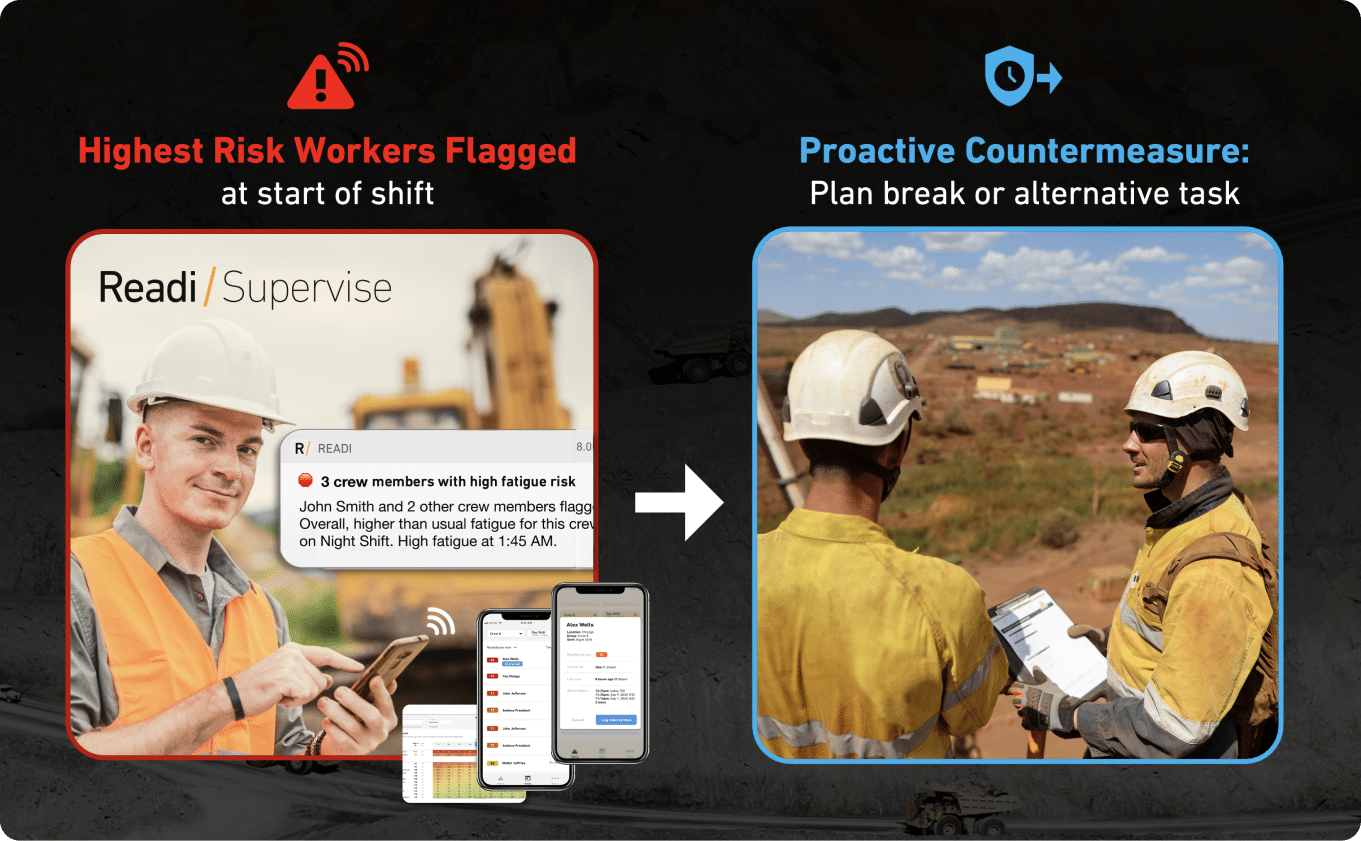
Readi for Fleet: Predictive Fatigue Risk Assessment
Readi for Fleet is a fatigue risk management platform designed to help transportation companies assess and manage fatigue risk among commercial drivers.
The system uses biomathematical fatigue modeling combined with wearable sleep data to estimate cognitive effectiveness and fatigue risk.
Key features include:
- fatigue risk prediction before a shift begins
- sleep and circadian rhythm analysis
- fatigue risk scoring for individual drivers
- scheduling optimization to reduce fatigue exposure
- proactive alerts for high-risk fatigue conditions
This approach allows transportation companies to identify fatigue risk before drivers start driving, rather than detecting fatigue only after unsafe behavior occurs.
For fleets operating overnight routes or long-haul transportation schedules, predictive fatigue risk assessment can play a critical role in reducing accident risk.
4. Training and Safety Performance
Driver training and ongoing education also influence driver risk levels.
Risk assessments often include evaluations of:
- defensive driving training completion
- safety certification records
- coaching participation
- incident follow-up training
- compliance with company safety policies
Drivers who regularly participate in safety training and demonstrate strong safety awareness often show lower risk scores.
Conversely, drivers who fail to complete required training or repeatedly violate safety policies may require additional intervention.
Some organizations incorporate training performance into driver risk scoring systems to ensure that safety education remains an ongoing process.
5. Environmental and Operational Risk Factors
Driver risk is also influenced by operational conditions.
Commercial transportation drivers frequently operate in environments that increase risk exposure.
These may include:
- urban congestion
- remote highways
- adverse weather conditions
- night driving
- long-distance routes
- heavy vehicle loads
Driver risk assessments sometimes include route and operational analysis to understand how environmental factors contribute to safety risks.
For example, drivers operating primarily at night may face increased fatigue risk compared to daytime drivers.
By understanding these contextual factors, fleets can implement targeted mitigation strategies such as route adjustments or schedule changes.
Technology Used in Driver Risk Assessment
Advances in fleet technology have dramatically improved the ability of transportation companies to evaluate driver risk.
Modern driver risk assessment programs rely on several key technologies.
Telematics and Vehicle Data Platforms
Telematics systems collect real-time data from commercial vehicles and transmit it to fleet management platforms.
These systems provide visibility into both vehicle performance and driver behavior.
Common telematics data points include:
- vehicle speed
- acceleration and braking patterns
- GPS location
- engine diagnostics
- trip duration
- idle time
Fleet managers use telematics data to identify risky driving behaviors and calculate driver safety scores.
Telematics systems are often the foundation of modern driver risk assessment programs because they provide continuous behavioral data across entire fleets.
AI-Powered Driver Monitoring Systems
AI dash cameras and driver monitoring systems provide additional visibility into driver behavior.
These systems use computer vision technology to analyze both road conditions and driver actions.
Capabilities may include:
- distracted driving detection
- mobile phone usage detection
- drowsiness detection
- seatbelt monitoring
- lane departure warnings
When risky behaviors are detected, drivers may receive immediate alerts encouraging them to correct the behavior.
AI camera systems also capture video evidence that can help fleets understand what happened during safety incidents.
This data improves the accuracy of driver risk assessments by providing contextual information about real driving situations.
Predictive Analytics and Risk Scoring Platforms
Predictive analytics tools combine multiple data sources to generate comprehensive driver risk scores.
These systems analyze patterns across:
- telematics data
- incident reports
- driver history
- fatigue predictions
- training records
By combining these data streams, predictive platforms can identify drivers who may have an elevated probability of being involved in a safety incident.
Risk scoring allows fleets to prioritize interventions and focus coaching resources where they are most needed.
Best Practices for Implementing Driver Risk Assessment Programs
Transportation companies implementing driver risk assessments should follow several best practices.
Establish Clear Risk Scoring Criteria
Organizations should define how risk is measured and what factors contribute to driver safety scores.
Common scoring components include:
- driving behavior metrics
- accident history
- fatigue risk indicators
- training completion
- regulatory compliance
Combine Multiple Data Sources
Driver risk assessments are most accurate when they incorporate multiple sources of data.
Combining telematics, fatigue modeling, and historical data provides a more complete picture of driver safety risk.
Focus on Coaching and Improvement
Risk assessments should be used to support drivers, not punish them.
Safety programs are most effective when they focus on:
- coaching
- skill development
- fatigue management
- operational improvements
Continuously Monitor Risk Levels
Driver risk is not static.
Operational conditions, fatigue, and behavioral patterns can change over time.
Continuous monitoring ensures fleets can detect emerging risks early and respond appropriately.
Common Challenges in Driver Risk Assessment
Transportation companies may face several challenges when implementing driver risk assessment programs.
Common challenges include:
- incomplete or inconsistent data
- driver resistance to monitoring technologies
- difficulty measuring fatigue risk
- fragmented safety systems
- limited safety analytics capabilities
Organizations that address these challenges often succeed by focusing on transparency, education, and integrated safety technologies.
Frequently Asked Questions About Driver Risk Assessment
What is a driver risk assessment?
A driver risk assessment evaluates the likelihood that a driver may be involved in a safety incident based on driving history, behavior, fatigue risk, and operational factors.
Why are driver risk assessments important in commercial transportation?
Commercial drivers operate large vehicles over long distances, which increases potential safety risks. Driver risk assessments help fleets identify high-risk drivers and prevent accidents.
What factors are included in a driver risk assessment?
Common factors include:
- driving history
- telematics behavior data
- fatigue risk
- training records
- accident history
- environmental conditions
How do fleets calculate driver risk scores?
Driver risk scores are typically calculated using a combination of behavioral data, historical safety records, and predictive risk analytics.
How does fatigue affect driver risk?
Fatigue significantly impairs reaction time, attention, and decision making. Drivers experiencing fatigue are much more likely to be involved in accidents.
Predictive fatigue tools such as Readi for Fleet help fleets assess fatigue risk before drivers begin operating vehicles.
Conclusion
Driver risk assessment has become a critical component of safety management in commercial transportation.
By analyzing historical records, behavioral data, fatigue risk, and operational conditions, fleets can identify high-risk situations before accidents occur.
Modern risk assessment programs combine:
- telematics monitoring
- predictive analytics
- fatigue risk modeling
- targeted driver coaching
This data-driven approach allows transportation companies to protect drivers, improve safety performance, and reduce operational risk.
As technology continues to evolve, driver risk assessment will become even more predictive, helping fleets move beyond reactive safety management toward proactive accident prevention.