Product News
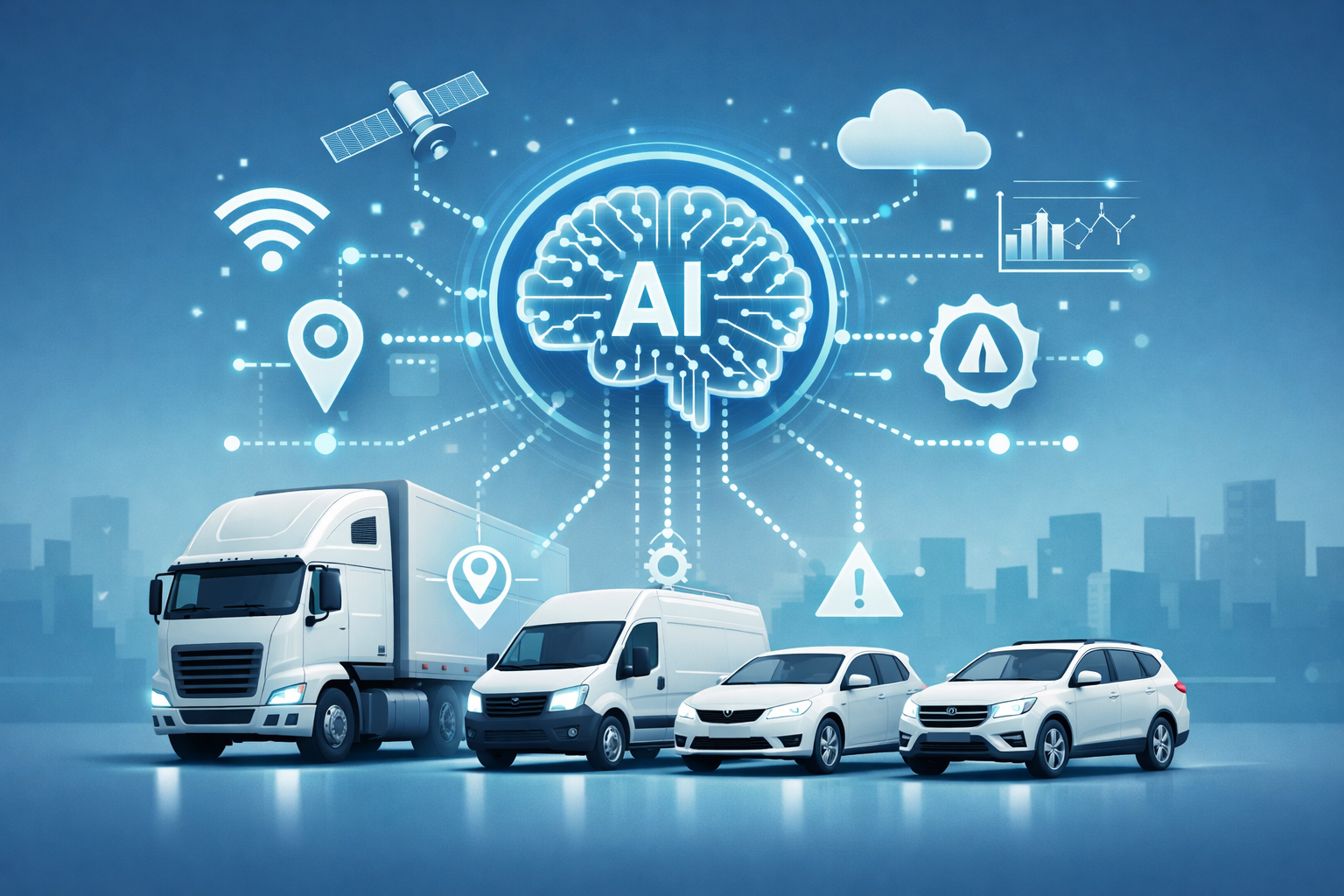

Artificial intelligence is rapidly transforming the transportation industry. Fleet operators today face growing pressure to improve safety, reduce costs, manage driver shortages, and meet sustainability goals. As these challenges increase, many organizations are turning to AI in fleet management to gain deeper operational insights and improve decision-making.
AI-powered tools allow fleets to analyze massive volumes of operational data, identify hidden patterns, and predict risks before incidents occur. From driver behavior monitoring to predictive maintenance and fatigue risk management, artificial intelligence is enabling fleets to move from reactive management to proactive risk prevention.
AI in fleet management refers to the use of machine learning, predictive analytics, and intelligent automation to analyze fleet data and improve operational decision-making.
Traditional fleet management systems collect data about vehicles, drivers, and operations. AI enhances these systems by identifying patterns within that data and providing predictive insights that help organizations make better decisions.
For example, AI algorithms can analyze historical driving behavior, vehicle diagnostics, and environmental conditions to detect potential risks before they result in accidents or equipment failures.
Instead of reacting to problems after they occur, fleet managers can use AI to anticipate and prevent operational disruptions.
Several factors are driving rapid growth in AI adoption across fleet operations.
Fleet operations today generate enormous volumes of data from vehicles, telematics systems, cameras, maintenance platforms, and logistics software. AI helps organizations extract actionable insights from this data.
Fleet-related accidents can have severe financial and reputational consequences. AI tools help organizations identify safety risks early and improve driver coaching programs.
Fuel prices, maintenance costs, and insurance premiums are increasing. AI can optimize vehicle usage and improve efficiency.
Driver shortages and increasing operational pressure require smarter systems to support drivers and improve decision-making.
Improvements in machine learning, edge computing, and cloud platforms have made AI tools more accessible for fleet operators of all sizes.
Artificial intelligence can improve multiple aspects of fleet operations. Below are some of the most important applications.
One of the most common uses of AI in fleet management is improving driver safety.
AI systems analyze driver behavior using data from telematics devices and in-vehicle cameras. These systems can detect behaviors that increase accident risk.
Examples include:
When risky behaviors are detected, drivers can receive real-time alerts encouraging safer driving practices.
Fleet managers can also use this data to identify trends and provide targeted coaching.
| Benefit | Description |
|---|---|
| Real-time feedback | Drivers receive immediate alerts |
| Behavior analysis | Identifies high-risk patterns |
| Targeted coaching | Improves driver performance |
| Incident investigation | Provides context during accidents |
By improving driver awareness and coaching, AI systems can help reduce collision rates and improve overall fleet safety.
Vehicle breakdowns can disrupt operations and increase maintenance costs.
AI-powered predictive maintenance systems analyze vehicle sensor data to detect early warning signs of mechanical problems.
These systems monitor factors such as:
When abnormal patterns are detected, the system can alert maintenance teams before a failure occurs.
Predictive maintenance is particularly valuable for fleets operating heavy equipment or long-distance transportation routes.
Another important use of AI in fleet management is route optimization.
AI systems analyze traffic conditions, weather patterns, delivery schedules, and historical trip data to recommend optimal routes.
This can help fleets:
Advanced routing systems can also dynamically adjust routes in real time when unexpected disruptions occur.
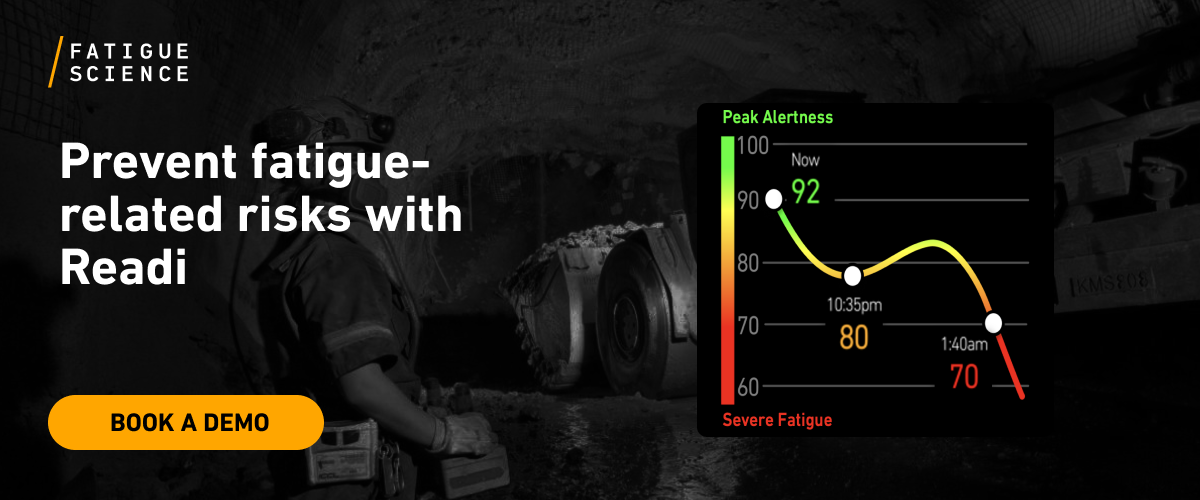
Fatigue is one of the most significant safety risks in transportation and other safety-sensitive industries.
Long driving hours, irregular schedules, and insufficient sleep can significantly impair driver performance.
AI-based fatigue risk systems analyze factors such as:
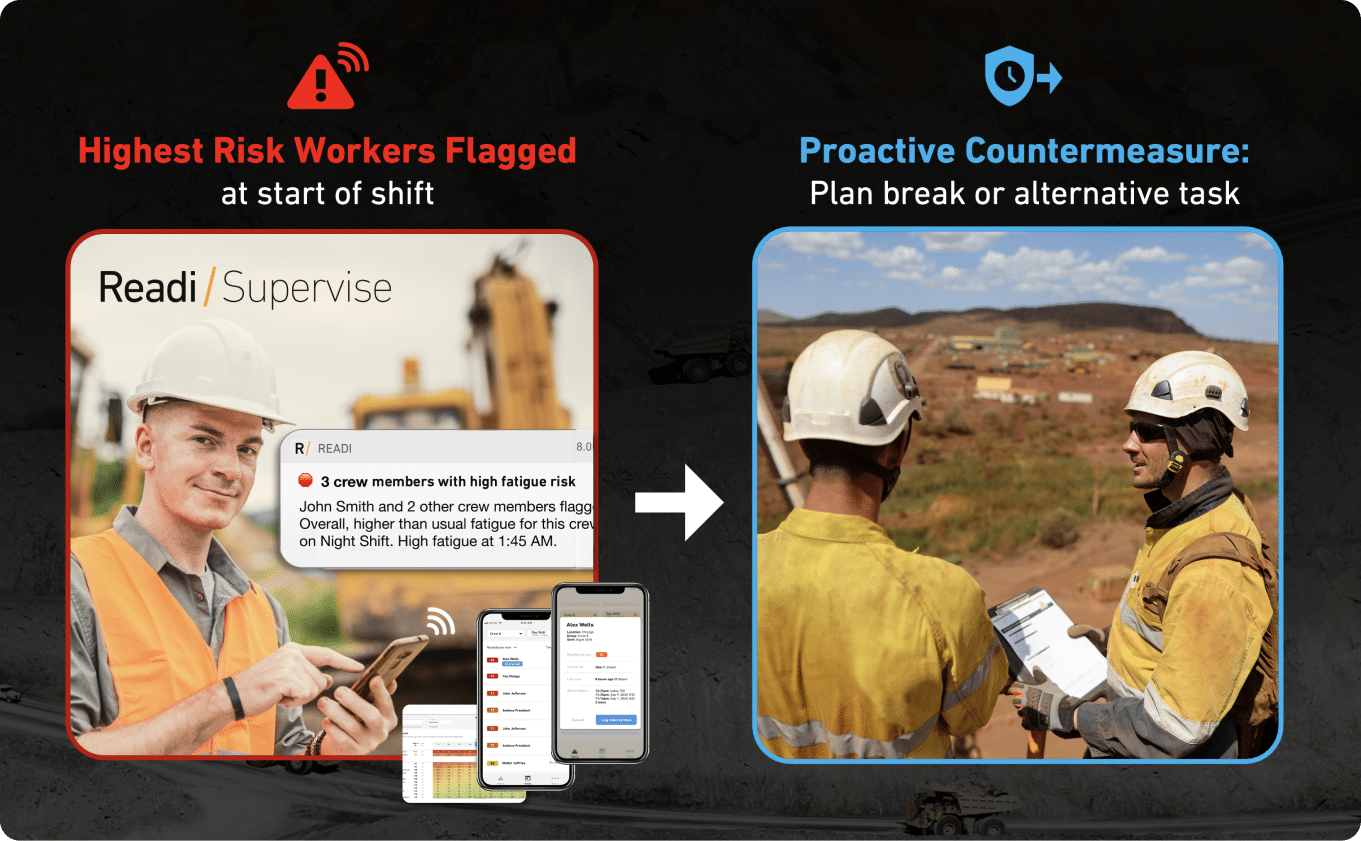
These systems estimate fatigue risk and provide alerts when drivers may be at higher risk of fatigue-related impairment.
Fatigue risk monitoring can help fleets identify risk before drivers begin safety-critical tasks, enabling supervisors to take preventive action.
Fleet safety programs generate large amounts of data from incidents, near misses, driver coaching sessions, and inspections.
AI analytics platforms help organizations analyze these data sources to identify patterns that may indicate emerging risks.
Examples include:
These insights allow fleets to improve risk management strategies and allocate safety resources more effectively.
Organizations adopting AI fleet technologies often see improvements across multiple operational areas.
These advantages allow fleets to improve both safety outcomes and operational performance.
Despite its benefits, implementing AI technologies can present challenges.
Fleet data often comes from multiple platforms that may not easily integrate with AI systems.
Drivers and operators may be concerned about monitoring technologies or privacy implications.
AI tools require careful planning, integration, and training to ensure successful adoption.
AI models depend on high-quality data. Incomplete or inaccurate data can reduce system effectiveness.
Organizations that address these challenges through strong communication, clear policies, and structured implementation strategies tend to achieve better results.
AI adoption across fleet operations is expected to continue growing rapidly. Future developments may include:
AI models will increasingly predict safety risks before incidents occur by analyzing multiple operational variables simultaneously.
Autonomous and semi-autonomous vehicle technologies will likely integrate with AI fleet platforms.
Fleet managers may receive increasingly sophisticated insights about driver performance, vehicle condition, and operational risks.
AI fleet tools will likely integrate more closely with logistics, workforce management, and safety systems.
As these technologies evolve, fleets will be able to manage risk and performance with greater precision.
Organizations implementing AI fleet technologies should consider several best practices.
Identify the operational problem you want to solve, such as driver safety improvement or maintenance optimization.
AI adoption requires alignment across operations, safety, and technology teams.
Explain how AI tools work and how data will be used to support safety rather than punish drivers.
The most valuable AI systems provide clear recommendations that help managers take practical action.
Monitor whether AI tools are improving safety and operational metrics over time.
AI in fleet management refers to the use of artificial intelligence technologies to analyze fleet data, improve operational efficiency, and identify safety risks.
AI can analyze driver behavior, environmental conditions, and operational data to identify unsafe patterns and provide real-time alerts or coaching.
Common technologies include:
Yes. AI can help fleets optimize routes, improve maintenance scheduling, and reduce accidents, which can lower operational expenses.
Artificial intelligence is rapidly reshaping how fleet operations manage safety, efficiency, and operational risk. By analyzing large volumes of fleet data and identifying patterns that would otherwise go unnoticed, AI systems allow organizations to make smarter decisions and prevent problems before they occur.
As fleet operations become more complex, the ability to use AI in fleet management will likely become an increasingly important competitive advantage.
Organizations that successfully integrate AI technologies into their fleet safety and operations strategies will be better positioned to reduce risk, protect drivers, and improve overall fleet performance.