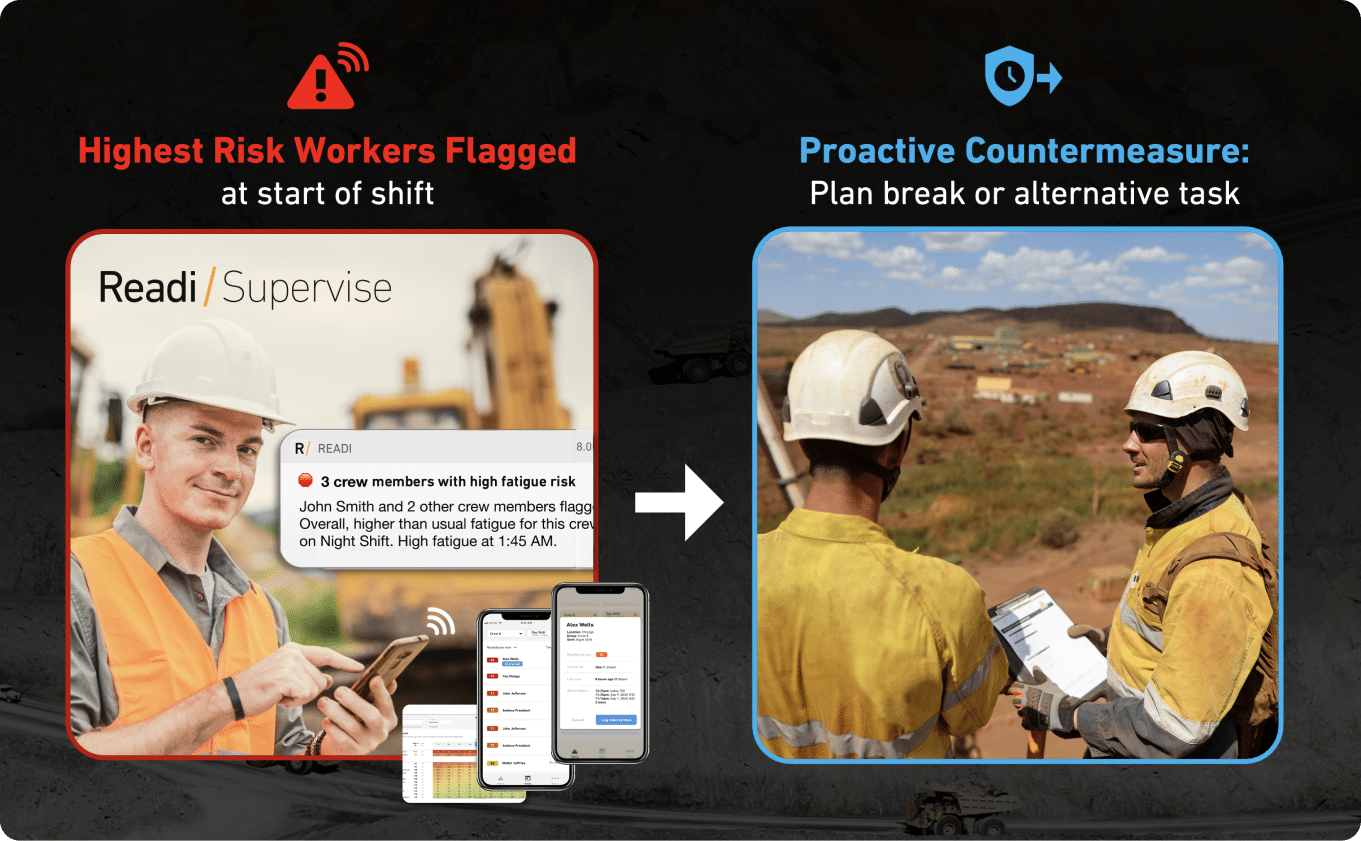
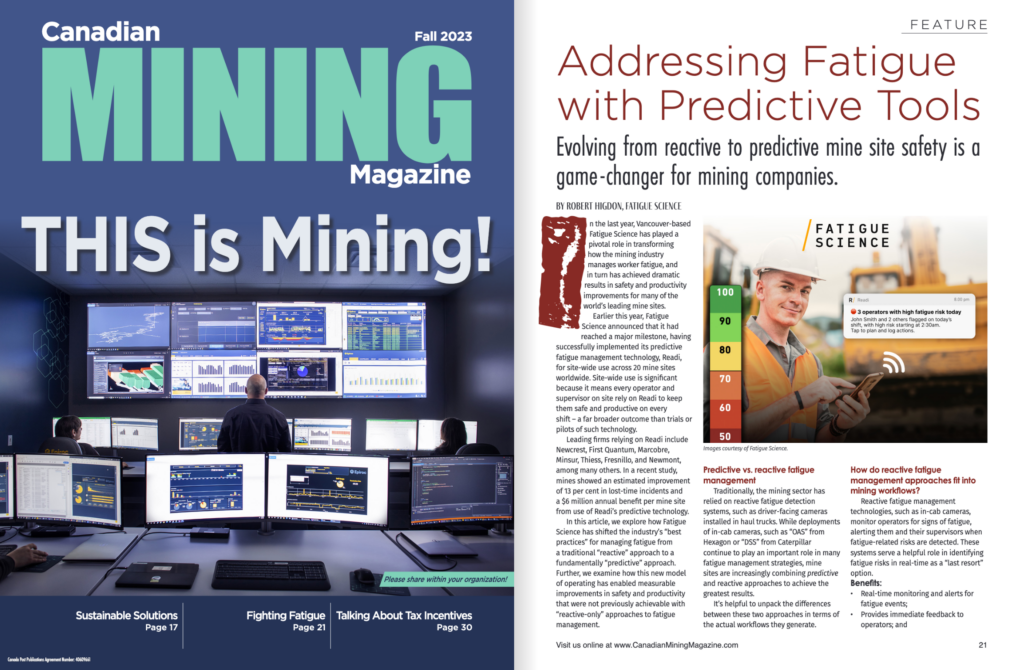

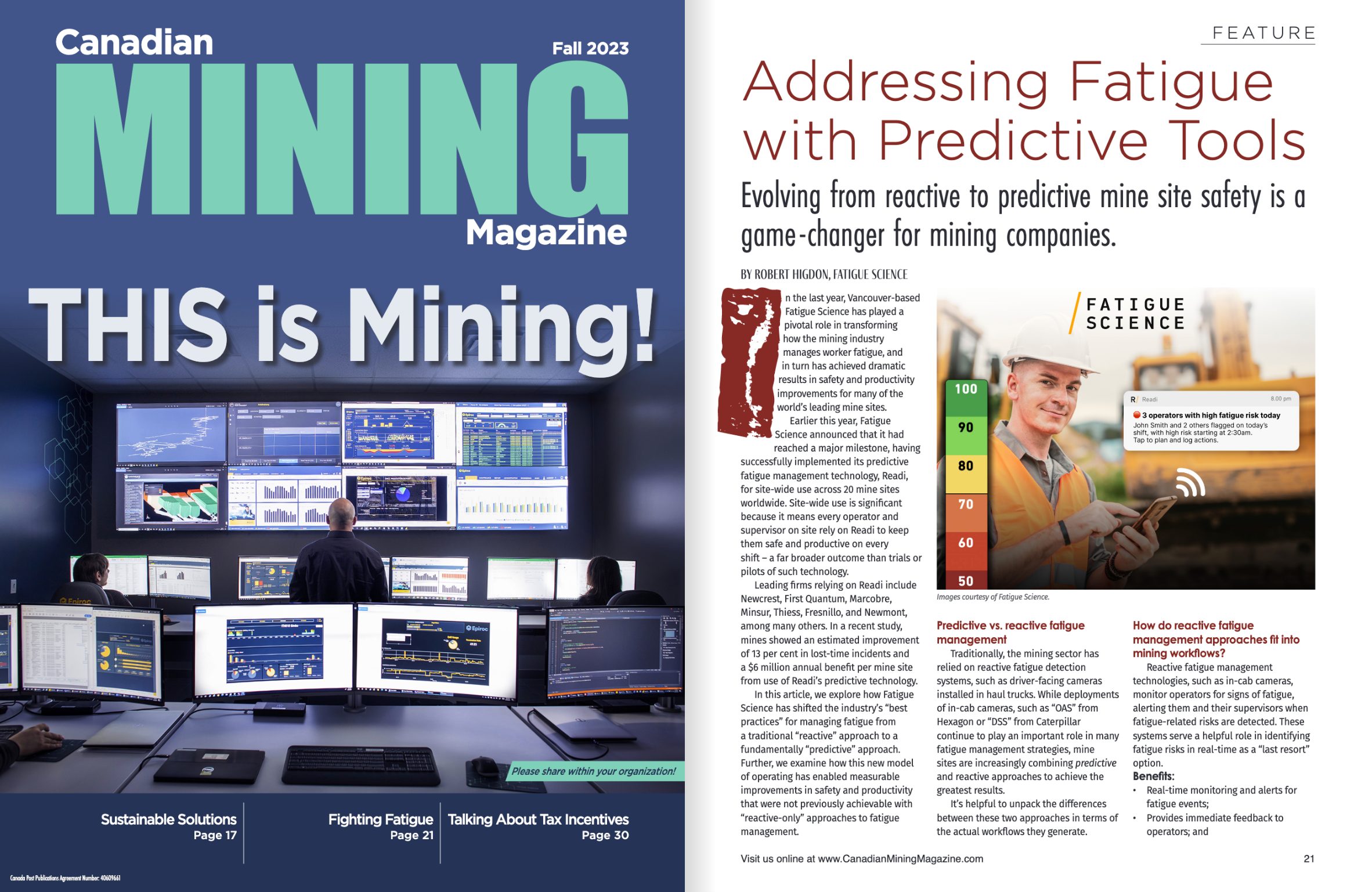
We’re delighted to be featured in Canadian Mining Magazine for changing how the world’s top mines keep workers safe and productive via ML and predictive technology. Fatigue management is a critical component of every mine’s operations, and dozens of top mines are now using Readi at the start of every shift to proactively manage worker fatigue.
In the past year, Vancouver-based company Fatigue Science has been instrumental in revolutionizing how the mining industry addresses worker fatigue, leading to remarkable improvements in safety and productivity across some of the world’s top mine sites.
Fatigue Science recently achieved a significant milestone by implementing its predictive fatigue management technology, Readi, across several dozen mine sites globally. This widespread adoption signifies that every operator and supervisor now rely on Readi for safety and productivity during every shift, marking a departure from limited trials or pilots.
Prominent mining companies such as Newcrest, First Quantum, Marcobre, Minsur, Thiess, Fresnillo, and Newmont have embraced Readi. A recent study revealed a remarkable estimated 13% reduction in lost-time incidents and an annual cost-saving benefit of $6 million per mine site, all thanks to Readi’s predictive technology.
In this article, we delve into how Fatigue Science has transformed the industry’s fatigue management practices from a traditional “reactive” approach to a groundbreaking “predictive” approach. We also explore how this shift has led to measurable improvements in safety and productivity that were unattainable with solely “reactive” fatigue management strategies.