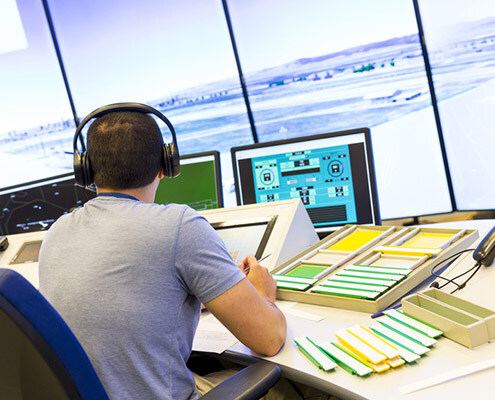

Our Fatigue Avoidance Scheduling Tool (FAST), was recently used by The Transportation Safety Board of Canada (TSB) to identify fatigue as a factor in an April 2013 incident at Vancouver Airport. FAST identified that the airport controller did not obtain sufficient sleep before their shift. In addition, the airport controller’s schedule did not permit enough adaptation time, requiring the controller to sleep during the day in an attempt to be adequately rested for the night shift.
The report says the controller mixed up the ID of a 737 and the Jazz plane waiting to take off and ordered the 737 to take off from the same runway where the Jazz plane was waiting. The confusion set off a delay in getting the planes off the ground, which forced an incoming West Jet plane to circle the runway.
FAST for Retrospective Analysis
By uploading an employee’s schedule into FAST, users can identify if an employee’s schedule could have caused fatigue and increased the likelihood of an incident or accident.
Further, if the employee was wearing our Readiband technology before the incident/accident actual sleep data could be imported into FAST for a more comprehensive analysis.
How does FAST work?
FAST is our user-friendly scientifically validated software that has been developed for schedulers and planners to identify areas of fatigue risk in employee rosters. FAST allows organizations to upload rosters and generates visual predictions of performance along with tables of estimated effectiveness scores. The data can then be used for objective comparisons and optimal schedules may be selected for proposed work periods or mission critical events.