Product News

The trucking industry is under legal siege. As reported by the American Transportation Research Institute (ATRI), litigation costs are skyrocketing, with nuclear verdicts in trucking. Jury awards exceeding $10 million are becoming increasingly common. One of the most exploited factors in these cases? Driver fatigue.
In a legal environment where Hours of Service (HoS) compliance is no longer a sufficient defense, fleets must adopt smarter tools to manage and prove fatigue mitigation. This is where predictive fatigue risk management platforms like Readi are redefining what "duty of care" looks like in transportation.
According to ATRI’s report, litigation-related insurance costs and jury awards have exploded in recent years. Even small and mid-sized fleets with solid safety records are seeing premiums rise dramatically.
Fatigue is a top liability trigger.
Attorneys are leveraging post-crash data, often from dash cams or ELD logs, to argue that a driver, though HoS-compliant, was fatigued and therefore unfit for duty. In court, reactive technology doesn’t help much.
This presents a harsh truth:
If your safety system only kicks in after fatigue has already caused a problem, it’s already too late to prevent an incident or defend against it.
Fleet managers know that HoS rules were designed to prevent fatigue, but compliance doesn’t guarantee alertness. Drivers can meet their rest requirements and still be impaired due to poor sleep quality, night shift effects, or schedule disruptions.
What matters in court is whether your company knew or should have known that a driver was fatigued, and whether you did anything about it.
This is the gap predictive fatigue management fills.
Enter Readi, the leading predictive fatigue management platform for fleets and 24/7 operations.
Unlike reactive tools (e.g., dashcams that detect eyelid droop or microsleeps), Readi forecasts driver fatigue before a shift even begins. Powered by the validated SAFTE model and enriched by machine learning, Readi provides:
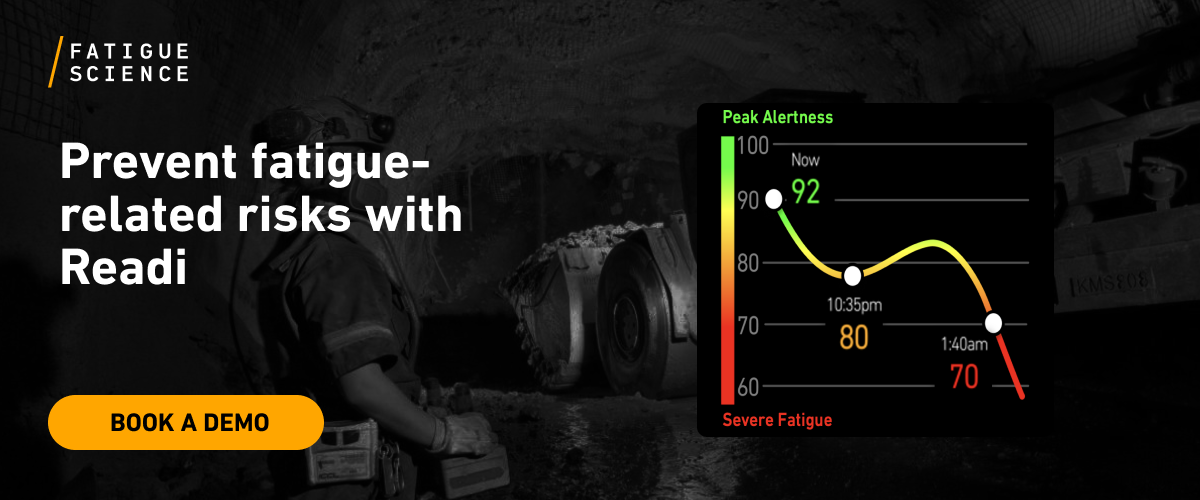
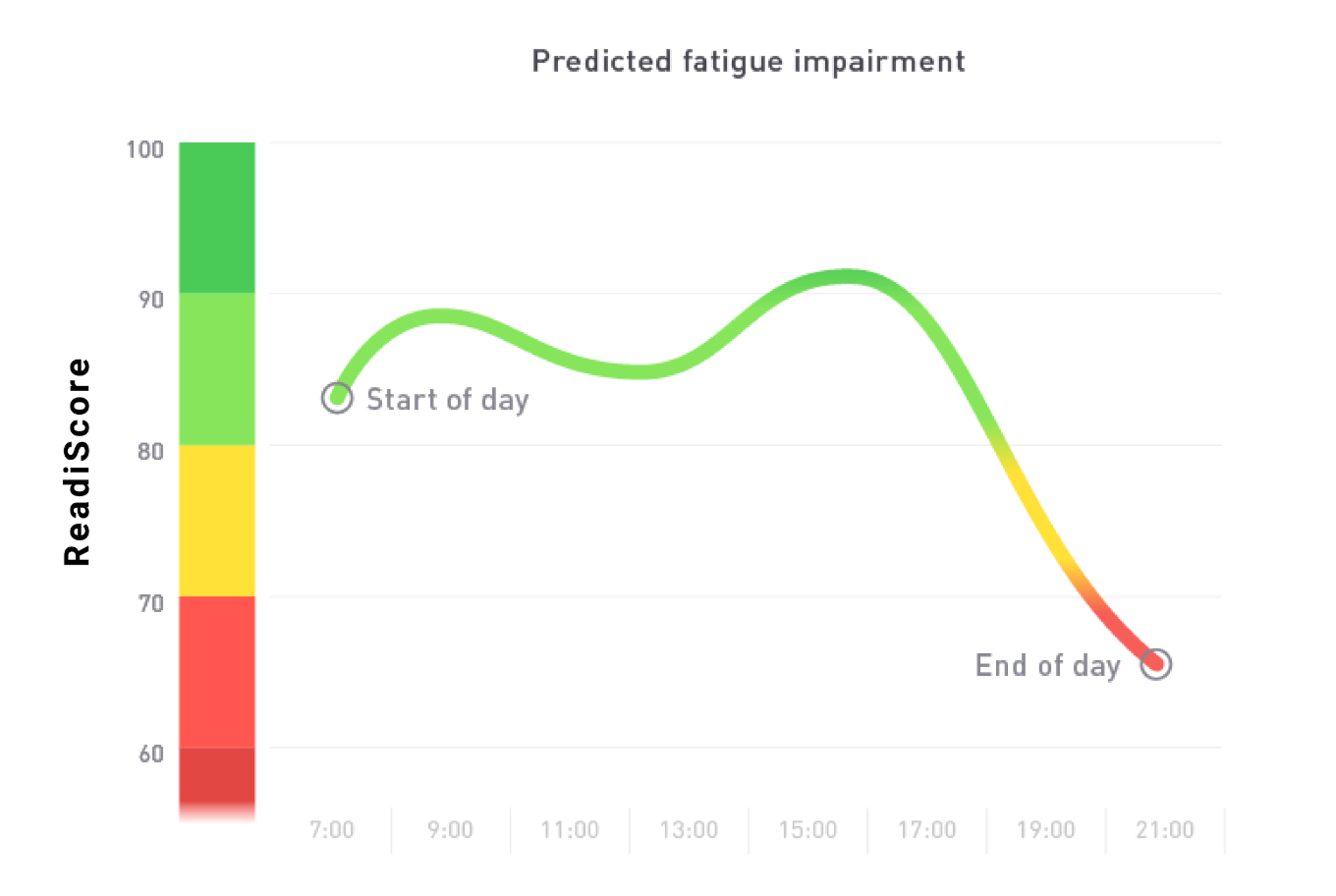
Personalized ReadiScores for every driver, every hour of the shift ahead
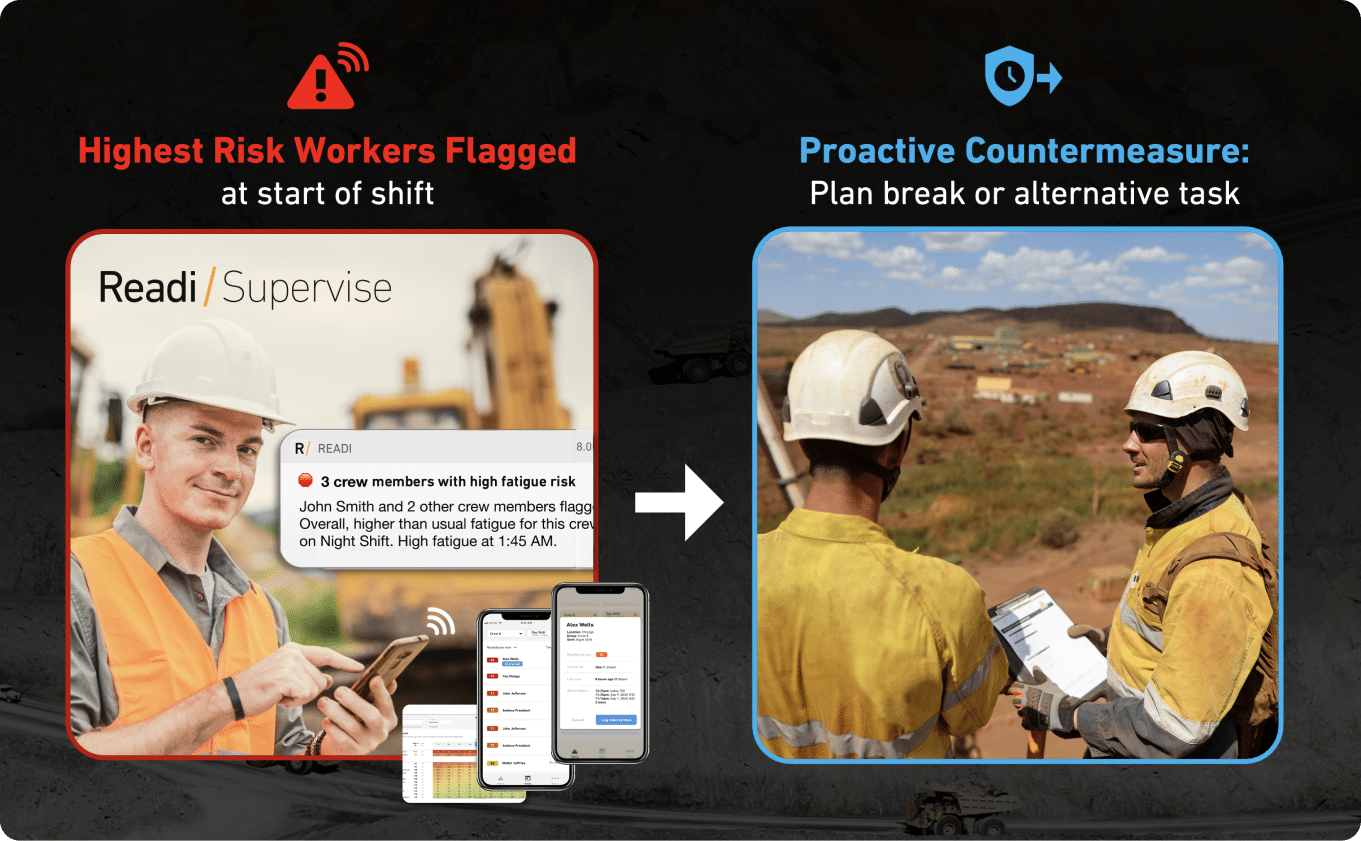
Fatigue risk alerts to dispatchers before vehicles leave the yard
Seamless integration with existing ELD and dispatch software
No wearables required, though optional for higher personalization
Auto-logged countermeasures, showing the organization took action
For safety managers, this means actionable insights, not just rear-view data.
For legal teams, it means documented due diligence in mitigating risk.
Consider the courtroom scenario: A driver rear-ends a vehicle after drifting lanes. Plaintiff lawyers subpoena your fatigue policies and incident data. Dashcam footage confirms microsleep. Even if the driver followed HoS rules, your defense hinges on what proactive steps your company took.
With Readi in place, you can demonstrate:
The driver's fatigue risk was predicted before the shift
A supervisor or dispatcher was alerted
Adjustments (rest break, route reassignment, etc.) were made and logged
Your organization went beyond compliance to actively reduce risk
This is no longer a “nice to have.” It’s a critical shield against potential reputational and financial ruin.
We’ve entered a new era in transportation. One where simply reacting to fatigue isn’t good enough and where proving you had the tools and processes in place to predict and prevent fatigue is now a legal, operational, and moral imperative.
If your fleet is still relying on lagging indicators and hoping for the best, now is the time to rethink your approach.
Readi isn’t just a safety tool. It’s your strongest defense against tomorrow’s verdict.