
Product News


Fleets struggle with fatigue management software because most solutions fail to fit into real-world dispatch workflows, create alert fatigue for supervisors, or treat compliance as a substitute for actual fatigue risk reduction. The result is low adoption, poor data quality, and safety gaps that the software was meant to close.
Understanding why fleets struggle with fatigue management software requires looking beyond the technology itself. The root causes are operational, organizational, and strategic. Fleet managers and safety officers often invest in driver fatigue solutions expecting immediate results, only to find that fatigue management challenges run deeper than any single tool can address.
One core issue is that many fleets confuse compliance with fatigue regulations, specifically hours-of-service tracking, with genuine fatigue risk management. An ELD confirms that a driver has not exceeded legal drive time. It does not confirm that the driver slept well, recovered from a string of night shifts, or is cognitively fit to operate a vehicle. When fleets rely on compliance data alone, they miss the biological factors that actually drive fatigue risk.
Technology integration in fleets presents another barrier. Most operations already run ELDs, telematics platforms, dash cams, and driver coaching programs. Adding a fatigue risk management system that requires new hardware, wearables, or separate logins creates friction for drivers, dispatchers, and maintenance teams. The software gets ignored or used inconsistently, which undermines the data it produces.
Common reasons fleet safety software issues persist include:
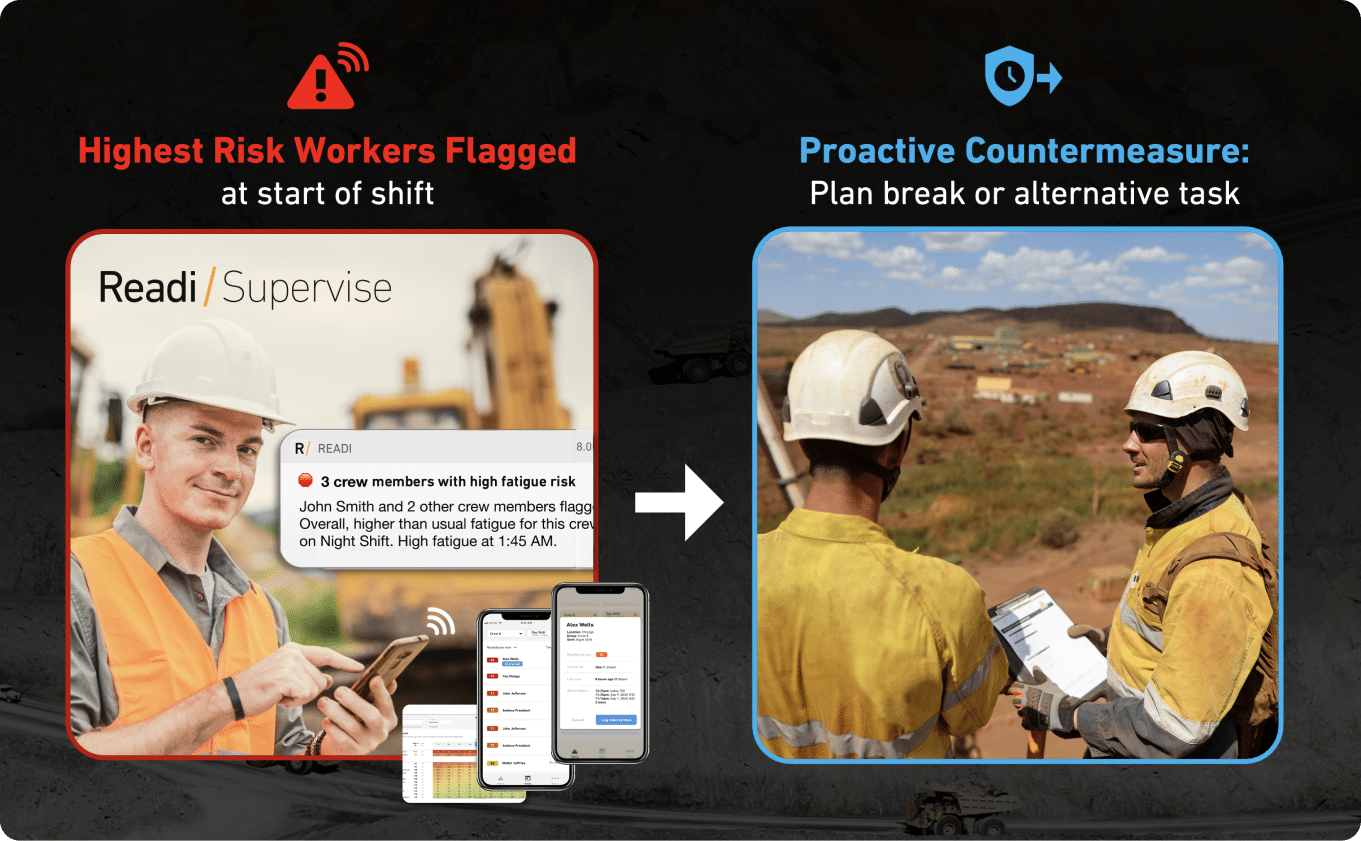
Predictive fatigue management offers a path forward by addressing several of these problems at once. Tools like Readi, which forecast fatigue risk in advance using ELD data without requiring wearables, reduce the adoption friction that stalls most implementations. When a fatigue risk management system fits inside existing workflows and highlights only the highest-risk drivers, supervisors can act on exceptions rather than chase every alert.
The sections that follow break down each of these barriers in detail and outline what fleet operations efficiency looks like when fatigue is managed as an operational risk rather than a checkbox.
Many fleets search for fatigue software and expect the tool to fix the problem on its own. The harder barriers sit in shift release decisions, supervisor handoffs, and unclear ownership across safety and operations.
A stronger approach starts before a truck leaves the yard or before a night segment starts. Put fatigue beside route risk, fuel, and service commitments in the daily plan; that placement helps fleet managers use driver fatigue solutions, predictive fatigue management, and compliance with fatigue regulations as part of one operating process.
Good fatigue risk management systems support the tools fleets already use for duty records, event review, and trip oversight, but the value comes from decision support, not from another stream of raw data. Operations needs a compact view that shows which driver, which trip, and which action fits the risk level; safety needs the same record for trend review and coaching.
Readi fits well in fleets that already use cameras or fit-for-duty checks and need earlier notice on overnight, weather-exposed, or time-critical runs. It gives supervisors on-demand visibility into fatigue risk and workforce performance, supports resource allocation and task planning, and surfaces fatigue forecasts in advance so a manager can move a start time, change an assignment, or place a driver on a lower-strain route.
The human side still decides adoption. Driver performance monitoring earns support when leaders explain the purpose, restrict access to fatigue data, and apply the same standard across day shift, linehaul, and night work; crews respond better when the program leads to safer schedules and fair calls rather than blame after an incident.
In many fleets, fatigue sits in one of two buckets: audit prep or wellness messaging. That split keeps the issue away from route planning, fuel performance, service recovery, and liability control, even though the business impact shows up there first.
Duty-hour limits set a legal boundary; they do not confirm readiness for a demanding run. A driver may start work after short sleep, several early starts, or an overnight reset that produced poor recovery and still remain within the logbook standard. Schedule strain often builds across several days, which is why fatigue management challenges rarely show up clearly in a single HOS record.
Effective fatigue risk management systems focus on the periods when alertness tends to drop and consequences tend to rise. That gives dispatch, safety, and front-line leaders a usable signal for route choice, task timing, and supervisor review before a dash cam clip, harsh braking event, or claims issue forces attention.
Fleets make better decisions when fatigue sits next to other forward-looking safety signals, such as speeding trends, coaching frequency, and telematics exceptions. Readi supports that approach with visibility in advance, which helps teams review high-risk cases sooner and use existing fleet safety software with better judgment.
A fleet does not gain much from a fatigue platform that sits outside the dispatch desk. Safety leaders, dispatchers, and fleet managers already move through a tight chain of decisions each day: driver availability, route assignment, service windows, customer changes, coaching follow-up, and telematics exceptions. Fatigue management challenges grow when software adds one more portal, one more review step, or one more device that needs support.
Useful driver fatigue solutions place risk information at the same point where the fleet decides who should take the run. That usually means fatigue risk appears alongside duty records, schedule changes, and other operating signals the team already uses to clear a driver for work. A stand-alone dashboard that requires manual checks after the load is assigned rarely changes the outcome.
| Workflow design choice | What the fleet gains | What the fleet loses when the design is wrong |
|---|---|---|
| Risk view tied to dispatch review | Faster action before a high-risk run starts | Late review after the route is already locked |
| ELD integration with schedule context | One source for duty history, route timing, and fatigue exposure | Manual cross-checks across separate systems |
| Exception-based output | Attention goes to the small set of drivers who need action | Supervisors spend time sorting low-value alerts |
| Low-maintenance deployment | Fewer support tickets, less driver disruption, quicker rollout | Extra upkeep for devices, passwords, and training |
Technology integration in fleets should help a supervisor answer a simple question: can this driver take this work safely under today's conditions?
Strong fatigue risk management systems support that decision with clear severity levels and practical timing. Weak systems force the team to stitch together HOS records, camera events, schedule edits, and fatigue data by hand.
Readi fits this model because it provides on-demand visibility into fatigue risk and workforce performance for operations teams and supervisors, while also supporting decisions on resource allocation, task planning, worker training, and scheduling. In transportation fleets that already invest in vehicle cameras, fit-for-duty checks, or telematics safety programs, that kind of workflow fit often decides whether predictive fatigue management becomes part of daily operations or turns into another unused system.
A common failure point in fatigue risk management systems sits in the handoff from data to action. Many platforms collect sleep-related signals, telematics inputs, and schedule data, then leave dispatch and safety teams to sort out what deserves attention first.
Supervisors need a queue they can use in minutes, not a report they have to interpret from scratch. Good driver fatigue solutions sort risk by priority, connect it to the trip or driver involved, and show the next operational choice inside the same review flow.
This approach improves fleet operations efficiency because it cuts the time spent on interpretation. It also lowers one of the most common fatigue management challenges: a tool that produces information but does not support a decision.
Post-event review has value, but it starts after the exposure has already reached the road. A camera clip, a harsh braking record, or a near miss on a night route can help with coaching, yet none of those events give dispatch much room to prevent the first mistake.
Predictive fatigue management changes the timing of the decision. Readi gives operations and supervisor teams visibility into elevated fatigue risk 18 hours in advance, which supports resource allocation, task planning, worker training, and scheduling before risk shows up as a safety event. That use of driver performance monitoring shifts the conversation from evidence collection to route planning and crew management.
In practice, the software should support a short list of choices. A dispatcher may move a driver off a high-exposure overnight segment. A safety lead may add a check-in before a circadian low period. A terminal manager may leave the assignment in place but flag it for coaching follow-up after the run. The platform adds value when it helps the fleet make the right move at the right point in the day, rather than pushing another dashboard into an already crowded stack of tools.
Driver resistance often starts with one belief: the system exists to watch people, not protect them. That belief hardens fast when a fleet launches fatigue management software without clear rules, plain language, or a fair response process.
Trust grows when fatigue risk management systems use a written policy that drivers can read, question, and revisit. The policy should explain what information the fleet reviews, which roles can access it, how long records stay in the system, and which actions are off limits unless a separate safety issue exists.
Fleets also need to separate fatigue from blame. A high-risk score does not prove misconduct; it signals elevated exposure that may come from night work, compressed resets, irregular start times, long commute patterns, or repeated schedule changes. That distinction helps driver performance monitoring support fair decisions instead of suspicion.
Adoption improves when the first uses of the software help the driver before a safety event takes shape on the road. In practical terms, that means the platform should support earlier schedule review, cleaner handoffs, and better resource allocation rather than serve as another source for post-incident scrutiny. Readi supports that approach with on-demand visibility for supervisors and operations teams, plus fatigue forecasts 18 hours in advance that inform task planning and scheduling decisions.
A durable fatigue-aware culture also looks beyond the screen. Drivers pay attention when leaders protect recovery time, avoid unnecessary shift volatility, account for circadian strain, and take related concerns such as crew mental health seriously. Those signals show that driver fatigue solutions sit inside a broader safety system with real operational backing.
After a fleet addresses trust and privacy, another limit appears in the safety stack. Video clips, telematics event records, and post-incident reviews usually show fatigue after it affects speed control, lane position, braking, or judgment on the road.
A drowsiness camera may detect long eye closures, head nods, or repeated lane corrections. That evidence helps with coaching and incident review, but it arrives after the driver enters a high-risk state and after exposure reaches traffic, weather, and delivery pressure.
This is where predictive fatigue management adds value as a leading indicator in fleet safety software. Supervisors can review elevated risk before first dispatch or before a known high-risk segment such as an overnight linehaul stretch, an early-morning return leg, or a weather-exposed corridor that leaves little margin for delayed reactions.
The most effective fleet safety programs do not expect one camera alert to solve fatigue management challenges. They combine event evidence with forward-looking fatigue insight, which gives operations, safety, and dispatch a better basis for driver performance monitoring and earlier intervention.
A high-risk score helps only when someone has clear authority to change the day’s plan. In many fleets, dispatch controls loads, safety reviews exposure, and terminal leaders manage coverage; without a pre-set decision path, the issue sits unresolved while the route still moves forward.
A practical rollout plan should define four items in advance:
The response menu should fit actual fleet conditions. A moderate case may support a later start time, a planned rest stop, or closer check-ins during the route; a more serious case may require a load swap, a shorter run, or reassignment away from a night segment with higher exposure.
That level of structure keeps fatigue risk management systems from turning into passive reporting tools. Supervisors do not need to invent a response under pressure; they need a short set of actions that line up with service commitments, available drivers, and route demands.
Readi gives supervisors on-demand visibility into fatigue risk and workforce performance, while also informing decisions about resource allocation, task planning, worker training, and scheduling. Because Readi can identify elevated fatigue risk in advance of the shift, teams have enough lead time to adjust assignments before the trip reaches a point where options narrow.
Software creates value when prediction changes the operating plan at the right moment. That is the step that turns fatigue insight into better driver performance monitoring, tighter dispatch control, and more reliable decisions across the fleet.
Many fatigue management challenges start after the software goes live. Dispatchers, safety managers, and front-line supervisors still decide who gets the route, who needs a change, and which cases need follow-up, so weak judgment at that level can turn useful data into noise.
Training should focus on the patterns that shape fatigue risk across a fleet day. Sleep debt can build across several short rest periods; circadian low points can hit in the early morning hours; night routes, weather, traffic delay, and monotonous highway miles can push driver performance monitoring in the wrong direction even when no obvious problem shows up at check-in.
High-risk sectors with mature fatigue risk management systems do not leave those calls to instinct alone. Aviation offers a useful model: fatigue sits inside scheduling, task design, supervision, and escalation rules, which helps managers treat risk as part of normal operational control instead of a personal weakness or a last-minute exception.
This is where fleet safety software issues often narrow or expand. A trained manager can use predictive fatigue management to support route changes, task allocation, and coaching with far less confusion; an untrained manager may ignore valid warnings or treat every flag as a crisis, which hurts fleet operations efficiency and trust in the system.
Readi supports that type of supervisor workflow because it gives on-demand visibility into fatigue risk and workforce performance, informs decisions on resource allocation and task planning, and shows elevated risk 18 hours in advance. With proper manager training, that information supports better forecasts, fewer false starts, and more consistent driver fatigue solutions across the operation.
A fatigue program needs a scorecard that matches how freight moves through the network. One headline result rarely captures progress early enough, especially when the goal is to cut exposure before a crash, claim, or service disruption takes shape.
The clearest view comes from three groups of measures: early warning signals, supervisor response, and business effect. That mix shows whether fatigue tools support better decisions in real operations or simply add another report for the team to check.
This approach also improves the ROI discussion. Better forecasts help teams pull together information from multiple systems, avoid false starts, reduce wasted effort, and make sound choices across safety and operations instead of chasing one dramatic before-and-after number.
With this kind of scorecard in place, fatigue software earns its place through earlier prevention, steadier supervision, and better use of the tools the fleet already owns. The program should lower fatigue-related incidents sooner in the risk timeline, strengthen driver risk management, and raise the practical value of video, logbook, and telematics data.
Fleets that treat fatigue as a scheduling and dispatch problem, rather than a compliance checkbox, gain control over risk earlier in the day. The barriers covered here are real, but each one has a practical fix:
Readi forecasts fatigue risk, hour by hour, and fits inside existing ELD and telematics workflows without wearables or new hardware. In a large U.S. logistics pilot, fleets using Readi reduced fatigue-linked in-cab telematics events by 42%. That earlier signal helps supervisors act before risk reaches the road.
Book a demo to explore how predictive fatigue management software can improve safety and productivity across your fleet.