
Product News
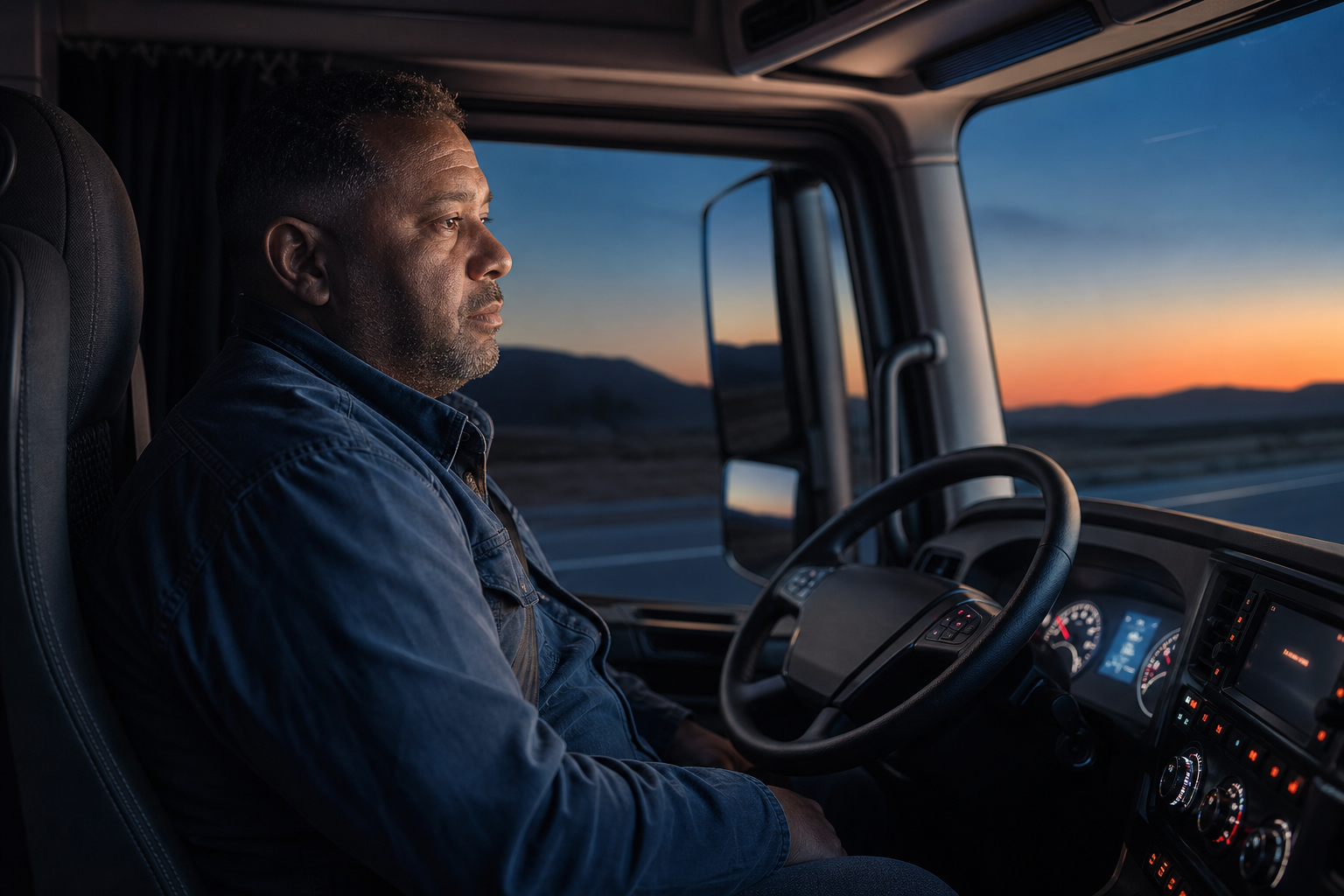

In-cab monitoring refers to the technologies and systems installed inside commercial vehicles to observe driver behavior, detect safety risks, and support fleet management decisions. These in-cab monitoring solutions combine cameras, sensors, and analytics to help fleets improve driver performance, reduce incidents, and integrate with existing fleet safety technology platforms.
For safety leaders and fleet managers evaluating driver monitoring systems, understanding how these tools work, what they measure, and where they fall short is essential to building a safety program that prevents incidents rather than just recording them.
Most in-cab monitoring systems use a combination of hardware and software to capture data about the driver and the vehicle in real time. A typical setup includes one or more in-cab monitoring cameras pointed at the driver and the road, paired with telematics sensors that track vehicle speed, braking force, acceleration, and GPS location.
Real-time driver monitoring relies on computer vision algorithms that analyze the camera feed for signs of drowsiness, distraction, phone use, seat belt non-compliance, and other risky behaviors. When the system detects one of these states, it triggers an alert. Depending on the configuration, the alert may go to the driver through an audible tone, to a back-office safety team through a cloud dashboard, or both.
Telemetry in vehicles adds another data layer. Sensors capture harsh braking events, rapid acceleration, hard cornering, and speeding. These data points feed into driver behavior analytics platforms that score each driver and flag patterns over time.
Advanced driver assistance systems (ADAS) sometimes work alongside in-cab monitoring by providing lane departure warnings, forward collision alerts, and following-distance indicators. Together, ADAS and driver monitoring systems create a more complete picture of what is happening inside and around the vehicle during every trip.
| Technology | What It Captures | Primary Safety Function |
|---|---|---|
| Driver-facing camera | Eye closure, head position, phone use, distraction | Detects drowsiness and inattention |
| Road-facing camera | Lane position, following distance, forward events | Records context around safety events |
| Telematics sensors | Speed, braking, acceleration, cornering | Identifies harsh driving behaviors |
| AI analytics engine | Behavioral patterns, event classification, risk scoring | Prioritizes coaching and intervention |
| ADAS integration | Lane departure, forward collision proximity | Provides real-time driver warnings |
| Vehicle occupant monitoring | Seat belt status, occupant presence | Supports compliance and post-incident review |
Each of these components generates data that feeds into a central fleet safety technology platform. The value of any single component increases when it connects to the others, giving safety teams a more complete view of risk across the fleet.
In-cab monitoring delivers several measurable benefits when deployed across commercial fleets.
Incident documentation and liability protection. Video event recorders capture footage before, during, and after a safety event. This footage can exonerate drivers in false insurance claims and provide critical evidence in litigation. Given the rising frequency of large jury verdicts against trucking companies, this documentation capability has become a baseline expectation for risk management teams.
Driver coaching and performance improvement. Driver behavior analytics allow safety managers to identify specific patterns, such as repeated harsh braking on certain routes or phone use during highway driving, and deliver targeted coaching. This approach is more effective than generic safety reminders because it ties feedback to observable events.
Reduced safety event frequency. Fleets that actively review in-cab monitoring data and coach drivers on flagged behaviors typically see a reduction in the types of events that lead to collisions, cargo damage, and injury claims.
Regulatory and compliance support. In-cab safety technology helps fleets demonstrate a proactive safety posture during audits and inspections. Documented coaching sessions, event review workflows, and trend data all contribute to a defensible safety record.
In-cab monitoring systems do not operate in isolation. Most platforms are designed to integrate with electronic logging devices (ELDs), transportation management systems (TMS), and dispatch platforms.
ELD integration is particularly important because it connects hours-of-service data with in-cab event data. When a safety manager can see that a harsh braking event occurred in the thirteenth hour of a driver's shift, the context changes. The event may not just reflect poor driving habits. It may indicate fatigue.
Telematics platforms from providers like Geotab and Motive serve as data hubs that aggregate vehicle performance, location, and driver behavior information. In-cab monitoring cameras and sensors feed into these platforms, allowing safety and operations teams to manage risk from a single interface rather than toggling between disconnected tools.
In-cab monitoring is strong at capturing what happens during a trip. It records events, classifies behaviors, and creates a reviewable record. But most in-cab monitoring solutions share a common limitation: they are reactive by design. The system detects risk after it appears on the road, not before the driver starts the engine.
A driver monitoring system can identify that a driver's eyes are closing. It cannot tell you whether that driver slept four hours or eight hours the night before. It can flag a harsh braking event. It cannot predict whether a driver is likely to experience impaired reaction time three hours into a night shift based on their recent sleep history.
This gap matters because fatigue is one of the most significant and least visible risk factors in commercial transportation. A driver can pass a pre-trip inspection, comply with hours-of-service limits, and still be operating at a level of cognitive impairment equivalent to a blood alcohol concentration of 0.05% or higher due to accumulated sleep debt and circadian rhythm disruption.
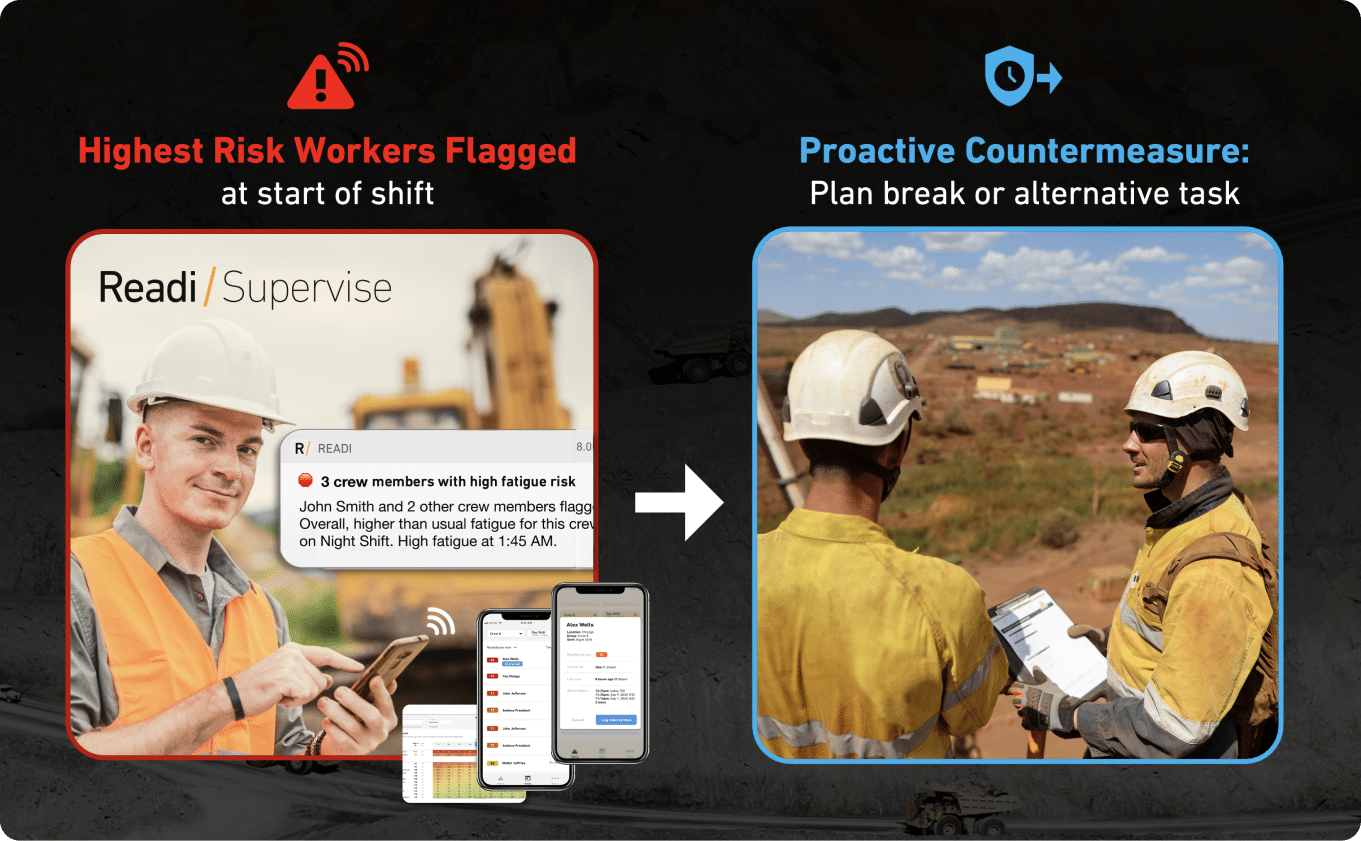
Predictive fatigue management tools address this gap by modeling fatigue risk before a shift begins. Readi, for example, integrates with existing ELD systems to forecast fatigue-related impairment up to 18 hours in advance without requiring wearables or additional hardware, giving supervisors an earlier signal than any camera or telematics alert can provide.
Selecting an in-cab monitoring solution depends on the specific risks a fleet faces, the existing technology stack, and the operational workflows safety teams use daily.
Fleets with high exposure to night driving, long-haul routes, or irregular shift patterns should evaluate whether their in-cab monitoring cameras and telematics data are paired with upstream risk indicators. A camera that catches a drowsy driver at mile 400 is useful for documentation. A system that identifies elevated fatigue risk before that driver departs is useful for prevention.
The strongest fleet safety programs treat in-cab monitoring as one layer in a broader safety architecture. Cameras provide evidence. Telematics provide vehicle data. ELDs provide compliance data. Predictive analytics provide the leading indicators that allow safety teams to intervene before a driver reaches a high-risk state.
When these layers work together, fleets move from reviewing incidents after the fact to preventing them before they occur. That shift, from reactive documentation to proactive risk management, is what separates compliance-driven safety programs from ones that measurably reduce injuries, costs, and liability exposure.
In-cab monitoring cameras rely on interior optics, infrared illumination, and onboard processing to interpret what happens inside the vehicle at driving speed. The system captures a continuous visual stream, measures specific facial and body markers, and routes only selected events into the fleet’s review process.
Hardware choice has a direct effect on detection quality. Fleets that run overnight lanes, early-morning dispatch windows, or long duty cycles need in-cab monitoring solutions that hold image quality in darkness, glare, cab vibration, and frequent posture changes.
Most in-cab monitoring cameras use near-infrared illuminated monochrome sensors because they perform well across day and night conditions. Infrared LEDs light the driver’s face without visible glare, which allows the driver monitoring system to map eyelids, pupils, head angle, and line of sight when a standard interior camera would lose contrast.
Some platforms add RGB video or use combined RGB-IR sensors. That configuration gives fleets two outputs from the same event: machine-readable infrared tracking for detection and color footage for later review. In practice, that helps when safety teams need to verify whether a flagged event involved mirror checks, device handling, food and drink, or another action that requires visual context.
Higher-spec in-cab safety technology may also include depth cameras, thermal imaging, radar, or time-of-flight sensors. Those sensors support more precise vehicle occupant monitoring by estimating seating position, upper-body movement, and distance within the cab. In advanced driver assistance systems, the same interior sensing approach can also support gesture recognition, child presence detection, and readiness checks in vehicles with partial automation.
After image capture, driver behavior analytics software converts the visual stream into measurable signals. The model tracks changes over time rather than relying on one frame. A brief glance at the dashboard may pass with no action; a sustained off-road gaze, repeated blink change, or progressive head drop may cross the platform’s alert threshold.
Most real-time driver monitoring systems look for clusters of indicators, such as longer-than-normal eye closure, frequent yawning, gaze drift away from the roadway, or repeated nodding. Some systems also compare those observations with telemetry in vehicles, including speed, steering input, braking force, or lane-related data, so the event enters the platform with operating context instead of video alone.
Once a threshold is met, the driver monitoring system sends an in-cab warning through a buzzer, chime, spoken prompt, or visual cue. The platform then packages a short event clip and transfers it to a cloud dashboard, where safety staff can sort severity, validate the trigger, and route the case into coaching or incident review. This is where camera-based fleet safety technology shows its operational value: it turns a moment inside the cab into a documented event that supervisors can assess against route conditions, schedule demands, and the driver’s broader risk pattern.
For fleets that move freight at night, across long distances, or through severe weather, in-cab monitoring adds direct observation to a safety program that often depends on reports after the fact. That matters in operations where one unsafe act can lead to injury, cargo loss, public exposure, or service disruption.
The value of in-cab monitoring cameras increases when the footage sits beside other fleet safety technology. A driver monitoring system can place a driver’s eye movement, head position, and phone handling next to telemetry in vehicles such as speed, braking force, and route data, which gives safety teams a fuller picture of what took place during a flagged event.
A written rule sets the standard. Real-time driver monitoring shows whether that standard holds during actual trips, across different routes, weather conditions, and delivery pressures.
That creates practical accountability across the fleet:
This kind of record helps in fleets where supervisors cannot ride along, watch every route, or inspect every decision in real time.
In-cab monitoring solutions can shorten the time between an event and a decision. When video captures the sequence around a complaint, near miss, or crash, the review process becomes more precise for safety, operations, and claims teams.
That precision improves several common fleet workflows:
| Scenario | Without video inside the cab | With in-cab monitoring cameras |
|---|---|---|
| Driver complaint review | Depends on statements and partial vehicle data | Managers can inspect driver actions and cabin conditions |
| Post-crash investigation | Sequence may remain unclear | Footage can show the order of events around the incident |
| Insurance dispute | Defense may rely on reconstruction | Recorded clips provide direct visual evidence |
| Internal case review | Teams may reach different interpretations | Shared footage creates a common factual record |
For fleets with frequent public exposure, this benefit reaches beyond liability. It can also reduce the time managers spend sorting through conflicting accounts.
Many coaching programs fail because the feedback stays broad. In-cab safety technology gives supervisors concrete material to review, which makes each discussion more useful and easier to document.
That improves coaching in several ways:
For fleets that already run multiple safety systems, the bigger operational gain often comes from better use of the data they already collect. Tools that help supervisors understand large volumes of information across systems can improve decisions on scheduling, resource allocation, and training without forcing teams to work through separate spreadsheets and disconnected dashboards.
Compliance depends on more than policies in a handbook. Safety leaders need records that show how the fleet identifies unsafe behavior, reviews events, and responds with action.
In-cab monitoring supports that work through:
For fleets under pressure to show a disciplined safety process, these records add operational proof to the written program.
Vehicle occupant monitoring can show details that telematics alone cannot capture. Depending on the system, safety teams may have access to seat belt status, occupant position, head movement, gaze direction, or other signs that help explain why an event occurred.
This added visibility is useful when the same driving event can have several possible causes. A harsh stop may reflect road conditions, poor spacing, distraction, or reduced alertness. In-cab monitoring gives managers a direct view into the cabin so they can judge the event with more context and respond with the right corrective step.
Camera-only in-cab monitoring gives fleets a direct record of what takes place inside the vehicle, but the method has structural limits. The system waits for a visible change in the cab before it classifies an issue, which means the first usable signal often appears after driver performance has already dropped.
That delay becomes more serious in operations with overnight driving, long route windows, and irregular dispatch patterns. Near-infrared camera systems can track eye movement in low light and AI can classify head position, blinking, or gaze direction, yet those tools still depend on outward signs that show up during the trip rather than conditions that built before the trip started.
A driver monitoring system works from what the camera can see. In-cab monitoring cameras and driver behavior analytics can detect distraction, phone use, prolonged eye closure, or drowsiness markers such as yawning, but the software still needs a physical cue in the moment.
This creates several operating limits:
For fleets that operate under tight delivery schedules, this distinction affects response quality. A warning buzzer may interrupt a risky moment, though it does not help supervisors understand which drivers, routes, or schedules carry higher fatigue exposure before the vehicle leaves the yard.
As in-cab safety technology expands across a fleet, event volume tends to expand with it. Real-time driver monitoring, vehicle occupant monitoring, and telemetry in vehicles can feed large numbers of clips into a review queue, especially when the system captures minor infractions and higher-risk events in the same workflow.
That load can pull safety staff into administrative review rather than prevention work. A team may spend hours sorting footage, checking severity, and preparing coaching notes. The issue is not the existence of data; it is the amount of low-context video that enters the process once every threshold event reaches the dashboard.
| Camera-only limitation | Fleet impact | Practical result |
|---|---|---|
| Event-triggered detection | Response begins mid-shift | Less room for prevention before risk escalates |
| High clip volume | More time in review queues | Less time for schedule, dispatch, and coaching decisions |
| Limited context in video alone | Harder root-cause analysis | Supervisors address the event, not the operating conditions |
| Uniform event pipelines | Weak prioritization | Serious fatigue exposure can sit beside minor rule violations |
Advanced driver assistance systems and telematics can add road context, speed data, and harsh event data, but those layers still center on what happened during the trip. They do not rank fatigue exposure in advance or show which future assignments deserve closer attention from dispatch or operations.
Camera-only in-cab monitoring also affects driver trust. Continuous video inside the cab can create resistance when drivers view the system as surveillance first and safety support second, particularly in fleets with established concerns about monitoring policy or disciplinary use.
That concern has practical effects on program strength. A fleet may install strong in-cab monitoring solutions and still struggle with adoption if drivers do not trust how footage is stored, reviewed, or used in coaching. In unionized environments, those concerns can slow rollout, complicate supervisor workflows, and reduce the quality of safety conversations after an event.
A camera-based program also leaves a gap between observation and planning. Video can document behavior inside the cab, while broader fatigue management platforms can provide on-demand visibility into workforce fatigue risk and support decisions on resource allocation, task planning, worker training, and scheduling. That difference matters for fleets that already invest in cameras, telematics, and compliance tools but need earlier signals to support safer dispatch decisions.
Most in-cab monitoring solutions feed data into the same systems fleets already use for dispatch, compliance, and safety oversight. API connections and native partnerships let a driver monitoring system pass event clips, timestamps, driver IDs, and alert types into broader fleet safety technology platforms without manual file transfer.
That system design matters because in-cab monitoring cameras produce only one part of the record. Fleet managers usually need the surrounding facts as well: where the vehicle was, how fast it moved, what the duty status showed, and whether the event matched a known pattern in driver behavior analytics. A connected platform lets those details appear together for faster review.
A typical setup links camera data with several existing tools:
This structure supports a cleaner review process. A safety manager can open one event and see the in-cab video, the vehicle data, the route context, and the driver record in one sequence instead of collecting details from separate systems.
Integrated dashboards help fleets sort events by severity, driver, terminal, route, or time of day. That view helps supervisors spot repeat patterns such as phone handling during urban delivery stops, seat belt violations on yard moves, or distraction alerts that cluster near the end of overnight runs.
Some fleets also use scorecards that combine video events, compliance status, and telematics safety events into one operating profile for each driver. This gives operations and safety leaders a more practical way to compare risk across the fleet, especially in logistics environments where overnight transport, tight delivery windows, and weather exposure create higher consequences from a single lapse.
For organizations that already manage several safety data sources, the larger advantage is decision support. Platforms such as ReadiAnalytics are built to provide on-demand visibility into workforce fatigue risk and performance, and to inform decisions on resource allocation, task planning, worker training, and scheduling. That approach fits fleets that already use in-cab safety technology and want better use from the systems they have.
Strong integration improves access to information, but it does not change what camera systems actually measure. Real-time driver monitoring still depends on visible cues and recorded events inside the cab, while telemetry in vehicles still reflects actions that have already occurred on the road.
That distinction matters in fatigue management. An integrated record can show a drowsiness alert at 3:10 a.m., a lane drift warning at 3:14 a.m., and a harsh brake event at 3:16 a.m. It cannot identify that same driver as high risk before dispatch unless another layer evaluates fatigue exposure ahead of the shift.
In-cab monitoring cameras work from visual evidence inside the vehicle. The driver monitoring system looks for eye behavior, head position, gaze direction, and other signs that the operator has already moved into a reduced-alertness state.
That leaves a large portion of fatigue risk outside the frame. A fleet can have strong in-cab safety technology, clear video, and reliable real-time driver monitoring, yet still miss the upstream factors that shape fatigue risk before departure. Schedule timing, shift rotation, prior rest opportunity, and workload planning all affect alertness long before a camera event appears. For transportation fleets that run overnight freight, early-morning dispatches, or irregular route patterns, this matters because exposure starts with the work design, not with the first visible yawn.
Video also has no way to rank which drivers deserve attention before the route begins. Two drivers can show the same behavior at check-in and face very different fatigue exposure later in the shift based on start time, route length, and recent duty history. That blind spot limits the preventive value of camera-only in-cab monitoring solutions.
A threshold-based alert tells the fleet that the driver has crossed into a measurable problem state. The buzzer, clip, or dashboard flag helps document the moment, but the safety impact has already moved into live operations.
This matters because fatigue affects more than eyelid closure. It changes scanning consistency, pace of response, lane control, and judgment during routine decisions. A driver may still look composed on camera while performance weakens through the middle of a route. In practical fleet terms, the first visible alert can come after several smaller failures have already shown up through harsh braking, poor speed management, or delayed reaction to traffic conditions.
For safety teams, this creates a narrow response window. In-cab monitoring cameras can warn, but they cannot restore alertness, recover lost attention, or remove the route conditions that pushed the driver into that state. The tool has value for event response; it does not provide enough lead time for broader prevention.
Camera footage becomes more useful when paired with the data that shapes the workday. A proactive program uses more than driver behavior analytics and vehicle occupant monitoring clips. It also uses information that supports resource allocation, task planning, worker training, and scheduling decisions before high-risk periods develop on the road.
This is where predictive fatigue management changes the workflow. Platforms such as Readi can provide on-demand visibility into workforce fatigue risk and performance for supervisors and operations teams, which supports earlier choices around assignments and schedule design. That kind of visibility places fatigue in the same operational category as compliance review rather than leaving it inside a post-event coaching queue.
A practical model usually depends on three capabilities:
| Capability | What it adds | Why it matters for fatigue risk |
|---|---|---|
| Schedule-linked risk visibility | A view of which shifts carry higher fatigue exposure | Helps supervisors spot concern before dispatch |
| Integrated fleet data | A connection between fatigue risk, telemetry in vehicles, and event history | Adds context to safety decisions and trip planning |
| Exception-based review | A short list of higher-risk cases instead of a full video backlog | Reduces review burden and sharpens supervisor focus |
Most fleets already have pieces of the safety stack in place: in-cab monitoring cameras, telematics, ELD records, and in some cases advanced driver assistance systems. Those tools do a good job of showing what took place in the cab and on the road. They do not forecast which shift, assignment, or dispatch window carries the greatest fatigue exposure before the trip starts.
That gap affects both safety and workload. Without an earlier signal, managers spend more time in event review and less time on prevention. With stronger forecasting, teams can synthesize information from multiple systems, make better decisions, and avoid false starts in day-to-day operations. In fleets where mental fatigue has already shown up through night transport, public-road incidents, or shipment loss, camera footage alone does not provide enough advance notice to control the risk before it reaches the route.
A stronger fleet safety stack depends on how well teams connect risk signals across dispatch, supervision, and post-trip review. In-cab monitoring cameras add useful evidence inside the vehicle, but fleets with overnight routes, rotating schedules, and long exposure windows need earlier operational inputs than video alone can provide.
For those fleets, the practical goal is tighter coordination across systems that already exist. Real-time driver monitoring, ELD records, scheduling data, and driver behavior analytics each support a different decision point; the value comes from how they work together inside day-to-day supervisor workflows.
Most fleets already own tools that report what took place during a trip. In-cab safety technology records distraction, seatbelt issues, and visible drowsiness; telemetry in vehicles records speed, braking force, acceleration, and location; ELD data shows duty status and legal drive time. Those systems help after exposure begins, which leaves dispatch and safety leaders with limited room to change the assignment itself.
A stronger model adds a fatigue signal before the route starts. The most useful versions pull from schedule and duty data already inside the fleet’s operation, then surface elevated risk where supervisors can act on it. According to product grounding, ReadiAnalytics provides on-demand visibility into workforce fatigue risk and performance and informs decisions on resource allocation, task planning, worker training, and scheduling. That placement matters because it turns fatigue from a review topic into an assignment input.
Alert volume can distort priorities. A driver monitoring system that flags every threshold event may create long review queues, slow response times, and uneven coaching quality across the week. In that environment, high-value clips compete with routine clips, and safety teams spend more time sorting footage than deciding what operational change should follow.
A better approach starts with event quality rather than event quantity. Fleets can use in-cab monitoring solutions for evidence, severity review, and coaching, while a separate fatigue risk layer helps explain why clusters of alerts appear on certain routes, shifts, or driver groups. That split improves signal clarity for supervisors and reduces wasted effort in back-office review.
A practical workflow often includes three steps:
Fatigue affects more than driver wellness. It shapes route reliability, equipment handling, incident exposure, and the consistency of decisions made under pressure. In transportation settings where crews drive through the night and in difficult weather, the cost of fatigue can include public incidents, lost loads, asset damage, and missed delivery outcomes.
That is why fatigue belongs inside routine operating decisions. Dispatchers, terminal leaders, and safety managers need a common view of where risk sits across the roster, especially when they assign long night segments, time-sensitive freight, or work that demands sustained vigilance.
The Readi fatigue risk management sstem, for instance, provides fatigue analytics before drivers get in the cab. Ultimately this early risk identification can reduce workforce fatigue, increase driver performance, and reduce risk; this framing aligns with how operations teams already manage route timing, labor allocation, and supervisor attention.
A mature fleet safety technology stack connects several layers without forcing managers to chase separate systems:
When those layers sit inside one operating rhythm, fleets gain a more useful basis for dispatch decisions, supervisor escalation, and coaching standards. That structure supports a safety program built for prevention, not just documentation.
Fleet leaders usually reach this stage after they have reviewed vendors, compared features, and tried to map camera data into real supervisor workflows. The questions below focus on system function, legal fit, and what fleets should verify before rollout.
In-cab monitoring uses interior vehicle hardware to capture visual and sensor data from the cab so a driver monitoring system can assess safety-related behavior during a trip. Depending on the setup, the system may review driver attention, occupant presence, cab activity, and selected policy violations tied to fleet safety technology rules.
In commercial fleets, this category usually sits inside a broader set of in-cab monitoring solutions that support risk review, insurance defense, and supervisor oversight. Some platforms focus only on event recording; others support real-time driver monitoring and vehicle occupant monitoring at the same time.
The safety value comes from faster recognition of conditions that often precede preventable events. That includes short periods of inattention, repeated device handling, visible drowsiness cues, or passenger movement that affects driver focus.
For fleet operations, the practical gains usually show up in three places:
Most in-cab monitoring cameras rely on near-infrared illuminated monochrome sensors because that format works well in dark cab environments and at night. Industry research shows these near-infrared camera systems account for more than half of in-car sensing setups used for fatigue or distraction monitoring.
Other in-cab safety technology options appear in more advanced systems:
| Technology | Main use inside the cab | Typical strength |
|---|---|---|
| Near-infrared camera | Eye and face detection in low light | Stable tracking at night |
| RGB camera | Standard interior video capture | Clear visual context in daylight |
| RGB-IR camera | Combined color and infrared sensing | Broader use across lighting conditions |
| Time-of-flight sensor | Cabin depth and position mapping | Occupant distance and gesture awareness |
| Radar or ultrasound | Motion or presence sensing | Detection without full video dependence |
The software stack then applies driver behavior analytics to those data feeds. That process allows the system to classify events with more detail than a basic recorder could provide.
Most in-cab monitoring solutions connect to telematics platforms, ELD environments, and internal fleet dashboards through standard integrations. This allows one event record to carry both interior footage and operating data from the same trip.
Telemetry in vehicles adds detail that supervisors need for proper review. A clip tied to route position, vehicle speed, braking force, shift timing, and dispatch data gives operations teams a more usable record than video by itself. For fleets that already work across multiple systems, that combined view reduces the need to compare separate logs by hand.
Camera systems identify outward signs that appear once fatigue begins to affect behavior in the cab. Examples include slower blink patterns, yawning, gaze instability, or head movement that suggests reduced alertness.
That timing creates a narrow intervention window in shift-based transport. A driver may already have reduced cognitive performance long before the camera flags a fatigue-related event. Fleets that move freight overnight or across long distances often need schedule-aware risk forecasting in addition to camera alerts, since camera footage does not account for prior rest opportunity or the biological effect of night work.
In most U.S. fleet settings, yes, provided the equipment placement does not interfere with driver visibility and the company follows applicable privacy and employment requirements. Federal rules are only one part of the review; state law, labor terms, and internal data practices also matter.
A lawful and workable deployment usually depends on clear operating rules:
A strong evaluation process should test how the system performs in the fleet’s actual operating conditions, not only in a product demo. Night routes, cab lighting, windshield angle, device placement, and wireless coverage can all affect performance.
Key comparison points include:
| Evaluation area | What fleets should verify | Operational reason |
|---|---|---|
| Night accuracy | Whether the driver monitoring system maintains stable detection after dark | Many safety events occur on low-light routes |
| Event review workflow | How quickly supervisors can retrieve, sort, and review clips | Slow access reduces response quality |
| Telematics linkage | Whether video aligns with telemetry in vehicles and ELD data | Better context for safety review |
| Driver policy controls | Whether alerts, retention, and privacy settings are configurable | Different fleets require different governance rules |
| Occupant coverage | Whether the system supports vehicle occupant monitoring when needed | Useful in passenger, shuttle, and mixed-duty settings |
| False alert rate | How often the system flags normal behavior as risk | High noise burdens safety teams |
For transportation fleets with long duty cycles, irregular dispatch, or heavy exposure to public-road incidents, the better choice usually supports both operational review and day-to-day safety management without creating unnecessary administrative load.
Fleets that run overnight freight, early-morning dispatches, or long duty cycles face fatigue exposure that builds before any in-cab monitoring camera can detect it. The strongest safety programs account for that gap by pairing event-based tools with schedule-aware fatigue risk data, so supervisors can adjust assignments, timing, and oversight before a driver reaches a high-risk state on the road. That approach treats every layer of the safety stack, from cameras to telematics to predictive analytics, as part of one connected operating discipline rather than a set of separate purchases.
The fleets that get the most from their existing technology investments are the ones that stop treating safety data as a review task and start using it to shape dispatch decisions, resource allocation, and daily supervision. When fatigue risk sits beside route data, duty records, and telematics events inside the same workflow, safety teams spend less time sorting footage and more time preventing the conditions that generate it.
Book a demo to explore how predictive fatigue management software can improve safety and productivity across your fleet.
Many commercial vehicles already use in-cab monitoring cameras, and adoption continues to expand across fleet operations. The technology exists today in transportation, logistics, and passenger service vehicles, where cameras capture driver behavior, cabin activity, and road conditions to support safety programs and liability protection.
Inward facing cameras are legal in most U.S. commercial fleet settings, provided the equipment does not obstruct driver visibility and the company follows applicable privacy and employment requirements. State law, labor agreements, and internal data practices affect deployment, so fleets should establish clear notice, access, retention, and review policies before activation.
An in-vehicle monitoring system combines cameras, sensors, and analytics to track driver behavior, vehicle performance, and safety events in real time. The system captures data such as eye closure, distraction, speed, braking force, and GPS location, then routes flagged events to fleet managers for review, coaching, and incident documentation.
In-cab monitoring cameras use near-infrared illumination and onboard processing to capture clear images inside the vehicle during day and night conditions. The system tracks driver eye movement, head position, gaze direction, and other behaviors without visible glare, which allows real-time detection of distraction, drowsiness, and policy violations across all lighting environments.