
Key Takeaways
- HOS compliance sets legal limits on driving time but does not prevent fatigue, since drivers can be fully compliant while still impaired by sleep debt, circadian disruption, or fragmented rest.
- Predictive fatigue management tools like Readi forecast fatigue risk in advance of shift using ELD data, allowing dispatchers to adjust schedules before risk reaches the road.
- Effective fatigue risk management requires layering HOS compliance with reactive telematics alerts and predictive tools that measure actual sleep patterns and circadian phase at the individual driver level.
- Fleets using predictive fatigue management in a large U.S. logistics pilot reduced fatigue-linked in-cab telematics events by 42% compared to an identical driver group.
Hours of Service Fatigue Management: Why HOS Compliance Alone Doesn't Prevent Driver Fatigue
Hours of service fatigue management is the practice of using FMCSA regulations, driver fatigue management strategies, and fleet safety technology to reduce fatigue-related risk in commercial transportation. While HOS compliance sets legal limits on driving and on-duty time, effective fatigue risk management requires going beyond those rules to address the biological and operational factors that cause drivers to become impaired behind the wheel.
See how Readi integrates with major ELDs for personalized driver fatigue prediction. Read the whitepaper.
The Gap Between HOS Compliance and Actual Fatigue Risk
FMCSA regulations establish clear boundaries: property-carrying drivers may drive a maximum of 11 hours after 10 consecutive off-duty hours and must take a 30-minute break after 8 cumulative hours of driving. These rules create a baseline for transportation safety, but they assume that off-duty time equals sleep, which is often not the case. Explore driver fatigue management technology built for safety-sensitive operations. EHS teams evaluating solutions can use the buyer’s guide to fatigue risk management software. Learn how ReadiScore works and how it represents predicted fatigue risk.
A driver can be fully HOS-compliant and still start a shift with significant sleep debt from poor rest quality, a long commute, family obligations, or circadian disruption caused by rotating schedules. This gap is where preventative fatigue management becomes critical. Related reading: using telematics to monitor HOS violations.
Common factors that create fatigue risk within legal HOS limits include:
- Night driving during the circadian low window (roughly 2:00 a.m. to 6:00 a.m.)
- Split-sleeper berth use that fragments rest into shorter, less restorative periods
- Back-to-back maximum-hour shifts across multiple days
- Off-duty time consumed by non-sleep activities
Moving from Reactive to Predictive Fatigue Management
Most fleet safety programs rely on lagging indicators to identify fatigue. Telematics safety events, dash-cam alerts, and driver coaching sessions all respond to risk that has already appeared on the road. These tools are valuable, but they capture the consequence of fatigue rather than its cause.
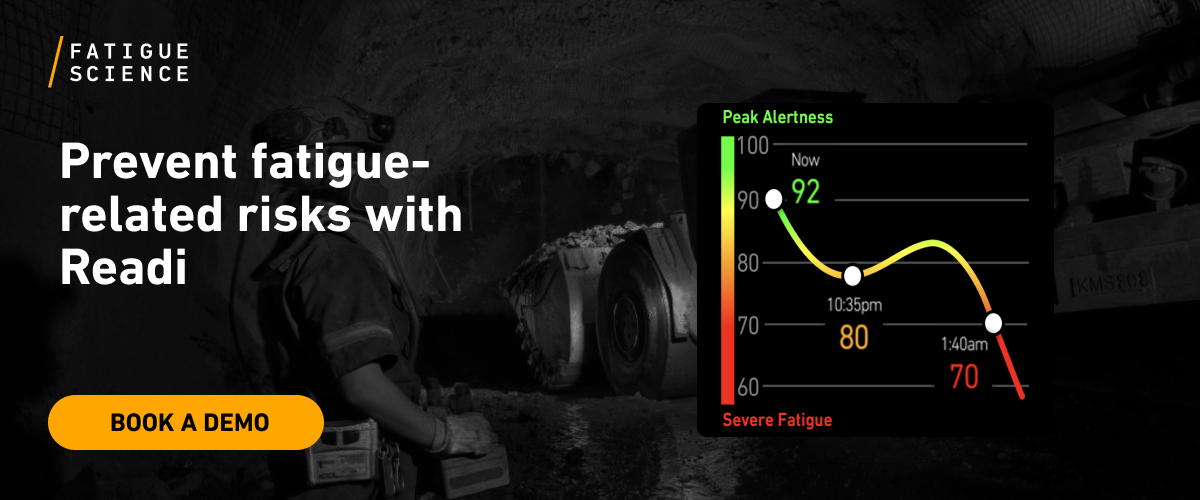
Predictive fatigue management adds a leading indicator to the safety stack. By modeling each driver's estimated sleep patterns, circadian rhythm, and schedule history, fleets can identify elevated fatigue risk before a shift begins. Tools like Readi use data from existing ELD systems to forecast fatigue risk in advance of shift, giving dispatchers and safety teams an earlier point of intervention without adding hardware or wearables.
Practical Strategies for Managing Fatigue Within HOS Rules
A fatigue risk management system should complement HOS compliance with operational controls that address the root causes of driver fatigue. Fleets that treat fatigue as an operational risk rather than a compliance checkbox tend to see fewer incidents and stronger driver retention.
Effective driver fatigue management strategies include:
- Scheduling high-risk routes outside circadian low windows when possible
- Using predictive fatigue data to flag drivers who may need schedule adjustments
- Training supervisors to recognize fatigue indicators during pre-trip interactions
- Integrating fatigue risk scores with existing telematics and camera platforms to prioritize coaching
Why HOS Rules Are Necessary but Not Sufficient
HOS regulations serve an essential purpose. They prevent the most extreme cases of overwork and create an enforceable standard across the industry. Violations carry real consequences, including fines, CSA score impacts, and out-of-service orders.
But fatigue science shows that compliance alone does not guarantee alertness. Circadian rhythms, cumulative sleep debt, and individual variability all influence cognitive effectiveness in ways that a 14-hour duty window cannot account for. The strongest hours of service fatigue management programs pair regulatory compliance with data-driven tools that measure actual fatigue risk at the individual driver level.
| Approach | What It Measures | When It Acts | |---|---|---| | HOS compliance | Duty and driving time limits | During and after the shift | | Camera and telematics alerts | Drowsiness events, lane departures, harsh braking | During the event | | Predictive fatigue management | Estimated sleep, circadian phase, cumulative fatigue | Before the shift begins |
Fleets that layer these approaches create a more complete safety program, one where compliance sets the floor, reactive tools catch in-the-moment risk, and predictive tools prevent risk from reaching the road in the first place.
How to build better hours of service fatigue management
Better hours of service fatigue management asks fleets to control two risks at the same time: legal duty-time exposure and actual fit-for-duty risk. In practice, that means HOS compliance must sit inside a fatigue risk management system that supports transportation safety across dispatch, supervision, and daily route planning.
HOS compliance and driver fatigue management strategies in daily operations
The daily routine should center on exception handling, not record review for its own sake. Safety teams, dispatchers, and supervisors need a clear view of which drivers face added risk from overnight runs, short recovery windows, rotating starts, or a dense sequence of duty periods so action can happen before telematics safety events show up in the cab.
- Safety leaders: review route groups, start-time patterns, and event timing to find repeat fatigue exposure that FMCSA regulations do not flag as a violation.
- Dispatch teams: protect sleep opportunity when they assign loads, especially after night work, early morning starts, or tight turnarounds.
- Frontline supervisors: respond to fatigue reports, adjust assignments, and document decisions so driver coaching and follow-up reflect the actual source of risk.
Fatigue management software helps turn those inputs into a usable daily workflow. Readi gives supervisors and operations teams on-demand visibility into workforce fatigue risk and performance, supports decisions about resource allocation, task planning, worker training, and scheduling, and can surface elevated fatigue periods in advance of shift so teams can change the plan while practical options still exist.
1. Start with what HOS rules are designed to do
The rules set legal operating limits
The purpose of FMCSA regulations under Part 395 is practical: cap exposure to long duty periods, require time away from work, and reduce the odds that fatigue ends in a crash or an out-of-service order. For hours of service fatigue management, that legal framework gives dispatch, safety, and frontline supervisors a shared set of limits for trip plans, route assignments, and driver availability.
Core elements fleets have to track include:
- Daily drive caps: limits on how much wheel time fits inside one work period.
- On-duty windows: boundaries on how long a shift can stay active once duty starts.
- Required pauses: breaks that interrupt extended stretches behind the wheel.
- Rolling weekly totals: cumulative limits across a 7-day or 8-day cycle.
Those controls support transportation safety, but they do not show whether a driver tried to sleep at the wrong body-clock hour, lost rest to a long commute, or carried short sleep across several days. An ELD record can stay clean while fatigue risk stays high in the cab, which is why strong HOS compliance does not replace a broader fatigue risk management system.
2. Treat HOS compliance as the floor, not the ceiling
Where compliance workflows fall short
Many fleets use ELD reports, recap hours, and violation alerts as the main control for hours of service fatigue management. That approach supports HOS compliance and audit readiness, yet it does not tell a dispatcher or supervisor whether the next assignment matches the driver’s likely level of alertness.
A legal off-duty block can still produce weak recovery. An overnight linehaul often pushes sleep into daylight hours, where noise, light, and home demands cut rest short; a week of mixed start times can shift sleep later one day and earlier the next; a pre-dawn dispatch can leave a driver with enough logged time off duty but too little real sleep before wheels roll.
- Logs answer one set of questions: Did the driver stay within the 11-hour, 14-hour, and weekly limits? Did the required break occur? Is the record ready for roadside review?
- Fatigue controls answer another set: Did the schedule allow a realistic sleep window? Did detention, unloading, or a late route change eat into recovery? Has the driver faced several reduced-rest days in a row?
Preventative fatigue management fills that gap. Fleet safety teams should review recurring schedule patterns even when no violation appears, such as early-start strings, overnight turns followed by short daytime rest, or dispatch plans that shift by several hours across the week. Those patterns often sit outside a simple pass-fail compliance view, yet they still shape transportation safety and driver performance.
Fatigue risk analytics help convert that pattern review into a repeatable process. With ELD integration, prior duty history, and dispatch timing in one view, supervisors can focus on exceptions instead of scanning every record; Readi supports that workflow with on-demand visibility into workforce fatigue risk and helps managers make scheduling, task allocation, and training decisions in advance of shift.
3. Plan schedules around sleep opportunity, not just available hours
Schedule quality shapes hours of service fatigue management before dispatch confirms a load. A route that ends late at night and restarts early the next morning may satisfy the log, yet detention, parking searches, meals, and post-trip tasks can cut the usable sleep window far below what the duty record suggests.
Build dispatch plans around usable rest
Route plans work better when mileage, appointment times, and handoff points match places where drivers can actually recover. Late receiver releases, uneven reload timing, and relay plans that shift report times by several hours from one day to the next often create unstable sleep patterns across the week.
- Add buffer before the next dispatch: Leave room for fueling, parking, paperwork, and basic recovery needs instead of assuming off-duty time turns into sleep at once.
- Keep report times within a narrow band: Repeated moves from pre-dawn starts to midday dispatch to overnight release times make sleep less predictable and reduce schedule tolerance.
- Check routes for sleep access: Long runs with poor parking availability, long dwell at customer sites, or limited lodging options often carry more fatigue exposure than mileage alone suggests.
A fatigue risk management system should review these schedule traits while planners still have options to change the work. Safety leaders, dispatchers, and supervisors can then use ELD records, route history, and service constraints to decide which loads need a different appointment time, a relay change, or a longer recovery gap before the next assignment.
4. Watch for high-risk fatigue patterns that HOS logs do not show
Hidden patterns in hours of service fatigue management
Hours of service fatigue management needs a second lens beyond legal duty status. A log can confirm when duty started and stopped, yet it cannot show whether a driver stayed awake too long before dispatch, lost sleep after a late unload, or reached the cab after a schedule that shifted back and forth across the week.
Several patterns deserve close review in a fatigue risk management system:
- Long wake time before first movement: a driver may report within HOS limits after many hours awake, which cuts alertness early in the trip.
- Rest that looks adequate on paper but breaks apart in practice: hotel check-in delays, home demands, and daytime sleep after a night run can reduce real recovery.
- Break periods that do not restore attention: a 30-minute pause may satisfy FMCSA regulations, but loading, fueling, and yard work can leave the driver more taxed than rested.
- Compressed weekly schedules: legal runs stacked across several days can produce slower judgment and reduced vigilance before any violation appears.
Operations teams often spot these exposures through pattern review rather than through a single log entry. A driver may show more camera activations near dawn, more late responses in dense traffic after the third consecutive run, or more steering corrections at the end of a demanding week.
Reactive tools rarely identify the cause at the point when dispatch can still adjust the plan. Some fleets use targeted wearable fatigue monitoring to study sleep behavior in pilot groups, while others use Readi to convert duty and schedule data into daily risk visibility in advance of shift for supervisors who need to decide which assignments carry the most exposure.
5. Use ELD data to support fatigue decisions, not just audits
ELDs give fleets a clean record of duty status, drive time, break use, and weekly hour totals. That record should feed daily transportation safety decisions, not sit in a compliance folder until an audit or roadside inspection.
ELD integration for driver fatigue management strategies
A useful review puts ELD data beside the rest of the operating picture:
- Duty-window compression: Delays at shippers, yard congestion, and long wait times can leave the legal duty window intact but shrink real recovery time before the next assignment.
- Weekly hour buildup: Drivers near the 60 or 70 hour limit often carry more strain into the last runs of the cycle, especially when several duty periods run close to the maximum.
- Route profile: Dense traffic, mountain corridors, weather exposure, and high stop counts create a different fatigue load than a simple highway lane of the same length.
- Event history: Camera alerts, speed variation, and repeated control errors near the same point in the trip can help supervisors separate routine coaching issues from fatigue-related patterns.
The strongest fleets use ELD integration to surface exceptions instead of forcing managers to inspect every log line by line. Readi fits that workflow by giving supervisors on-demand visibility into workforce fatigue risk and performance, which supports decisions on resource allocation, task planning, worker training, and scheduling.
That shift changes the role of HOS compliance data. Dispatch, safety, and frontline leaders can use it to decide who should take a demanding overnight route, who needs a lower-risk assignment after a compressed rest period, and where preventative fatigue management should start before the truck reaches the road.
6. Coach drivers and dispatchers on fatigue, not just violations
Teach fatigue recognition and response
Training for drivers should name the signs that show up before a crash or log violation: heavy eyelids, missed road signs, late braking, variable speed, short memory gaps, and trouble with lane control. It should also explain that fatigue changes judgment; once a driver has been awake too long or has lost sleep across several days, the ability to rate personal alertness drops.
A clear response path keeps service pressure from driving the decision: Readi overview brochure.
- Stop the assignment review: the load should not move until operations has checked the fatigue report.
- Look at recent duty history: review prior start times, overnight work, split sleep, and time awake before duty.
- Pick the control: delay release, swap the route, shorten the run, or assign a lower-risk task.
- Write down the outcome: keep a record of the report, decision, and follow-up so repeat patterns become visible.
Dispatch staff and shift supervisors need the same instruction. A trip can sit inside FMCSA regulations and still create high fatigue exposure after a late load change, a yard delay that cuts into sleep time, or a run that follows several early starts.
That coaching should cover schedule design as well as communication. Dispatchers need to know when a legal plan becomes a poor plan, and they need authority to adjust it without waiting for a harsh event, roadside stop, or missed delivery to prove the point. Readi can support that process by giving operations teams on-demand visibility into workforce fatigue risk for task planning, worker training, and scheduling decisions.
A strong transportation safety culture treats fatigue the same way it treats equipment defects, bad weather, or an unsafe route. The report goes in; the risk gets reviewed; the team takes action; the record stays with the trip so the next decision starts with better information.
7. Connect telematics safety events back to fatigue risk
Read events in context, not in isolation
Harsh braking, rapid acceleration, lane departures, and camera alerts often look like conduct issues in a weekly safety review. In hours of service fatigue management, those same telematics safety events also warrant a fatigue check, because reduced alertness often appears as late corrections, uneven speed control, and poor lane control before a crash or HOS violation.
Supervisor review should start with context:
- Time of event: note whether the trigger occurred between midnight and dawn, in the last part of a legal duty period, or after several dense workdays.
- Work pattern: check prior off-duty blocks, sleeper berth use, route delays, and dispatch changes that cut into real sleep opportunity.
- Event mix: one camera alert may reflect traffic conditions; a series of lane deviation, hard braking, and unstable speed points to a broader fatigue pattern.
That comparison gives fleets an earlier warning sign for transportation safety. When teams line up event timing with HOS compliance, rest opportunity, and trip demands, driver coaching becomes more precise; the response for a vehicle handling issue differs from the response for an attention lapse tied to fatigue.
8. Build a fatigue risk management system around HOS operations
Define the system inside fleet workflow
A fatigue risk management system is a structured process for daily control of fatigue exposure across HOS operations. It brings together policy, training, driver reporting, schedule review, and decision support so dispatch, safety, and operations teams use the same rules when fatigue risk rises.
Rather than sit in a separate wellness program, the system should fit routine fleet work. Dispatch uses it before load assignment; supervisors use it during pre-trip review; safety teams use it during incident analysis; operations leaders use it when they review route design, start-time volatility, and repeat high-risk runs.
Assign action by role
- Safety leaders: own policy, set review standards, and track fatigue-related incidents, telematics safety events, and recurring schedule exposure across terminals or fleets.
- Operations managers: decide when to resequence loads, swap drivers, adjust start times, or protect rest opportunity after delays, weather, or long detention.
- Frontline supervisors and dispatchers: review flagged cases, document the response, and confirm follow-through after the trip, event, or schedule change.
- Drivers: report fatigue early, use the escalation path, and follow the approved rest, reassignment, or delay plan.
Readi can support that structure with on-demand visibility into workforce fatigue risk and performance. The same insight can inform resource allocation, task planning, worker training, and scheduling, which helps teams act through existing safety and dispatch routines instead of a separate manual process.
Clear ownership reduces delay at the point of decision. In logistics and other high-hazard sectors, a missed fatigue signal can affect more than the driver; it can affect the public, the load, the vehicle, service levels, and liability exposure during night runs, poor weather, or long-distance operations.
Strong hours of service fatigue management depends on consistent rules for who reviews elevated risk, who can change the plan, and how the action gets recorded. That structure gives fleets a fatigue risk management system that supports FMCSA regulations and keeps transportation safety tied to daily operating decisions.
9. Add predictive fatigue management to close the gap
Predictive fatigue management within HOS compliance
Predictive fatigue management applies sleep science to planned work so fleets can estimate where alertness may drop across an upcoming duty period. For hours of service fatigue management, that gives dispatch, safety, and supervisors a practical way to test a legal trip plan against likely human performance, especially on overnight routes, compressed turnarounds, and multi-day schedules with uneven start times.
- Route swap: Move a demanding night run or long final leg to a driver with a lower projected fatigue burden for that day.
- Release adjustment: Shift a departure time when a planned start leaves too little real sleep opportunity after the prior duty cycle.
- Protected rest plan: Place a break before the part of the route with the highest traffic density, hardest backing conditions, or longest continuous drive.
- Load sequence change: Rework delivery order so the most safety-sensitive stops happen earlier, before alertness drops.
- Supervisor focus: Flag repeat patterns such as stacked early starts or consecutive overnight assignments for pre-trip review and follow-up.
Readi fits this layer of preventative fatigue management by giving operations teams and frontline supervisors on-demand visibility into fatigue risk and workforce performance. That supports day-to-day decisions on resource allocation, task planning, worker training, and scheduling, which helps turn HOS compliance data into a usable fatigue risk management system for transportation safety.
10. Measure success with both compliance and risk outcomes
Track legal exposure and operating risk together
Once controls are in place, score the program with two sets of measures. One set should cover logbook errors, duty-limit breaches, and other exposure tied to FMCSA regulations; the other should show what happens in live operations, where fatigue affects vehicle control, supervisor workload, and preventable loss.
- Regulatory performance: review driving-hour violations, missed breaks, false records, and out-of-service cases by driver, terminal, and week.
- Road-risk indicators: track fatigue-linked incidents, video-trigger frequency, near misses, and preventable crash rate by lane, customer, and shift type.
- Workforce response: count fatigue reports, pull-over decisions, route reassignments, and coaching case volume so leaders can see whether drivers and supervisors use the process.
A fleetwide average rarely shows where the real problem sits. Compare overnight routes, pre-dawn dispatch times, long-haul groups, and operations with unstable start times; those patterns often carry more risk than daytime runs with steady schedules.
Use before-and-after comparisons instead of isolated totals. The core measures stay the same when a fleet adds predictive fatigue management, but the value appears in better trip plans, fewer exception reviews, and lower event rates within the same operating groups over time.
Readi gives supervisors on-demand visibility into workforce fatigue risk and performance, which helps with resource allocation, task planning, worker training, and scheduling. The strongest programs rely on leading indicators that surface elevated risk early, so dispatch and safety teams can make better decisions before a route ends in an inspection, a loss, or a claim.
How to manage hours of service fatigue: Frequently Asked Questions
What are the Hours of Service regulations and how do they relate to driver fatigue?
Hours of Service regulations are the FMCSA work and rest rules under Part 395 for commercial motor vehicle drivers. In hours of service fatigue management, they shape duty windows, break timing, weekly caps, sleeper berth use, short-haul exceptions, and ELD records that support HOS compliance.
Their link to driver fatigue sits in exposure control. The rules can curb extreme work periods, yet they do not account for night work, long commute time, untreated sleep disorders, or poor sleep before duty, so a legal schedule can still create transportation safety risk.
How can fleets effectively manage driver fatigue within HOS limits?
Fleets usually get better results when they treat hours of service fatigue management as a dispatch and supervision task, not only a logbook task. Strong driver fatigue management strategies often include:
- Trip plans with real margins: detention, traffic, weather, and parking all cut into usable sleep time when dispatch leaves no buffer.
- Stable start times where possible: frequent shifts between day runs, early starts, and overnight departures can erode sleep across the week.
- Clear fatigue escalation: drivers need a simple path to report unsafe alertness levels without pressure tied to service or miles.
A fatigue risk management system helps align those decisions across safety, dispatch, and frontline leaders so the same risk does not get handled three different ways.
What are the consequences of violating HOS regulations regarding fatigue?
The direct consequence can start at roadside with an out-of-service action that stops the load and disrupts the route. A pattern of violations can also trigger deeper audit scrutiny, create tension with insurers, and raise legal exposure after a crash when logs, dispatch records, fuel receipts, and messages all come under review.
Fatigue adds another layer because federal rules also prohibit operation when illness or fatigue makes driving unsafe. That means a carrier may face questions not only about log accuracy, but also about whether the trip plan, dispatch pressure, or supervisor decisions placed the driver in a condition unfit for duty.
What strategies can be implemented to reduce fatigue-related incidents?
The most effective controls usually sit upstream from the event itself. Fleets can review when incidents cluster by hour of day, route type, terminal, customer dwell time, and duty sequence; that pattern often shows whether the issue comes from schedule design, medical factors, or poor recovery time between runs.
Some operations also add sleep health education, medical follow-up for issues such as sleep apnea, and targeted studies with wearable fatigue monitoring for high-risk groups. Those steps support preventative fatigue management because they expose risk that a standard log review will never show.
How do predictive fatigue management systems integrate with HOS compliance?
Predictive fatigue management works best when it pulls from the same operational data that already supports HOS compliance: ELD duty status, prior duty history, dispatch timing, and route demands. Instead of a simple pass or fail view, the system produces a daily exception list that helps supervisors decide who should take a long night run, who needs a schedule change, and where driver coaching should focus.
Readi fits that workflow by giving supervisors on-demand visibility into fatigue risk and performance, along with support for resource allocation, task planning, worker training, and scheduling. In practical use, that means a fleet can spot elevated risk in advance of shift and act before a camera alert, lane event, or harsh-braking record forces the issue.
Fleets that already invest in cameras, ELDs, and telematics have built a strong foundation for catching risk on the road. The missing piece for most operations is a reliable way to identify that risk before dispatch confirms the load. Adding a predictive layer to hours of service fatigue management gives safety teams, supervisors, and dispatchers a shared view of fatigue exposure that HOS logs and reactive alerts cannot provide on their own.
Readi forecasts fatigue risk in advance of shift and integrates with existing ELD systems, requiring no wearables or new hardware. In a large U.S. logistics pilot, fleets using Readi reduced fatigue-linked in-cab telematics events by 42% compared with an identical driver group.
Book a demo to explore how predictive fatigue management software can improve safety and productivity across your fleet.
Frequently asked questions
What is the 7/3 rule in trucking?
The article does not cover a "7/3 rule." FMCSA hours of service rules instead cap driving at 11 hours after 10 consecutive off-duty hours and require a 30-minute break after 8 cumulative driving hours. The split-sleeper berth provision also pairs a 7-hour sleeper berth period with a shorter 2- or 3-hour off-duty or sleeper period, which drivers often shorten to "7/3" or "7/2."
What is trucker syndrome?
"Trucker syndrome" is not a medical term in this article, but it points to the fatigue risks drivers face, including sleep debt, circadian disruption, and fragmented rest. These factors impair alertness even when a driver stays within legal HOS limits.
Can truck drivers stay HOS-compliant and still be too fatigued to drive?
Yes, drivers can meet every FMCSA limit and still start a shift with sleep debt from poor rest quality, long commutes, or rotating schedules. HOS rules assume off-duty time equals sleep, so night driving, split-sleeper use, and back-to-back maximum-hour shifts still produce impairment.
How can fleets reduce fatigue risk beyond HOS compliance?
Fleets layer predictive fatigue management onto HOS compliance and reactive telematics alerts, using ELD data to forecast fatigue risk in advance of shift. In a large U.S. logistics pilot, this approach reduced fatigue-linked in-cab telematics events by 42% compared with an identical driver group.
Related resources