
Key Takeaways
- A fatigue policy for trucking fleets treats fatigue as an operational risk managed by the organization, not just a personal driver responsibility or hours of service compliance checkbox.
- Hours of service regulations set minimum rest requirements but cannot account for sleep quality, circadian timing, or accumulated sleep debt, which is why effective policies combine ELD data with predictive fatigue management tools.
- Scheduling controls that address consecutive overnight assignments, short recovery periods, and irregular start times prevent fatigue exposure before it becomes a safety event.
- Measuring policy effectiveness requires tracking both leading indicators like predicted fatigue scores and lagging indicators like crash rates to identify trends before incidents occur.
Fatigue Policy for Trucking Fleets: A Practical Guide for Fleet Safety Leaders
A fatigue policy for trucking fleets is a formal set of rules, procedures, and controls that reduces the risk of fatigued drivers operating commercial vehicles. An effective policy combines compliance with fatigue regulations, scheduling controls, driver coaching programs, and fatigue risk management system practices to prevent fatigue-related incidents and protect both drivers and the public.
See how Readi integrates with major ELDs for personalized driver fatigue prediction. Read the whitepaper.
Too many fleets treat fatigue as a personal responsibility or a simple hours of service regulations checkbox. A strong fatigue policy for trucking fleets treats fatigue as an operational risk that touches safety, productivity, fuel costs, and liability exposure. When fatigue goes unmanaged, fleets see more harsh braking events, higher insurance premiums, and greater exposure to catastrophic litigation. Explore driver fatigue management technology built for safety-sensitive operations. For a concise product overview, see the Readi overview brochure.
The difference between a compliance-only approach and a true driver fatigue management program is the difference between tracking hours logged and understanding whether a driver is actually fit to operate. Hours of service regulations set minimum rest requirements, but they cannot account for sleep quality, circadian timing, or accumulated sleep debt. A fatigue policy for trucking fleets should address all of these factors through clear transportation safety policies that assign responsibility across drivers, dispatchers, supervisors, and leadership. EHS teams evaluating solutions can use the buyer’s guide to fatigue risk management software. Related reading: using telematics to monitor HOS violations.
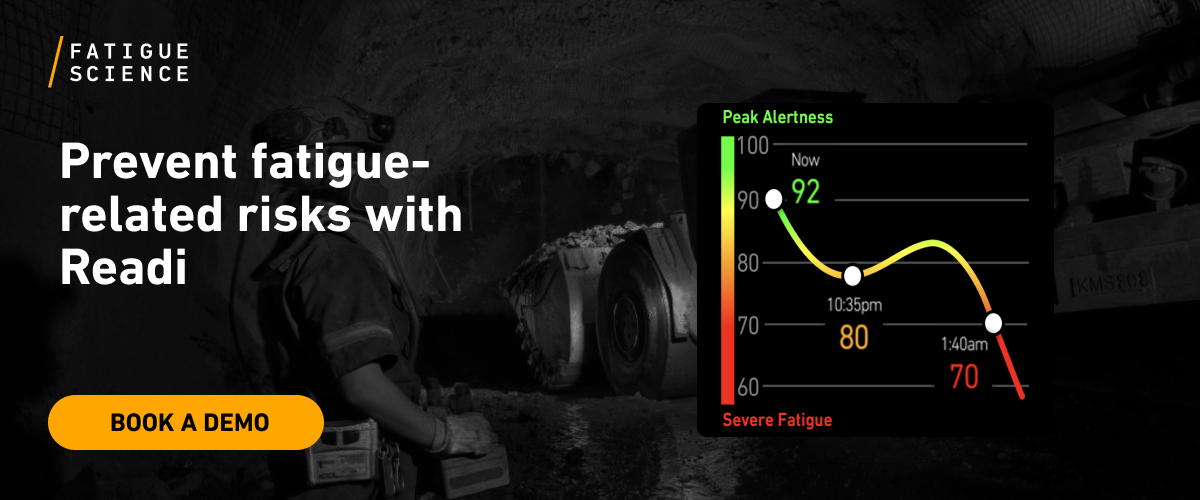
Fleets that already invest in fleet safety technology like cameras and telematics are well positioned to layer in preventative fatigue management. Tools such as Readi can forecast fatigue risk in advance of shift using ELD data, giving supervisors a leading indicator before a driver reaches a high-risk point on their route. This kind of predictive fatigue management moves intervention upstream, before a camera or telematics alert ever fires.
A practical fatigue policy for trucking fleets should include these core components:
- A clear statement that fatigue is a workplace hazard managed by the organization, not just the driver
- Defined roles and responsibilities for drivers, dispatchers, safety managers, and executives
- Scheduling guidelines that account for circadian low points, especially between 2:00 a.m. and 6:00 a.m.
- A reporting process that allows drivers to flag fatigue without fear of discipline
- Integration with existing driver coaching programs so fatigue data informs post-trip reviews
Beyond policy language, implementation matters. Fleets that succeed with fatigue risk management systems build fatigue into their daily operational workflows rather than treating it as a standalone safety topic. That means dispatchers review fatigue risk alongside route assignments, and supervisors use fatigue data when making go or no-go decisions about a shift.
Measuring policy effectiveness requires tracking both leading and lagging indicators. Lagging indicators like crash rates and injury counts tell you what already happened. Leading indicators like predicted fatigue scores and sleep opportunity windows tell you what is likely to happen next. Fleets that track both can identify trends early and adjust schedules, routes, or rest opportunities before incidents occur.
A fatigue policy for trucking fleets is only as strong as the culture that supports it. Drivers need to trust that reporting fatigue will lead to support, not punishment. Supervisors need clear authority to adjust assignments based on risk data. And leadership needs to see fatigue management as a measurable contributor to operational performance, not just a regulatory obligation.
How to create an effective fatigue policy for trucking fleets
Build a fatigue policy for trucking fleets with compliance and preventative fatigue management
A practical fatigue policy for trucking fleets should read like an operating document, not a handbook placeholder. Fleet leaders need language that fits terminal dispatch, overnight linehaul, customer delays, team runs, and the fatigue exposure that builds across several duty periods.
A strong policy should set three clear targets:
- Support compliance with fatigue regulations: Anchor the policy to hours of service regulations, fit-for-duty expectations, and internal transportation safety policies so every role works from the same baseline.
- Control predictable fatigue exposure: Address the schedule patterns that raise risk in trucking, including consecutive night work, short recovery periods, irregular start times, waiting time at docks, and heavy delivery pressure.
- Standardize field decisions: Give dispatchers, supervisors, and safety staff clear actions for load changes, delay approval, relief planning, and fatigue reporting so one terminal does not handle the same risk differently from another.
That structure helps a fatigue risk management system work in daily operations. It also keeps driver fatigue management from falling onto the driver alone, which is a common weakness in compliance-only programs.
The goal should stay operational and specific: fewer unsafe schedule combinations, fewer preventable fatigue-related incidents, and steadier transportation safety outcomes across the fleet. Fleets with existing fleet safety technology and driver coaching programs can then connect the policy to the tools they already use instead of adding another disconnected process.
1. Define fatigue as a fleet safety risk
Driver fatigue management starts with a clear policy definition
A clear fatigue definition should sit near the top of the policy. In trucking, fatigue is a state of reduced alertness that limits safe vehicle control and weakens the mental skills a driver needs for speed choice, space management, hazard detection, and route judgment.
This section should also separate legal status from actual readiness to drive. ELD records show duty status and available hours, but they do not show sleep opportunity, circadian disruption from night work, or cumulative sleep debt across several days, all of which can raise fatigue risk even with full compliance with fatigue regulations.
- Reaction time: brake application comes later, and recovery after a traffic change takes longer.
- Attention: lane position, mirrors, signs, and traffic flow receive less consistent scanning.
- Decision-making: gap selection, speed adjustment, and response to delivery pressure become less reliable.
For that reason, the policy should classify fatigue as a leading fleet safety risk within the broader fatigue risk management system. A strong driver fatigue management program directs supervisors to review fatigue exposure before harsh braking, lane departure, or a driver complaint becomes the first signal; predictive fatigue management tools such as Readi support those decisions with on-demand visibility into fatigue risk and performance, plus forecasts in advance of shift.
2. Set the scope of the policy
Cover every operating model
The policy should name each part of the fleet that falls under the rule set: long-haul, regional, local, dedicated, night-route, and team-driver work. Include owner-operators, contractors, slip-seat assignments, and temporary coverage roles when they run under company dispatch or on company accounts.
Scope also needs an exposure lens. Spell out the operating conditions that raise risk in your network, such as overnight highway runs, 3:00 a.m. to 6:00 a.m. delivery windows, rotating bid schedules, back-to-back dawn starts, extended detention, irregular route release times, and peak-volume weeks that compress recovery time between duty periods.
Name each accountable function
- Drivers and team drivers: follow the policy on pre-trip readiness, escalation, and stop-work authority when alertness drops below a safe level.
- Dispatch and load planning staff: check trip timing, customer appointment windows, and handoff plans before a load leaves the board.
- Terminal managers and fleet supervisors: approve schedule changes, secure relief options, and document any exception to standard limits.
- Safety and compliance staff: maintain the policy, verify field use, and flag terminals or accounts with repeat exposure patterns.
A workable scope should cover the full operation without vague language. A local P&D fleet with 4:00 a.m. starts needs different controls than a team truck on a two-night linehaul route, so the policy should map expectations by operation type, account, and terminal rather than rely on one broad statement for every route.
3. Align the policy with regulatory requirements
Hours of service regulations and internal policy controls
Use FMCSA hours of service regulations as the policy floor, then add fleet-specific rules that address the way freight actually moves through your network. The written policy should reference the 11-hour driving limit, the 14-hour duty window, required rest breaks, sleeper berth use, and the 60/70-hour limits; it should also show how those rules connect to dispatch approval, trip planning, and exception handling inside your transportation safety policies. ELD integrations.
ELD records give the fleet a reliable record of duty status, drive time, break timing, and route progress. They do not show whether the driver slept well, lost sleep across several days, worked through a circadian low, or came out of a long detention period with reduced alertness. A compliant log can still sit next to elevated fatigue exposure, which is why driver fatigue management should place ELD review inside a broader fatigue risk management system.
- Dispatch review should start before release: A planner or supervisor should check trip timing when a load pushes most drive time into the overnight window, follows a short restart, or stacks early departures across consecutive days.
- Supervisors should intervene on schedule strain: Step in when customer appointments, yard delays, weather, or border waits force a legal route into a much later finish than planned.
- Internal rules should cover compliant but high-risk trips: The policy can require approval for routes with extended detention before night driving, split sleep patterns, or low recovery time between duty periods.
The goal in this section is clear policy language that tells operations teams when compliance with fatigue regulations is not enough for release. That approach supports preventative fatigue management, keeps fleet safety technology and ELD integration in the right role, and gives supervisors a consistent basis for load changes, delay approval, and documented escalation when route conditions raise the chance of fatigue-related incidents.
4. Identify the main fatigue risk factors in your operation
Once the policy sets expectations and the compliance baseline is clear, the next step is a fleet-level review of where fatigue exposure actually enters the workday. A useful review looks at dispatch times, detention records, appointment windows, route variability, and the amount of recovery time drivers receive across several days, not just within one duty period.
Map the patterns that raise fatigue exposure
- After-midnight runs and overnight delivery windows: These routes place drivers on the road when alertness often drops, which can increase missed traffic cues and slower hazard response.
- Successive early dispatches: Several sign-on times in the pre-dawn hours can shrink sleep opportunity even when hours of service regulations remain intact.
- Broken rest tied to live loads, yard moves, or check calls: Split sleep rarely offers the same recovery value as one stable sleep period.
- Extended dock or border waits before a long drive segment: Time spent waiting can leave drivers mentally drained before the main portion of the trip even starts.
- Unstable start times across the week: A driver who starts at 4 a. week one day, noon the next, and midnight after that has little chance to keep a reliable sleep routine.
- High customer pressure and tight delivery promises: Strong service pressure can push rushed lane changes, missed route checks, and poor judgment late in the shift.
Each fleet should compare these patterns by terminal, account, and route type. Long-haul teams, regional relay networks, dedicated retail work, and local pickup-and-delivery operations often carry different exposure points, so one blanket assumption usually hides the real problem.
Connect fatigue exposure to operating signals
Fatigue risk rarely appears first as a formal incident report. It often shows up earlier through telematics safety events, delayed control inputs, missed exits, late braking, unstable speed control, and repeat coaching cases tied to the same lanes or appointment times.
A practical fatigue policy for trucking fleets should require leaders to review these signals against route design and schedule structure. When a pattern repeats after short recovery periods, during overnight runs, or following long dwell time, the issue sits with the operation as much as the driver. That is where preventative fatigue management starts to support better transportation safety policies and stronger driver fatigue management decisions.
Supervisors who need examples of how sleep loss, schedule disruption, and time-of-day effects shape risk can use the fatigue management blog as a training reference during safety meetings. It gives planners, dispatch leaders, and safety managers a clearer view of fatigue patterns that do not show up in ELD records alone.
5. Define roles and responsibilities
A fatigue policy only works when each decision has a clear owner. In trucking, fatigue risk can start with sleep loss, grow through dispatch pressure, and show up on the road long after the original cause, so the policy should assign duties at each step.
Driver duties
Drivers need exact instructions, not broad language about “using good judgment.” The policy should require a driver to report reduced alertness before dispatch, after a long shipper or receiver delay, after split sleep in the sleeper berth, or after any off-duty period that did not allow real sleep. It should also require the driver to stop work when alertness falls to an unsafe level, follow the fleet’s report process, and wait for a revised plan from operations.
Driver duties should also cover factors that do not appear in hours of service records. A strong driver fatigue management policy should tell drivers to disclose sleep restriction from prior days, illness that affects alertness, use of sedating medication, and repeated warning signs such as missed turns, drifting attention, or trouble with routine checks.
Dispatcher and supervisor duties
- Review risk before release: check overnight route segments, repeated early starts, long dwell time before departure, tight appointment windows, and route plans that leave little room for rest.
- Adjust the work plan: change load order, delay dispatch, reassign the trip, or move delivery commitments when fatigue exposure rises.
- Use neutral language: the policy should ban comments or practices that make a driver think a fatigue report will lead to punishment, fewer miles, or poor future load access.
- Document each case: note the trigger, the response, and the terminal, lane, or customer involved so repeat patterns become visible.
Safety leader duties
Safety leaders should own the control system behind the policy. Their role should include monthly review of fatigue reports, ELD patterns, dispatch exceptions, telematics safety events, and preventable crash data by terminal, route type, and customer account. That review can show where risk clusters form, such as late-night departures after long wait times or repeated short rest periods on the same account.
Policy upkeep should also sit with safety leadership. They should audit whether supervisors follow the written response steps, check whether corrective actions close on time, and update transportation safety policies when routes, staffing, or service demands shift. In fleets that use predictive fatigue management and other fleet safety technology, safety leaders should compare those signals with coaching records and fatigue-related incidents so the fatigue risk management system reflects actual operating conditions.
6. Create a fit-for-duty and self-reporting process
Driver fatigue management response steps
A usable process starts with clear trigger points and a standard intake. Drivers should complete an alertness check before dispatch, contact operations when alertness drops on the road, and reopen the check after any disruption that cuts planned sleep, such as detention, a breakdown, a route swap, or a weather delay.
- Before a shift: report short sleep, split rest that did not restore alertness, a late schedule change, a medication issue, or several early starts in a row.
- During a route: report missed exits, heavy eyelids, lane drift, trouble with speed control, or a need for repeated caffeine stops to stay awake.
- After a schedule disruption: report long shipper delays, border waits, equipment problems, traffic closures, or any change that reduces the next rest window.
The report should move through the same operations channel every time so no one loses time on the call tree. Dispatch or supervision should capture the location, the last off-duty period, the event that changed the driver’s condition, and whether safe parking or load relief is required.
What happens after a report
Once a report comes in, the next step is an operations review, not a debate. The person in charge should check hours of service status, appointment time, route length, night exposure, customer constraints, and parking options; then choose a control that fits the risk. That may mean a dispatch hold, stop resequencing, load transfer, relay plan, appointment reset, extra rest time, or trip shutdown until the driver can resume safely.
The policy should also protect the report itself from penalty when the concern is legitimate. A valid fatigue notice should not trigger points, bonus loss, or negative dispatch notes; any misuse review belongs in a separate process. Each case should leave a record of the report, the decision, and the result so safety leaders can spot weak follow-through, inconsistent terminal decisions, and route patterns that keep the same fatigue problems in place.
7. Build in preventative scheduling rules
Policy language should set schedule standards before loads hit the board. Strong driver fatigue management starts with route timing, shift spacing, and recovery windows that support alertness before the first mile.
Scheduling guardrails for route and duty planning
- Cap consecutive overnight assignments: set limits on runs that place drivers on duty through the early-morning low point, then require a recovery break before the next similar assignment.
- Set minimum recovery buffers across multi-day sequences: flag patterns with compressed off-duty windows, split sleep, or repeated early starts, even when ELD logs show compliance with fatigue regulations.
- Restrict abrupt start-time reversals: block schedules that move a driver from a late finish to a very early report time the next day, since those changes reduce total sleep and weaken decision quality.
Load planners should assess exposure across several duty cycles, not only the current dispatch. Night work, waiting time at shippers, traffic delays, and customer appointment pressure can
Teams that combine route plans, ELD integration, and predictive fatigue management have a better view of schedule risk before trucks leave the yard. Readi gives supervisors visibility into fatigue risk in advance of shift and helps operations teams make more consistent scheduling decisions without extra hardware. EHS buyer’s guide to Readi fatigue risk management software.
The policy should also trigger schedule review after disruptions such as weather delays, detention, missed delivery windows, or last-minute load swaps. A route that looked workable at planning stage can become unsafe once rest time shrinks or duty time shifts deeper into the night.
8. Use predictive and operational data together
Once the policy covers reporting, scheduling, and supervisor response, the next step is a shared data view. Dispatch plans, ELD timestamps, route duration, stop density, dock delays, and recent duty patterns should sit in one workflow so a terminal can spot exposure before a truck enters the highest-demand part of the trip.
Build one view of exposure
- Schedule inputs: start time, end time, sequence changes, split sleeper use, and back-to-back short resets that reduce sleep opportunity across several days.
- Route inputs: overnight mileage, customer appointment windows, border or terminal waits, mountain routes, weather exposure, and periods with low parking availability.
- Driver history: recent self-reports, missed rest opportunities, repeated delay patterns, and prior coaching tied to alertness-related driving behavior.
- System data: ELD logs, telematics trends, dash-cam events, and biomathematical fatigue models that help estimate when performance is most likely to drop.
Forecast-based fatigue controls give operations a forward view that a compliance-only process cannot provide. A driver may stay within legal duty limits and still carry sleep debt from repeated 4:00 a.m. starts, two disrupted sleeper periods, or a route flip from daytime work to overnight delivery. When that risk appears early, dispatch can change load order, shift appointment times, approve added recovery time, or assign a different driver before performance falls.
Reactive tools still serve a purpose, but they rely on evidence that shows up late in the chain: a lane drift clip, a sudden braking event, a late response in traffic, or a fatigue complaint from the cab. More mature fatigue risk management systems support steadier decisions because they combine operational context with forecasted exposure, rather than leaving each supervisor to interpret isolated alerts. Readi supports that approach by giving operations and safety teams on-demand visibility into workforce fatigue risk and performance, plus forecasts in advance of shift.
9. Connect the policy to fleet safety technology and coaching
Put technology inputs into one review path
A strong fatigue policy should tell supervisors how to use each safety system, in what order, and for what purpose. ELDs verify duty status, restart history, break timing, and route delays; telematics and dash-cam footage show where control errors surfaced on the road, such as late braking, lane drift, or unstable speed control.
- Start with duty and schedule context: Review recent start times, overnight work, detention, split sleep, and short recovery periods before looking at the event itself.
- Add event evidence: Pull the camera clip, telematics record, and route segment so the supervisor can see whether the issue fits a fatigue pattern or another driving risk.
- Set one action record: Log the response in one place so dispatch, safety, and terminal leadership work from the same case history.
This structure helps a fatigue risk management system support daily decisions instead of separate reviews across separate tools. It also keeps transportation safety policies consistent across terminals, which reduces guesswork when the same type of event shows up in different parts of the fleet.
Use coaching to fix the right problem
Driver coaching programs should sort fatigue-linked events by cause, not only by severity. A single event during a stable workweek may call for routine coaching, but a cluster of events after repeated early starts, night miles, or long wait times points to a dispatch or schedule control issue that needs a different response.
A policy should require supervisors to choose from a defined set of actions: coaching, dispatch adjustment, load resequencing, added rest time, or escalation to safety leadership. Readi supports that process by giving operations and supervisors on-demand visibility into workforce fatigue risk and performance, which helps with resource allocation, task planning, worker training, and scheduling. Over time, those records show whether corrective action reduced fatigue-related incidents or whether the same route and timing patterns keep creating avoidable exposure.
10. Write clear response steps for elevated fatigue risk
A written response matrix removes guesswork after a fatigue alert or a fit-for-duty report. Each terminal should follow the same sequence so load decisions do not change from one dispatcher or shift lead to the next.
Response matrix by risk level
- Low exposure: confirm the last off-duty period, check the planned route against the duty window, adjust stop order where a later delivery creates a better rest margin, and note the check in the trip record. Keep the assignment only when no other warning signs appear.
- Moderate exposure: hold the departure, move appointment times where possible, cut extra yard or loading tasks, add a planned rest break, or swap delivery order to reduce pressure during circadian low periods. Pass the case to the next operations lead before shift handoff.
- High exposure: remove the driver from the trip, reassign the load, split the route, or move the freight to a later departure. Send the case to the safety lead at once when the trip includes overnight travel, recent safety events, or a prior fatigue report.
The policy should also name who can approve each action and how fast that approval must occur. A short record in the dispatch system should capture the source of the risk flag, the action taken, the person who approved it, and the time the load returned to plan; that level of detail supports compliance with fatigue regulations and keeps the fatigue risk management system consistent across regional, local, and long-haul operations.
11. Train supervisors and drivers on the policy
Put training into the rollout plan
Policy launch should include role-based instruction from the first day. Drivers, dispatch, and terminal leaders need short training tied to real fleet decisions such as pre-trip release, late customer appointments, sleeper berth splits, weather delays, and roadside fatigue reports.
- Drivers: cover basic sleep need, circadian low periods, common fatigue cues such as missed exits, drifting speed, narrow scanning, and delayed responses; then walk through the exact report path for pre-shift concerns, mid-route risk, and post-delay documentation.
- Supervisors: cover how restricted sleep affects attention, hazard recognition, and judgment; use examples that involve load swaps, detention time, and service pressure so responses stay consistent across terminals.
- Dispatchers: cover realistic trip timing, handoff quality, and when hours of service regulations permit movement but fatigue exposure still calls for a change in plan.
Keep skills current with scenario practice
One training session will not hold up under live freight pressure. Short refreshers, case reviews, and fatigue management webinars help crews stay sharp, especially in fleets that run overnight lanes, rotating starts, or irregular delivery windows. For operations that use predictive fatigue management, supervisors should learn how to read risk scores next to ELD logs, route order, and recent disruptions so they can make better calls before a driving error turns into one of the fatigue-related incidents the policy aims to prevent.
12. Measure results and update the policy
Review exposure, outcomes, and policy use
A fatigue policy for trucking fleets should go through a scheduled performance review at the terminal and fleet level. Monthly checks work well for route and dispatch patterns; quarterly checks help safety leaders test whether driver fatigue management controls hold across seasons, customers, and operating groups.
- Exposure measures: fatigue reports, consecutive night assignments, repeated early starts, long dwell periods before final delivery, split sleep patterns, and short off-duty windows between demanding runs.
- Outcome measures: telematics safety events, preventable crashes, near misses, missed turns, hard braking clusters, cargo loss tied to driver error, and other fatigue-related incidents.
- Process measures: time to supervisor response after a fatigue report, number of loads reassigned, delay approvals tied to fatigue risk, coaching completion rates, and follow-up reviews after schedule exceptions.
Use these measures to test whether transportation safety policies change field decisions or just add administrative work. Compare terminals, route families, customer accounts, and shift bands. A fleet may show clean hours of service regulations records and still carry high exposure from overnight delivery windows, late dispatch changes, or recurring short recovery periods.
Policy updates should follow operating change, not wait for a serious event. New lanes, tighter appointment windows, labor shortages, growth in team operations, or changes in fleet safety technology can all shift fatigue exposure. Readi can support that review with on-demand visibility into workforce fatigue risk and performance, which helps supervisors and operations leaders adjust task planning, training, scheduling, and resource allocation with better consistency.
A fatigue policy earns its value when it changes daily decisions at the terminal, not when it sits approved in a shared drive. The fleets that reduce fatigue-related incidents over time are the ones that connect policy language to dispatch workflows, supervisor authority, and the data their existing systems already produce. Readi supports that connection by forecasting fatigue risk in advance of shift, giving operations teams a leading indicator that works alongside cameras, telematics, and ELD records without adding hardware or wearables.
Book a demo to explore how predictive fatigue management software can improve safety and productivity across your fleet.
Related resources