
Fleet Management

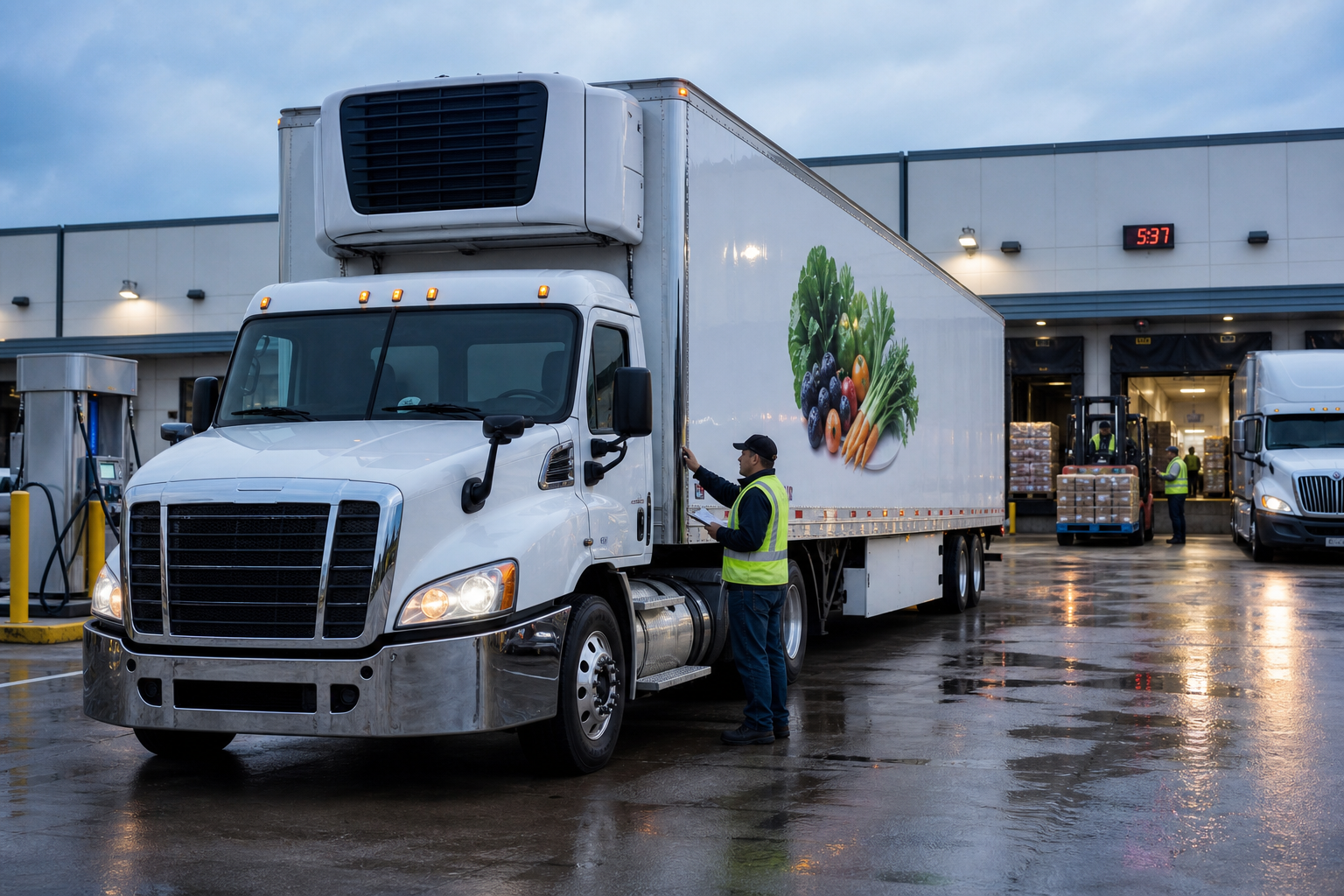
Reefer trucking ELD compliance refers to the set of FMCSA ELD compliance regulations that require refrigerated carriers to use certified electronic logging devices to record driver hours of service. These ELD compliance regulations apply to reefer trucks under the same federal framework as dry freight carriers, with added operational complexity from temperature-sensitive loads and tight delivery windows.
Refrigerated trucking ELD requirements follow the same core mandate that governs all interstate commercial motor vehicles. Drivers must use a registered ELD to log their record of duty status unless they qualify for a specific exemption. But the day-to-day reality of hauling reefer loads creates compliance pressure that dry van operations rarely face.
Reefer drivers routinely deal with conditions that compress available drive time and increase the chance of logging errors:
Each of these factors affects how ELD logging for reefer trucks plays out in practice. A driver who spends two unplanned hours at a dock waiting for a temperature inspection loses drive-time flexibility, which can force difficult choices between compliance and on-time delivery.
Strong reefer trucking ELD compliance depends on aligning dispatch planning with realistic duty-status expectations. Fleets that treat ELD data as a scheduling input, not just a regulatory record, tend to maintain better compliance rates and fewer violations.
Dispatchers should build detention buffers into reefer routes, since temperature monitoring ELD data and facility dwell-time patterns can reveal which receivers consistently cause delays. Pairing that operational data with predictive fatigue tools like Readi, which forecasts fatigue risk hour by hour using ELD-integrated sleep and schedule data, gives safety teams an earlier signal about whether a driver is fit to absorb an unexpected delay without entering a high-risk window.
Reefer trucking regulations also require carriers to understand which activities count toward on-duty time. Monitoring reefer unit temperature, fueling the reefer engine, and performing pre-trip inspections all fall under on-duty not-driving status. Failing to log these correctly is one of the most common sources of ELD violations in refrigerated fleets.
A practical compliance checklist for reefer carriers includes:
Getting reefer truck ELD requirements right protects carriers from CSA score damage, out-of-service orders, and the litigation exposure that follows a fatigue-related incident where logs show compliance gaps.
Refrigerated carriers face the standard federal ELD rule plus a tighter audit trail. Roadside inspections, dock delays, and cold-chain records all put pressure on log accuracy.
This model fits fleets that already use cameras, telematics, and formal safety workflows. In reefer operations, compliance for refrigerated transport works best when log records support dispatch decisions instead of sitting in a back-office file.
For reefer carriers, compliance starts with the driver record that enforcement can inspect at any stop. Most drivers who must keep records of duty status need a refrigerated trucking ELD that connects to the truck’s ECM and captures vehicle movement, engine hours, distance, and location data without manual entry.
The carrier’s duty does not end with device installation. Federal rules require six months of log data plus the documents that support each trip, such as bills of lading, dispatch records, fuel receipts, and toll receipts; those records need to match the duty-status timeline in the ELD for reefer loads.
Reefer truck ELD requirements become harder to manage once cold-chain tasks enter the schedule. Cold storage docks often hold drivers for long periods, and that time usually belongs in on-duty not driving status; the same applies to trailer pre-cool steps, set-point checks, cargo inspections, and reefer unit fuel stops that support compliance for refrigerated transport.
Temperature records create a second timeline that has to fit the logbook. A temperature monitoring ELD system or reefer telematics platform does not replace the truck ELD, but its time stamps should align with the driver’s duty record, especially on multi-stop routes where partial unloads, seal checks, and compartment changes create frequent status updates and more room for form-and-manner errors.
In refrigerated transport, an ELD violation rarely stays limited to a paperwork problem. The effect can move straight into service failure, load delay, and carrier exposure while the freight still sits under temperature control.
A reefer truck that runs with a revoked device, or no compliant device at all, can receive the same enforcement treatment as a truck with no lawful ELD in service. FMCSA has removed more than 20 devices from its registered list in recent enforcement actions; once the replacement deadline passes, the carrier has little room to argue good-faith use of the old unit. For ELD for reefer loads, that creates immediate pressure because a stopped truck can miss a dock window at a grocery warehouse, food processor, or cold storage site within hours.
When a serious event triggers litigation or a focused compliance review, the ELD record becomes one part of a larger timeline. Reviewers compare the driver's certified log with six months of supporting documents such as dispatch records, bills of lading, toll data, and fuel receipts. In refrigerated trucking ELD cases, long wait times at distribution centers and cold storage facilities often leave a detailed operational trail that can expose inconsistencies in duty status.
A carrier also faces added risk when the file shows unresolved vehicle movement under no logged-in driver, repeated edits, or extended malfunction periods. In a fatigue-related case, those defects can support an argument that the company should have recognized elevated risk before the trip moved forward. That is a harsher position than a simple form-and-manner violation because it shifts the issue from administrative error to preventable operational negligence.
A refrigerated trailer does not create a special exception under FMCSA ELD compliance. The rule looks at the driver’s operating pattern and the truck itself, not the fact that the load needs temperature control. For fleets that handle ELD for reefer loads, that point prevents a common mistake: treating trailer technology as proof of legal log compliance.
Some local food and beverage routes fall under the 150 air-mile short-haul rule. When a reefer driver starts and ends at the same work reporting location within 14 hours and stays inside the allowed radius, the carrier may use time records instead of a refrigerated trucking ELD. This tends to fit narrow delivery networks such as local grocery, dairy, or restaurant supply runs.
Most over-the-road refrigerated fleets will not fit those exceptions for long. Multi-state produce lanes, frozen freight, and pharmacy shipments often involve long dwell times, changing appointment windows, and return schedules that break short-haul limits. In those cases, ELD logging for reefer trucks stays fully in scope, even when the trailer carries advanced sensors and continuous temperature history.
A temperature monitoring ELD is not a substitute for the driver log because the systems serve different functions. One tracks trailer conditions for cold-chain control; the other documents driving time, duty status, engine hours, and location for ELD compliance regulations. Carriers that mix those purposes often create gaps during audits, especially when trailer data shows loading, fueling, or unloading activity that does not match the driver’s timeline.
Hours-of-service rules set a legal ceiling for work, but reefer operations often place stress on alertness well before a violation appears. A driver can start a route with a full clock and still carry elevated risk after several nights of short sleep, a 2 a.m. pickup, or repeated interruptions during an off-duty period.
A refrigerated trucking ELD record captures movement, duty status, location, and engine time. It does not capture how much sleep a driver actually obtained, whether that sleep came in short fragments, or whether rest took place in a noisy truck stop near a cold storage facility with constant trailer traffic and refrigeration unit noise.
That gap can create false confidence inside dispatch and safety workflows. ELD for reefer loads shows where time went, but it cannot show whether the driver spent part of a break searching for parking, waiting on a dock call, or trying to sleep during daylight after an overnight unload.
Cameras, telematics, and in-cab alerts add useful evidence, but they enter the picture late. The first clear sign may come as a lane departure, delayed reaction, harsh braking event, or unstable speed control, even though the ELD logging for reefer trucks still shows a compliant duty record.
For reefer fleets, fatigue risk sits outside the limits of compliance for refrigerated transport alone. Effective control depends on a separate view of sleep debt, biological timing, and work-rest patterns across the week, because a legal log cannot answer the core safety question of whether the driver is ready for the next high-pressure, temperature-sensitive run.
In reefer operations, most safety data arrives after exposure. FMCSA ELD compliance records, unassigned drive segments, camera footage, and harsh-braking alerts help explain what took place on the route, but they do not help a dispatcher judge alertness before a late-night pickup, a long dwell period, or a cold-storage delivery slot.
Readi adds a planning signal that standard refrigerated trucking ELD workflows do not provide. It uses sleep opportunity and work schedule data to identify elevated fatigue exposure in advance. That signal gives dispatch and safety teams time to adjust a route, swap a stop order, assign a relay, or protect a rest window before fatigue shows up as a roadside event or a log problem.
A reefer fleet rarely needs another device in the cab. Drivers already manage seal checks, dock instructions, fuel stops for the refrigeration unit, and temperature-control exceptions, so added hardware often creates resistance. A stronger model uses the ELD for reefer loads that the fleet already runs and brings forward only the cases that need action.
That exception-based workflow fits reefer truck ELD requirements because dispatch already works from schedules, legal hours, and customer appointments. Readi provides on-demand visibility into fatigue risk and workforce performance, which supports decisions on resource allocation, task planning, worker training, and scheduling. For fleet leaders who review fatigue tools alongside ELD compliance regulations, the practical test is straightforward: whether the platform calculates risk before duty starts or only re-labels alerts from cameras and telematics after exposure appears.
Fleet safety leaders need a control system that fits refrigerated transport, not a generic trucking checklist. The best reefer compliance best practices tie FMCSA ELD compliance to dispatch discipline, document control, and fatigue risk review across the full trip record.
A quarterly device review should compare every installed unit, model, and firmware version against the current FMCSA registry. That step is essential for refrigerated trucking ELD programs because a carrier can slip into non-compliance for refrigerated transport without any change in route, freight, or driver behavior. A strong review also checks roadside transfer capability, malfunction logs, tractor assignment accuracy, and whether each truck still meets reefer truck ELD requirements after swaps, replacements, or shop work.
Training should use real reefer scenarios, not generic hours-of-service examples. Drivers need clear instruction on how to record cold-storage wait time, trailer pre-cool periods, reefer unit fuel stops, and multi-stop unload activity where temperature zones and receiver procedures create frequent status changes. ELD logging for reefer trucks breaks down most often when drivers treat these tasks as routine freight handling instead of time that affects legal availability.
ELD compliance regulations set the legal boundary for work time, but reefer operations create risk long before a violation appears. Night appointments, dock delays, and sleep loss between runs can leave a driver fully legal and still less alert than the route demands. A refrigerated trucking ELD record can show exact duty status and mileage while saying nothing about whether the off-duty period produced real recovery.
That is where predictive fatigue management supports reefer trucking regulations in a practical way. Readi gives supervisors on-demand visibility into workforce fatigue risk and performance, and it informs decisions on scheduling, task planning, resource allocation, and worker readiness. In reefer operations, that allows dispatch and safety teams to see elevated risk in advance, then adjust a handoff, load assignment, or delivery sequence before fatigue shows up as a lane drift, harsh brake event, or missed cold-chain milestone.
The strongest fleets treat ELD for reefer loads as one data stream inside a broader operating review. Safety, dispatch, and operations should examine schedule pressure, detention exposure, temperature monitoring ELD timeline conflicts, and predicted fatigue risk in the same meeting so that compliance decisions reflect actual operating conditions instead of a narrow logbook view.
Reefer truck ELD requirements start with a compliant device that syncs with the vehicle engine and captures core records automatically: driving time, duty status, miles, engine hours, and location points. Carriers also need six months of ELD records plus supporting documents such as bills of lading, fuel receipts, toll receipts, and dispatch records that match the driver timeline.
FMCSA ELD compliance also depends on roadside readiness. Drivers need to transfer records through an approved method, carriers need a process for unassigned drive time review, and any malfunction needs notice within 24 hours with repair or replacement within eight days while paper logs cover the gap.
A refrigerated trucking ELD changes how fleets plan appointment freight because the log now exposes every mismatch between route design and available hours. Multi-stop produce runs, grocery distribution appointments, and long waits for unload priority all push schedulers to build more accurate arrival windows and backup plans.
The device also creates a tighter record trail across operations. When a food safety review, cargo claim, or internal audit examines a load, the ELD timeline often sits next to temperature records, dispatch notes, and delivery paperwork, so gaps between those systems become easier to spot.
A disciplined daily process keeps ELD logging for reefer trucks clean:
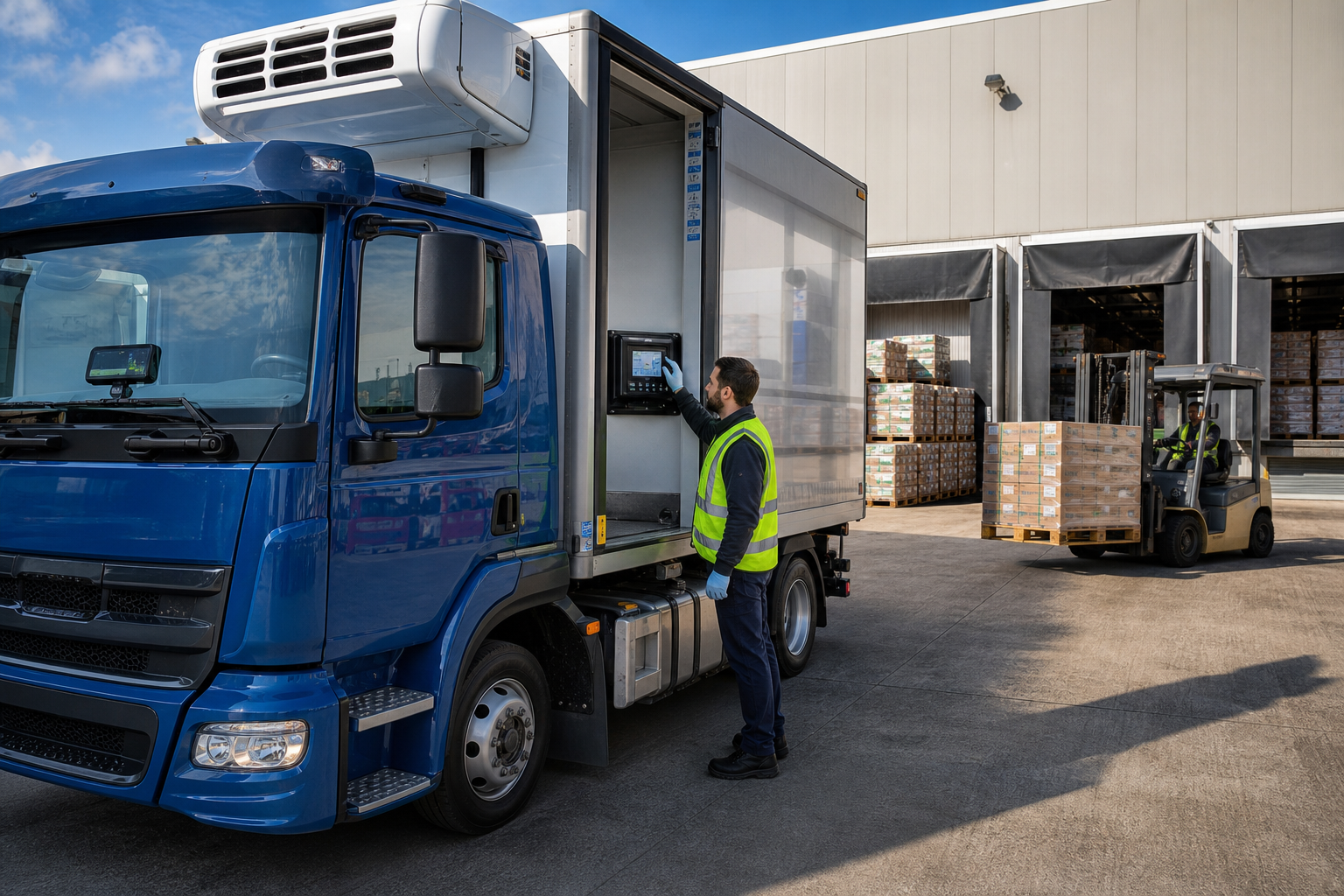
No. The FMCSA requirement applies to the truck that the driver operates, not to the refrigeration unit mounted on the trailer. A reefer controller or trailer telematics platform may capture setpoint, return air temperature, fuel level, runtime, and alarm history, but those records serve cargo control and maintenance purposes.
For compliance for refrigerated transport, the key issue is separation of purpose. The refrigerated trucking ELD supports hours-of-service enforcement; the reefer platform supports product protection and traceability.
ELD data helps fleets spot fatigue exposure patterns that often stay hidden in a basic dispatch view. Repeated overnight departures, compressed restart cycles, frequent split-sleeper use, and high weekly duty totals can signal a schedule that places drivers into lower-alertness periods more often.
That record still leaves out the human side of fatigue. The log cannot show sleep quantity, sleep quality, or whether off-duty time took place in a noisy lot beside an active cold storage yard, so fleets that want a stronger fatigue program usually combine ELD schedule data with separate fatigue-risk analytics for supervisor review and schedule decisions.
Reefer fleets that treat ELD records, temperature logs, and fatigue exposure as separate data streams end up with blind spots between them. The carriers with the strongest safety programs connect those inputs so that dispatch, safety, and operations teams share a single view of driver readiness before each load moves.
Readi fits that approach by forecasting fatigue risk up to 18 hours in advance using data from the ELD systems reefer fleets already run, with no wearables or added hardware. In a large U.S. logistics pilot, fleets using Readi reduced fatigue-linked in-cab telematics events by 42%, which also helped cut the harsh braking and rapid acceleration that raise fuel costs across temperature-sensitive lanes.
Book a demo to explore how predictive fatigue management software can improve safety and productivity across your refrigerated fleet.