


Drowsy driving prevention starts with enough sleep and safe decisions when sleepiness appears; fleet planning also shapes whether drivers can make those decisions.
See how Readi connects ELD data with personalized fatigue prediction
Key Takeaways
- Plan realistic shifts and safe stopping options.
- Train drivers and dispatchers on reporting and response.
- Use a pre-trip checklist and adjust plans when conditions change.
- Readi supports earlier fatigue review, alongside sleep and safe decisions.
What causes drowsy driving?
Common contributors include too little sleep, night work, irregular schedules, long periods awake, some health conditions, and sedating substances or medications. Fatigue can slow reaction and weaken attention. The National Highway Traffic Safety Administration’s drowsy driving guidance covers risks and prevention.
Protect sleep before a trip
Plan trips around realistic rest opportunity. Avoid assigning a demanding drive after a disrupted night or a schedule that leaves little time for sleep. Consider start times, overnight work, route duration, and delays. HOS compliance matters, but a legal schedule does not guarantee a driver is rested.
Fleets can support drivers with clear policies and a way to report fatigue. A driver fatigue management plan can explain the process and assign responsibilities.
Recognize warning signs early
Warning signs can include heavy eyelids, repeated yawning, difficulty focusing, drifting from a lane, missing turns, or trouble remembering recent miles. These signals call for action. If a driver feels too sleepy to continue safely, the priority is to stop in a safe location and notify the appropriate contact. Caffeine, loud music, and open windows are not substitutes for sleep.
Build prevention into fleet operations
Review routes and shift patterns that repeatedly place drivers on the road overnight or after short recovery. Give dispatchers clear options for changing timing, reassigning a trip, or escalating a concern. Use coaching to understand whether a schedule, customer delay, or other operating factor is contributing.
Telematics and cameras help teams review events, while driver fatigue management technology can add information about exposure before a shift. Explore how a fatigue risk management system can support the process, including ELD integrations. See the Readi overview brochure for additional context.
Keep awareness active all year
A single campaign will not change schedules. Refresh training, discuss near misses, review incident patterns, and make sure supervisors know what to do when a driver reports fatigue. Invite drivers to identify route or dispatch conditions that make rest difficult. Review the program after seasonal peaks or major operating changes.
Use Readi as one part of drowsy driving prevention
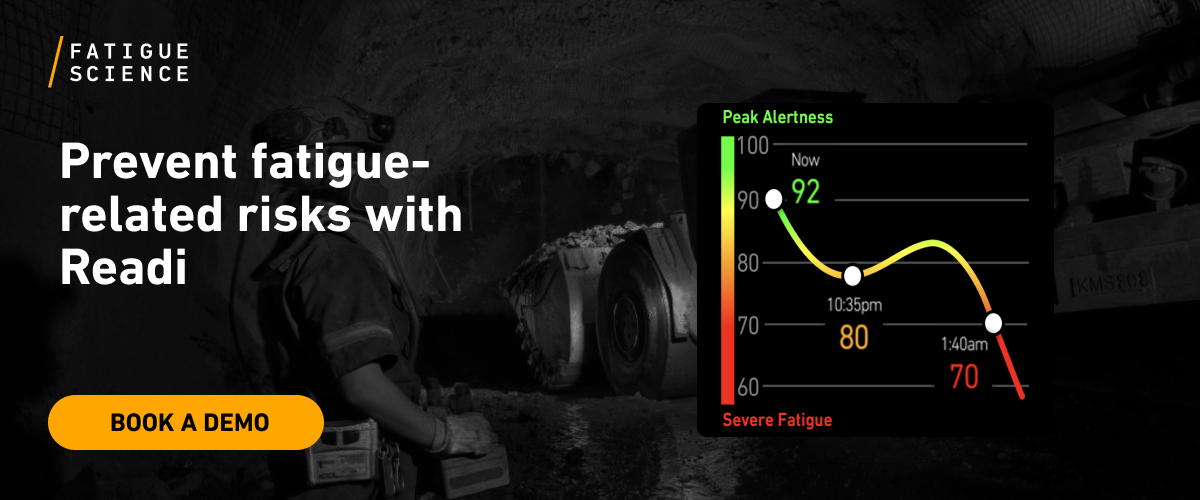
Driver education and safe stopping procedures matter, but fleet prevention also depends on planning demanding work before it begins. Readi by Fatigue Science forecasts personalized fatigue risk across an upcoming shift based on sleep and work schedule information. If a fleet uses Readi, supervisors can review that signal with route and dispatch context and consider whether a schedule conversation or other policy-approved response is needed.
A forecast cannot tell a driver to continue when they feel unsafe, and it does not replace rest, HOS compliance, or professional judgment. Make clear that drivers should report fatigue and stop safely when needed. Readi can support a wider fatigue risk management system alongside training, telematics, and coaching.
Make prevention a shared responsibility
Drivers need clear guidance, but dispatch and management decisions shape the conditions in which they work. Set schedules with realistic recovery time, plan routes that allow safe stops, and give drivers a direct path to raise fatigue concerns. Supervisors should know how to respond without pressuring someone to continue when they feel unsafe. Review recurring delays and customer expectations that make rest difficult. Use near misses and driver feedback to identify where procedures need adjustment. Share reminders before seasonal peaks and other periods when schedules become demanding. A prevention program should be reviewed throughout the year, with changes based on operating evidence. When leadership supports safe decisions in practice, individual awareness can translate into fleet-wide prevention.
drowsy driving prevention: a prevention checklist for fleet leaders
drowsy driving prevention: practical steps and decision criteria
For drowsy driving prevention, use the steps and review criteria in this guide to connect recorded work patterns, operational context, and fatigue prevention. Readi by Fatigue Science contributes a personalized forecast for the upcoming shift where deployed, supporting a contextual review by authorized supervisors.
Build safeguards around sleep, scheduling, and response
Prevention begins before the vehicle moves. Review start times, route length, overnight duty, likely delays, and the availability of safe stopping places. Avoid plans that assume every day will go as scheduled or leave no room for driver feedback. Make the fatigue reporting path clear and ensure dispatchers know what options are available when a driver says they cannot continue safely. Training should explain warning signs, safe stopping, and the limits of temporary alertness tactics. NHTSA advises that adequate sleep is the only true way to protect against drowsy driving; review its drowsy driving guidance and NIOSH driver fatigue information.
Copy-and-use pre-trip fatigue prevention checklist
- Is the planned start time reasonable given the recent schedule?
- Are route duration, delays, and rest locations realistic?
- Does the driver know how to report fatigue and who will respond?
- Can dispatch adjust timing or assignment if circumstances change?
- Are relevant vehicle and safety systems functioning?
- Is there a clear instruction to stop safely if the driver feels unable to continue?
Revisit the checklist after route changes, seasonal peaks, or repeated delays. Ask drivers which parts of the plan are difficult to follow and make corrections at the operational level.
Example: a late-running overnight delivery
If traffic or loading delays push an overnight trip behind schedule, dispatch should reassess the plan rather than pressure the driver to make up time. Communicate clearly, consider safe alternatives, and record the decision. Readi by Fatigue Science may provide an additional personalized forecast of fatigue risk across the upcoming shift, helping authorized supervisors plan a check-in or consider schedule context. It complements adequate sleep, HOS compliance, and safe stopping decisions; it cannot make an unsafe drive safe.
Sources and further reading
Written by Fatigue Science, a provider of predictive fatigue risk management technology for fleet and industrial teams. Last updated: November 24, 2026.
drowsy driving prevention: practical review and action
drowsy driving prevention in day-to-day fleet operations
Begin by writing down the question the team needs to answer. drowsy driving should help identify a repeatable condition, not label an individual. Use a consistent review period and group records by comparable route, start time, terminal, and work sequence. Confirm that data are complete and that timestamps align before drawing comparisons. Ask drivers and dispatchers what shaped the work: an overnight delivery delayed by loading or traffic. Record this context with the evidence so another reviewer can understand how the team reached its decision.
A practical process distinguishes what the record shows from what it cannot show. An ELD documents duty status and driving history; it does not confirm sleep quality, alertness, or causation. Readi by Fatigue Science adds a personalized fatigue forecast across the upcoming shift where deployed. Together, ELD data and Readi can support a more complete planning discussion, with human review and company policy guiding each action. Keep access limited to authorized roles, explain how information is used, and give drivers a way to correct an inaccurate record or provide context.
| Review element | What to check | Possible next step |
|---|---|---|
| Work pattern | sleep opportunity, route planning, warning signs, reporting, and safe stopping | Confirm whether the pattern repeats across comparable shifts. |
| Operating context | an overnight delivery delayed by loading or traffic | Discuss with the driver and operations before drawing a conclusion. |
| Forward planning | Upcoming schedule, forecast timing, route demands, and available response options. | Use Readi by Fatigue Science’s personalized fatigue forecast for an upcoming shift alongside ELD history, route conditions, telematics, and driver input. Readi can help authorized supervisors focus a planning conversation on the timing of potential fatigue exposure. It is a decision-support signal, not a diagnosis, a guarantee of alertness, or a replacement for compliance checks and safe driving judgment. |
Copy-and-use review checklist
- Define: write the question, period, and operating group being reviewed.
- Verify: confirm the data are complete and comparable.
- Contextualize: check route, schedule, delays, and driver input.
- Decide: identify an owner and a policy-approved action.
- Document: record the evidence, decision, and follow-up date.
- Learn: review whether the pattern recurs and whether the control helped.
Use the checklist for prevention and continuous improvement, not automatic discipline. If the same condition affects several drivers, examine dispatch practices, route assumptions, staffing, or customer requirements. If the issue is isolated, confirm that the record is accurate and provide coaching or support suited to the circumstances. Use Readi by Fatigue Science’s personalized fatigue forecast for an upcoming shift alongside ELD history, route conditions, telematics, and driver input. Readi can help authorized supervisors focus a planning conversation on the timing of potential fatigue exposure. It is a decision-support signal, not a diagnosis, a guarantee of alertness, or a replacement for compliance checks and safe driving judgment.
Example: Make it easy to replan safely and respond when drivers report fatigue.
For example, if a review surfaces an overnight delivery delayed by loading or traffic, compare similar work periods, ask the people involved what changed, and identify whether a scheduling or process adjustment is possible. Set a time to check whether the new approach was followed and whether the pattern returned. Readi can help teams consider personalized fatigue risk timing before a shift, while ELD records describe prior duty patterns. Use the two sources as complementary context; neither replaces the driver’s report, applicable HOS rules, or a supervisor’s judgment.
Frequently asked questions
What should a driver do if they feel sleepy?
Stop in a safe place and notify the appropriate fleet contact. Do not rely on temporary tactics to make an unsafe drive safe.
Can caffeine prevent drowsy driving?
Caffeine may briefly improve alertness for some people, but it does not replace sleep and should not be treated as a prevention plan.
What can fleet managers do?
Protect realistic rest opportunities, plan schedules carefully, create a reporting path, train supervisors, and review high-risk patterns.