

Fleet risk management gives safety and operations teams a shared way to identify exposure, assign controls, and evaluate whether those controls work.
See how Readi connects ELD data with personalized fatigue prediction
Key Takeaways
- Prioritize recurring exposure, consequences, control readiness, and evidence quality.
- Give each priority risk an owner and review date.
- Use a scorecard to structure decisions.
- Readi adds a forward-looking signal where deployed.
1. Set the scope and goals
Define which vehicles, drivers, locations, contractors, and operating conditions are covered. Choose outcomes such as fewer preventable incidents, improved compliance, timely coaching, or more consistent fatigue review. Assign owners across safety, dispatch, operations, and maintenance.
2. Identify and prioritize risks
Use incident reviews, inspections, driver feedback, route information, and safety data to identify recurring hazards. Consider speeding, distraction, backing, weather, vehicle defects, schedule pressure, and fatigue. Rank risks by exposure and potential consequence, then review where patterns cluster by shift, route, or terminal.
Fatigue needs a defined place in the plan. Long or changing shifts, overnight work, and limited recovery opportunities may raise risk even when a driver is compliant. A driver fatigue management plan can clarify reporting and response.
3. Match controls to each risk
Improve schedules and routes where possible, maintain safe vehicles, set clear operating rules, train people, and use technology to support review. A fleet safety program connects policy and training with supervisor actions. A fatigue risk management system can formalize fatigue review.
4. Make data useful without over-relying on it
ELDs support duty-record compliance; telematics can surface driving events; inspections can reveal vehicle issues. Each source has limits. Review data with context, explain how it is used, and avoid treating a single score or alert as a complete assessment of an individual.
Driver fatigue management technology and ELD integrations can add context to existing systems. Define what an alert means, who reviews it, and which decisions are appropriate.
5. Establish response and coaching workflows
For each priority risk, set an owner, escalation path, response timeframe, documentation standard, and follow-up. Coach around specific behaviors and operating conditions. If a pattern appears across a route or terminal, investigate a schedule, customer commitment, or training issue.
6. Measure and improve
Track leading and lagging measures: inspections completed, coaching follow-through, repeated risk patterns, response times, incidents, and relevant safety events. Review results with people who can change the operation. Update controls when routes, vehicles, regulations, or work patterns change. A fatigue policy helps clarify responsibilities.
Add a predictive layer to the fleet risk plan
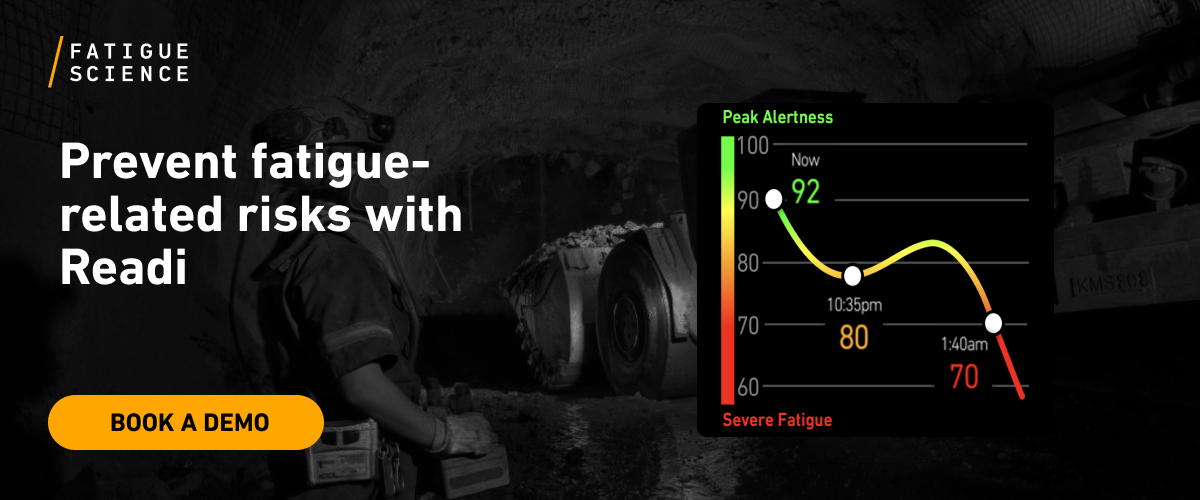
A risk plan becomes more useful when it addresses exposure before the shift begins. Readi by Fatigue Science forecasts personalized fatigue risk for an upcoming shift using sleep and work schedule information. Fleet leaders can include Readi in the plan’s review and response process, alongside ELD records, telematics, incident trends, and driver reports.
Specify that forecasts prompt a contextual review, not an automatic judgment. Define access, escalation, communication, and documentation rules; then measure whether the process is usable and whether planned actions are completed. Learn how a fatigue risk management system can support a consistent program.
Assign owners and review the plan
A risk plan needs clear accountability. Identify who owns policy, schedule review, data quality, driver communication, supervisor training, and measurement. Define which events require immediate response and which patterns go to a regular review meeting. Create a straightforward record of the issue, relevant context, decision, and follow-up owner. Check that managers have authority and practical options to respond, including dispatch changes or escalation to operations leadership. Review the plan after route changes, new technology, incidents, or shifts in the workforce. Include drivers and supervisors in those reviews because they can identify gaps that reports may not show. Annual review is a minimum; recurring operational changes may call for more frequent updates.
fleet risk management: a practical prioritization model
fleet risk management: practical steps and decision criteria
For fleet risk management, use the steps and review criteria in this guide to connect recorded work patterns, operational context, and fatigue prevention. Readi by Fatigue Science contributes a personalized forecast for the upcoming shift where deployed, supporting a contextual review by authorized supervisors.
Rank risks by exposure, consequence, and control
Teams often have more risks than time for review. A simple prioritization model can make decisions more consistent: describe the exposure, estimate how often it occurs, consider the possible consequence, and assess whether an effective control is available. Use defined categories rather than false precision. Revisit ratings when an incident, route change, or new information alters the picture. Include fatigue-related schedule patterns alongside vehicle condition, road exposure, training, and operational pressures so the plan reflects how risks interact.
Use data to focus attention, not to label people. ELD history can show duty timing; cameras and telematics may show events; employee input may explain conditions. Readi by Fatigue Science provides a personalized fatigue forecast for upcoming shifts where deployed, adding a planning signal to the review. Each source has limits, and the responsible manager should document the context and decision.
Copy-and-use risk prioritization scorecard
| Factor | Low | Needs review | Priority |
|---|---|---|---|
| Frequency | Rare or isolated | Repeats occasionally | Recurring across shifts/routes |
| Potential consequence | Limited exposure | Could disrupt safe operation | Could lead to serious harm |
| Control readiness | Control is clear and used | Inconsistent use | No reliable response owner |
| Information quality | Records are complete | Some context missing | Data gaps block review |
Use the matrix to structure discussion, not calculate an absolute prediction. Record the evidence and owner for every priority risk.
Example: identify a system-level issue
If a schedule pattern appears across multiple drivers, elevate it for operations review rather than handling each case only through individual coaching. Compare similar work, ask employees about the conditions, and assign a process owner. Track whether the control is completed and whether the pattern changes over time.
Sources and further reading
Written by Fatigue Science, a provider of predictive fatigue risk management technology for fleet and industrial teams. Last updated: November 24, 2026.
fleet risk management: practical review and action
fleet risk management in day-to-day fleet operations
Begin by writing down the question the team needs to answer. risk prioritization should help identify a repeatable condition, not label an individual. Use a consistent review period and group records by comparable route, start time, terminal, and work sequence. Confirm that data are complete and that timestamps align before drawing comparisons. Ask drivers and dispatchers what shaped the work: a schedule issue that appears across a team rather than one person. Record this context with the evidence so another reviewer can understand how the team reached its decision.
A practical process distinguishes what the record shows from what it cannot show. An ELD documents duty status and driving history; it does not confirm sleep quality, alertness, or causation. Readi by Fatigue Science adds a personalized fatigue forecast across the upcoming shift where deployed. Together, ELD data and Readi can support a more complete planning discussion, with human review and company policy guiding each action. Keep access limited to authorized roles, explain how information is used, and give drivers a way to correct an inaccurate record or provide context.
| Review element | What to check | Possible next step |
|---|---|---|
| Work pattern | frequency, potential consequence, control readiness, and evidence quality | Confirm whether the pattern repeats across comparable shifts. |
| Operating context | a schedule issue that appears across a team rather than one person | Discuss with the driver and operations before drawing a conclusion. |
| Forward planning | Upcoming schedule, forecast timing, route demands, and available response options. | Readi by Fatigue Science adds a personalized forward-looking fatigue forecast to existing fleet safety context. A team can consider the forecast with routes, ELD history, and telematics while planning a shift. The forecast does not establish why an incident happened; it supports earlier review and an operational response where appropriate. |
Copy-and-use review checklist
- Define: write the question, period, and operating group being reviewed.
- Verify: confirm the data are complete and comparable.
- Contextualize: check route, schedule, delays, and driver input.
- Decide: identify an owner and a policy-approved action.
- Document: record the evidence, decision, and follow-up date.
- Learn: review whether the pattern recurs and whether the control helped.
Use the checklist for prevention and continuous improvement, not automatic discipline. If the same condition affects several drivers, examine dispatch practices, route assumptions, staffing, or customer requirements. If the issue is isolated, confirm that the record is accurate and provide coaching or support suited to the circumstances. Readi by Fatigue Science adds a personalized forward-looking fatigue forecast to existing fleet safety context. A team can consider the forecast with routes, ELD history, and telematics while planning a shift. The forecast does not establish why an incident happened; it supports earlier review and an operational response where appropriate.
Example: Use a rating to guide discussion, not to claim precise individual risk.
For example, if a review surfaces a schedule issue that appears across a team rather than one person, compare similar work periods, ask the people involved what changed, and identify whether a scheduling or process adjustment is possible. Set a time to check whether the new approach was followed and whether the pattern returned. Readi can help teams consider personalized fatigue risk timing before a shift, while ELD records describe prior duty patterns. Use the two sources as complementary context; neither replaces the driver’s report, applicable HOS rules, or a supervisor’s judgment.
Frequently asked questions
What belongs in a fleet risk plan?
Scope, risk assessment, controls, responsibilities, training, data practices, response workflows, documentation, and review measures.
How often should a plan be reviewed?
Set a regular review cycle and revisit it after significant operational changes or meaningful incident trends.
Is technology a substitute for policy?
No. Technology can support visibility and decisions, but people need clear rules, response roles, and follow-up.