
Product News
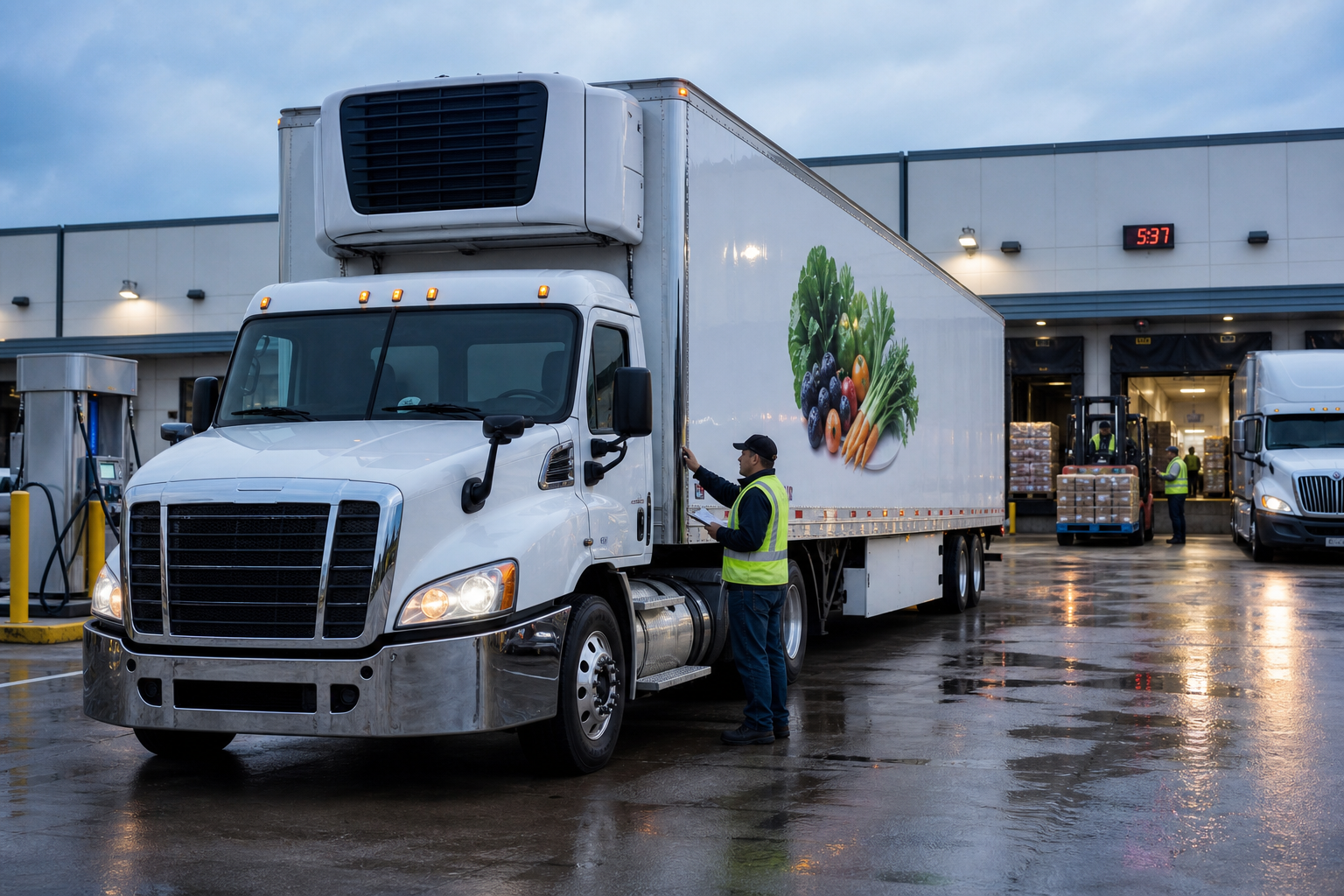

Reefer driver hours of service rules follow the same FMCSA regulations that apply to all property-carrying commercial motor vehicle drivers in the United States. These rules set strict limits on reefer driving hours, break requirements for reefer drivers, and mandatory rest periods to reduce fatigue-related risk on the road.
What makes reefer operations distinct is the added operational pressure that comes with hauling temperature-sensitive freight. Perishable loads like food and pharmaceuticals often come with tight delivery windows, overnight schedules, and extended wait times at shippers and receivers. These realities make HOS compliance for reefer drivers both a legal obligation and a scheduling challenge that affects load planning, driver pay, and safety outcomes.
Understanding reefer driver hours of service starts with the core CDL hours of service limits set by the FMCSA:
These limits apply regardless of cargo type, but reefer truck regulations around temperature control add tasks that consume on-duty time without adding driving miles. Pre-trip reefer truck inspections, temperature monitoring during transit, and cargo checks at delivery all count against the 14-hour window. This compression of available driving time directly affects reefer load scheduling and can reduce the number of loads a driver completes per week.
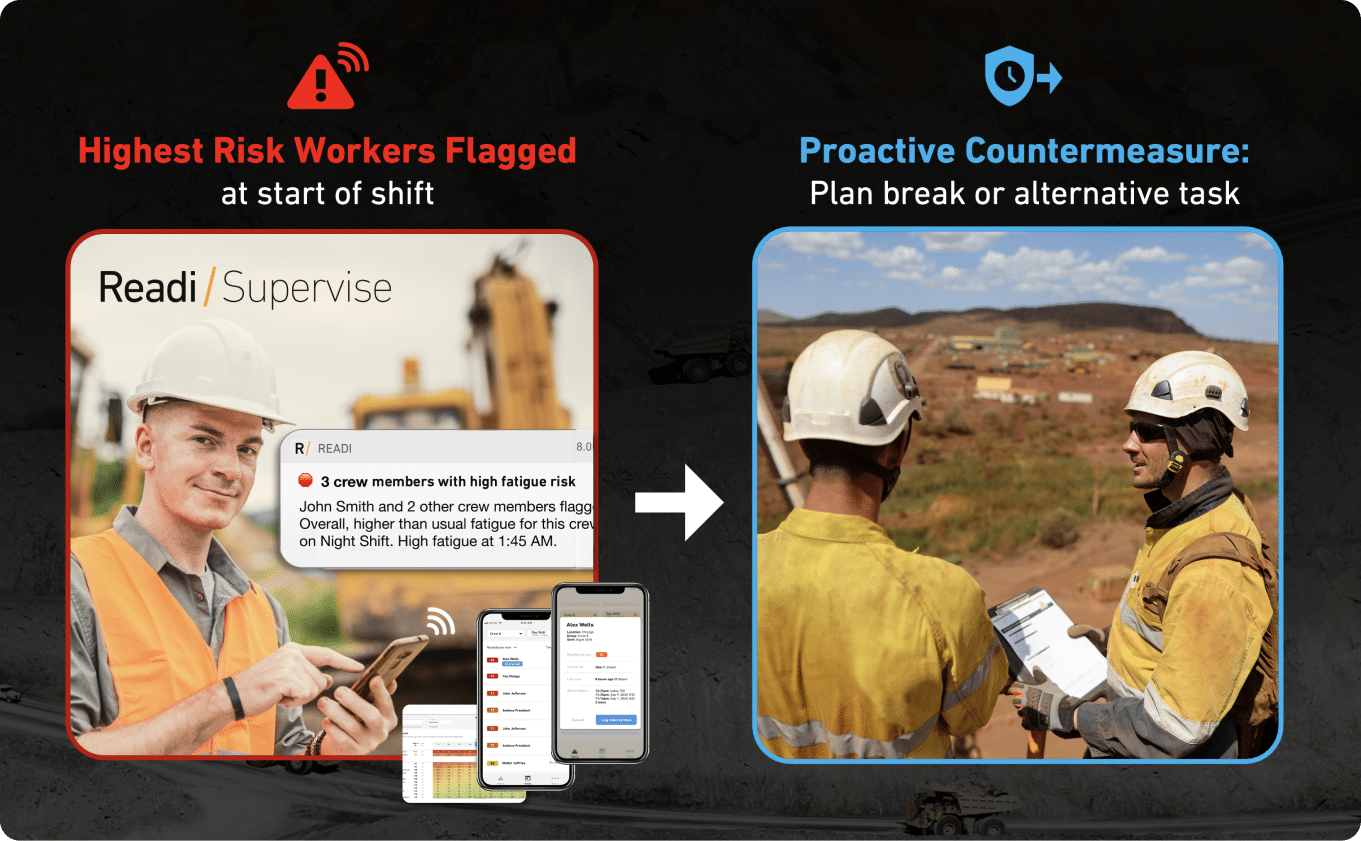
For fleet managers and dispatchers, the gap between HOS compliance and actual fatigue risk is a growing concern. A driver can be fully compliant with reefer driver hours of service rules and still operate at reduced alertness due to circadian disruption, accumulated sleep debt, or poorly timed rest. Fatigue management for drivers requires looking beyond the ELD log. Predictive fatigue management tools like Readi can forecast fatigue risk in advance of shift by analyzing sleep and schedule data, giving dispatchers a leading indicator that HOS logs alone do not provide.
Fleet compliance in refrigerated transport depends on a dispatch method that accounts for the trailer as much as the route. A plan can break apart when the schedule leaves no room for pre-cool time, reefer fuel checks, set point verification, return air temperature review, or receiver rules for temperature-sensitive freight.
Strong reefer load scheduling starts with the facility pattern on each lane. Grocery warehouses, cold storage sites, and food distribution centers often create long dwell, strict check-in times, and narrow unload windows; each one can reduce the usable portion of a driver's day even when transit miles look manageable on paper.
Dispatch should also plan past the current stop. A load that fits the day may still create HOS compliance problems for reefer drivers when the next pickup sits on a tight reset, recap, or sleeper berth split. Weekly limits under CDL hours of service can become the real constraint on multiday refrigerated routes, especially after repeated overnight runs and long time at docks.
Reefer operations need a fatigue rule for disruptions at the dock and on the road. A late call from a receiver, a reefer alarm, or a long hold at a warehouse can push the next leg into the biological low that comes with night work, even though the log still shows available hours.
Supervisors need a view that covers more than legal status. Readi gives operations teams on-demand visibility into fatigue risk and performance so they can make better decisions on resource allocation, task planning, worker training, and scheduling; that extra view helps when a dispatcher must decide whether to hold a load, swap an assignment, or change the next stop after a route slips.
Reefer fleets usually do not struggle with the rulebook itself. Trouble starts when dispatch treats a cold-chain run as a normal linehaul move, then leaves no room for a 4:00 a.m. receiver slot, a live unload, a trailer temperature dispute, or a long wait at a grocery warehouse.
A reefer route can stay under the 11-hour drive limit and still fail the day. The 14-hour clock keeps moving through fuel stops, dock queues, seal checks, paperwork, and cargo temperature verification; a driver may still have drive time left on the ELD and no legal way to use it.
Cold-chain freight brings service obligations that can compress legal time without any formal HOS exception. A receiver may reject early arrival, require product checks before unloading, or hold a driver in line behind other temperature-controlled loads. Each delay cuts into reefer driving hours and makes HOS compliance for reefer drivers harder to protect.
This is where fleets make the wrong comparison. Dry van dispatch often assumes the schedule can absorb small delays. Reefer load scheduling rarely has that margin, especially when the route depends on overnight transit to hit store, warehouse, or distribution center appointments before sunrise.
Some errors repeat across refrigerated fleets because the dispatch plan ignores how reefer work consumes legal time.
Teams that handle reefer truck regulations well usually review more than the log itself. They track recurring detention by customer, overnight start patterns, and lanes where legal CDL hours of service still produce schedule strain. That review gives dispatch a better basis for load acceptance, appointment times, and fatigue management for drivers.
For refrigerated freight, the legal workday starts well before the truck reaches the highway. A reefer driver may spend 30 to 45 minutes on trailer pre-cool, verify a separate reefer fuel tank, match the set point to the bill of lading, and wait for a live load before the first mile goes on the ELD.
These tasks change HOS compliance for reefer drivers because the logbook does not reward time spent on cargo protection. A driver can show room left under reefer driving hours and still face a nearly exhausted on-duty window after a late pickup, a long receiver line, and several temperature-control checks.
Dispatch errors often start with a miles-first plan. A 420-mile load may look simple on paper, yet the real trip also includes pre-cool time, shipper paperwork, reefer truck inspections, fuel checks, and possible delay at a grocery warehouse or distribution center. Fleets that count only wheel time tend to overcommit the driver, compress break options, and create avoidable pressure by the last third of the route.
A reefer route needs the 30-minute stop placed on the plan before the freight reaches a tight delivery window. Early grocery appointments, overnight linehaul, and cold-storage receivers leave little room for delay, so dispatch should place the break at a point that protects both CDL hours of service and on-time service.
For reefer load scheduling, the break location should match the route, the trailer, and the customer clock. A stop that works for dry van freight may fail for refrigerated freight when parking is limited, the reefer unit needs a quick check, or the next leg runs into metro traffic and warehouse gate lines.
The required stop helps with HOS compliance for reefer drivers after eight cumulative hours of driving, but it does not guarantee full mental recovery. A driver who loses sleep before a midnight start, then waits two hours at a shipper, may still face slower reactions and weaker judgment near dawn even after the log shows a legal break.
That is why fatigue management for drivers should include more than break placement alone. Strong fleets review night starts, repeated early appointments, long detention, and telematics safety events together so supervisors can adjust the plan before a late load turns into rushed driving, missed rest, or a preventable safety event.
Dispatch should build each plan from the delivery dock backward. Start with the receiver appointment, then place the required off-duty block, expected unload delay, drive time, fuel needs, parking limits, and shipper release time. That order gives a clearer view of whether reefer driver hours of service can support the trip before the load leaves the yard.
Refrigerated freight has schedule risks that standard freight may avoid. Grocery warehouses and cold storage sites often enforce narrow appointment windows, reject early arrivals, and require temperature checks or seal review before unload. One missed slot can force a later door assignment, cut into the next load, and weaken HOS compliance for reefer drivers across the rest of the week.
Many reefer lanes depend on late-night departures and pre-dawn arrivals because stores, food distributors, and cold-chain facilities want product on site before business hours. The trip may fit within CDL hours of service, but alertness often drops between midnight and early morning. A lane that repeats that pattern for several days can shrink sleep opportunity even without a logbook problem.
A stronger schedule review combines compliance data with fatigue management for drivers. ELD records show remaining time; detention trends, harsh driving events, lane timing, and start-hour patterns show where the operation creates strain. Readi gives supervisors on-demand visibility into fatigue risk and workforce performance, which supports resource allocation, task planning, worker training, and scheduling decisions when a legal route still carries elevated risk.
Reefer truck inspections start before dispatch releases the tractor. The driver needs a clean handoff: trailer door seals intact, reefer fuel tank at the required level, controller free of active fault codes, correct mode on the unit, and a set point that matches the bill of lading.
A strong pre-trip follows a fixed sequence so the driver does not sort out cold-chain problems at the gate or at the first fuel stop. That sequence should cover the refrigeration unit, the trailer interior, and the shipment record in the same order every time.
En route checks need the same level of structure. Drivers should know the exact triggers for a stop: a reefer alarm, a return-air temperature drift, a door seal concern, a low reefer fuel reading, or a customer report that points to cargo condition risk.
Poor inspection discipline creates hidden risk in reefer load scheduling because small defects can turn into route interruptions that no dispatcher planned for. A loose air chute, a blocked floor channel, or the wrong set point from the prior load can produce a warm trailer complaint at delivery, extra time at the receiver, and a schedule reset for the next assignment.
The same discipline that protects refrigerated freight also supports safer reefer driving hours. Fleets that assign fixed time for pre-cool, reefer truck inspections, and document review usually see fewer preventable exceptions on the road, better HOS compliance for reefer drivers, and less pressure on supervisors to recover service with rushed decisions.
The legal clock cannot show whether off-duty time turned into real sleep. A reefer driver may finish a cold-storage unload at 3 a.m., spend time in line for a gate pass, search for parking at dawn, then try to sleep through daylight noise and heat before the next appointment. The log may look clean; the recovery period may not.
Refrigerated freight often puts the hardest work at the worst biological hours. Midnight departures, pre-dawn receiver windows, and long waits at grocery and food-service docks can push sleep into short daytime blocks across several days. That pattern can lower alertness even when reefer driving hours stay within reefer truck regulations.
A fleet that wants stronger fatigue management for drivers has to look past single shifts. One late unload can cut the next rest period; one rejected delivery window can push the next dispatch into another overnight run. In reefer operations, fatigue risk often comes from schedule sequences, not one obvious bad trip.
A stronger approach pairs HOS compliance for reefer drivers with predictive fatigue management, ELD data, and telematics safety events. Readi gives supervisors on-demand visibility into fatigue risk and workforce performance; that supports resource allocation, task planning, worker training, and scheduling. In reefer fleets, that view can surface high-risk driver and route combinations 18 hours in advance.
That extra time helps supervisors make practical changes while options still exist. They can move an appointment, swap a load, add recovery time, or shift a more complex stop sequence to a driver with a lower fatigue profile. Those choices protect temperature control reliability and reduce the chance that schedule pressure turns into a safety event.
Reefer fleets need decision rules that hold up when the day stops matching the plan. A missed dock slot, a long unload at a grocery warehouse, or a reefer unit fault can change legal availability, cargo condition, and customer service at the same time.
Dispatchers should not improvise when time starts to disappear. They need a standard response path for the exceptions that show up most often in refrigerated transport: detention at cold storage sites, a receiver that pushes the appointment, a trailer alarm, or a driver who reaches a low-energy period after an overnight start.
A practical playbook should tell the team which event triggers a route reset, who approves a relay, and when the load stays put until the next rest period. That structure reduces pressure on the driver and keeps reefer driver hours of service decisions tied to facts such as remaining duty time, available parking, product sensitivity, and the next realistic delivery slot.
Some problems need a schedule fix; others need a safety stop. A receiver delay may call for a new appointment, while a reefer alarm with rising cargo temperature may require immediate coordination with maintenance, the customer, and the next facility that can protect the load.
Strong fleets do not wait for a roadside violation, a harsh maneuver, or a dash-cam clip to prove the route has gone bad. They teach supervisors to review lane history, prior detention, sleep opportunity, and night exposure before they ask a driver to absorb another delay.
Readi supports that workflow with on-demand visibility into fatigue risk and workforce performance, which helps supervisors make better choices on task planning, resource allocation, and schedule changes. When that view shows elevated fatigue 18 hours in advance, the safer choice may be a later dispatch, a load swap, or a different driver assignment instead of one more attempt to recover lost time.
Consistency also shapes retention. Many reefer drivers accept the extra checks, strict appointment windows, and after-hours freight because the work often pays more and stays steady, but they still expect a schedule that does not punish them for warehouse delay or equipment trouble beyond their control.
In refrigerated transport, a logbook breach can set off problems far beyond an enforcement stop. Reefer truck regulations sit inside a larger operating system that includes appointment times, trailer temperature control, receiver rules, and limited dock capacity. Once a driver loses legal availability, the load may miss its slot, sit longer at a facility, or require a same-day reassignment that adds cost across the board.
The effect often spreads through the rest of the schedule. A single violation can expose the carrier to citations, out-of-service risk, and CSA damage; at the same time, it can push the next pickup late, reduce trailer turns, and strain a network that already runs on narrow timing. In reefer freight, lost time also raises the chance of product claims when a receiver questions dwell time, seal integrity, or trailer condition at arrival.
A useful review starts with the full trip picture. The issue may trace back to a long live unload, a late trailer release, repeated temperature checks, or a route plan that left no room for normal delay. Reefer driving hours can break down even when the mileage looks reasonable, especially on overnight lanes with early dock times and little parking near the final stop.
Safety and operations teams should line up ELD records with dispatch timing, detention history, harsh braking, lane deviations, and customer patterns. That type of review shows whether the failure came from driver choice, weak route design, or poor exception handling after the plan slipped. It also gives fleets a better base for fatigue management for drivers, because the same trip conditions that create log violations often show up before a telematics safety event or a product issue.
The strongest reefer fleets treat data review as part of route control. The same lane, customer, or dispatch block often sits behind repeat HOS pressure, missed appointment windows, and cold-chain disruption.
Start with ELD records, then pair them with detention logs, reefer unit alarm history, late-arrival records, and telematics safety events. That mix shows where reefer load scheduling loses legal time before the truck covers the planned miles, especially at cold storage sites with long unload queues, strict receiving cutoffs, or repeated temperature disputes.
The review should change dispatch rules, not just fill a dashboard. When one grocery distribution center adds two hours of average dock time, or one poultry lane shows repeat missed breaks, the fix may sit in pickup timing, appointment buffers, trailer drop strategy, or a different relay point.
Readi adds another layer to fatigue management for drivers through on-demand visibility into fatigue risk and workforce performance, plus forecasts 18 hours in advance. Used with CDL hours of service data, telematics, and camera events, that view helps supervisors make better decisions on resource allocation, task planning, worker training, and schedule changes before a harsh brake event, a lane drift, or a spoiled load forces a reactive response.
Reefer driver hours of service fall under the same interstate property-carrier rules that govern most freight fleets, but compliance work in refrigerated transport usually turns on record accuracy and duty-status discipline. HOS compliance for reefer drivers depends on clean ELD records, correct use of the sleeper berth provision when applicable, and proper treatment of fueling, loading, temperature checks, paperwork, and reefer truck inspections when those tasks qualify as on-duty time. Refrigerated freight does not receive a blanket carveout from CDL hours of service rules simply because the load is perishable.
Break requirements for reefer drivers need more than a time slot on the route plan. A qualifying 30-minute non-driving period has to fit with safe parking, cargo security, reefer fuel level, unit alarm status, and the customer’s receiving window; otherwise the driver reaches the break point with no good place to stop. Cold storage sites and grocery warehouses often add delay before or after the break, so dispatch should place that stop where the driver still has room to absorb traffic or dock friction.
Reefer load scheduling depends on the full workday, not the linehaul miles alone. A route can lose margin fast when the trailer needs pre-cool time, the shipper requires set-point verification, the receiver runs late, or the dock rejects the first arrival window. Those events do not just slow the trip; they also reduce the legal time left for the rest of the move.
Strong dispatch plans usually start from the appointment and work backward through likely detention, road speed, weather, night parking access, and any temperature control regulations tied to the load. That approach gives operations teams a better view of which loads fit normal capacity and which ones need a relay, a different pickup time, or a different driver.
Drivers need a plan for sleep as much as a plan for miles. Overnight pickup cycles, early dock times, and long waits at receivers can cut sleep opportunity across several days, so fleets should protect recovery time, reduce sharp start-time swings when possible, and watch for lanes that force repeated circadian low-point driving. A legal log does not show whether the driver slept well before a 2:00 a.m. departure.
The stronger approach combines ELD data with telematics safety events, schedule design, and a predictive fatigue layer. Readi gives supervisors on-demand visibility into fatigue risk and workforce performance, supports decisions on task planning and resource allocation, and flags elevated risk 18 hours in advance so the team can add rest, reassign a load, or change the plan before fatigue shows up on the road.
Reefer fleets that treat fatigue as a scheduling and operational discipline, not just a logbook check, tend to see fewer service failures, fewer cargo claims, and fewer safety events on the lanes that carry the most risk. The drivers, dispatchers, and supervisors who work refrigerated freight already manage tight windows, strict temperature requirements, and unpredictable dock conditions every day. Adding a predictive view of fatigue risk to that workflow gives the team one more decision point before a route turns into a problem.
Book a demo to explore how predictive fatigue management software can improve safety and productivity across your reefer fleet.