Product News


Fatigue mitigation strategies are the methods, policies, and tools organizations use to reduce fatigue risk, maintain alertness, and protect both worker safety and operational performance. These strategies span sleep hygiene practices, shift work fatigue management, fatigue risk assessment, and predictive technologies that help safety teams intervene before fatigue leads to incidents.
For industries like transportation, mining, oil and gas, and utilities, fatigue is not an abstract wellness concern. It is an operational risk with measurable consequences. A Caterpillar Global Mining study found that an estimated 65% of haul truck accidents can be attributed to operator fatigue. In commercial trucking, fatigue-linked events such as harsh braking and lane departures increase fuel costs, damage assets, and put drivers and the public at risk.
Effective fatigue mitigation strategies combine multiple layers of defense. No single intervention is enough on its own. The strongest programs pair individual fatigue management techniques with organizational controls and workplace fatigue solutions that address scheduling, environmental conditions, and real-time monitoring.
The most common layers in a comprehensive fatigue mitigation program include:
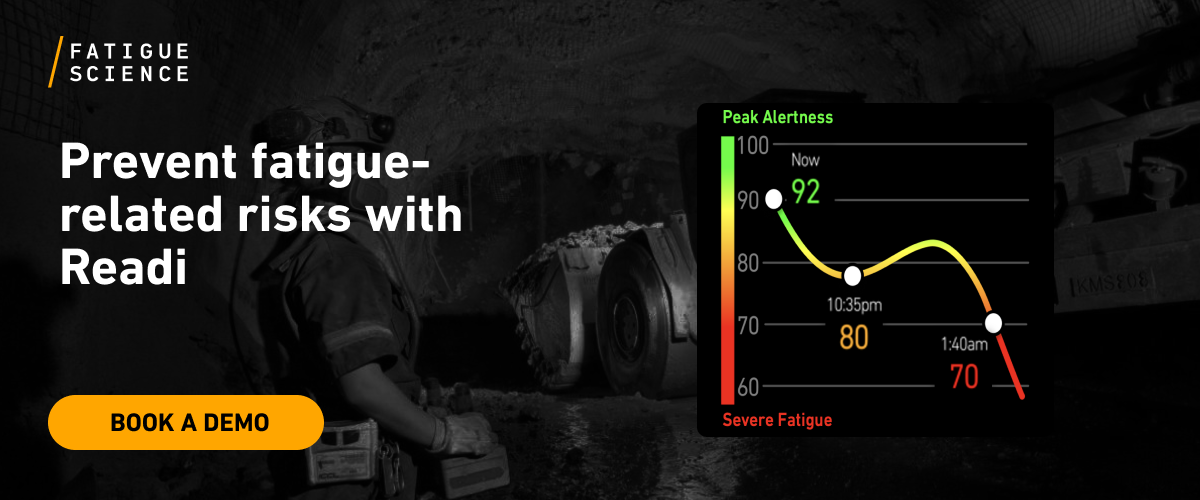
Organizations that already invest in cameras, telematics, or fit-for-duty assessments are well positioned to add predictive fatigue management as a leading indicator layer. Tools like Readi use AI-powered analysis of existing ELD data to forecast fatigue risk up to 18 hours in advance, without requiring wearables or additional hardware.
The sections that follow break down each category of fatigue mitigation strategies in detail, with practical guidance for safety leaders, operations teams, and fleet managers working in high-risk environments.
Mining companies need fatigue mitigation strategies that run through the full job, from roster design to transport, supervision, camp conditions, and task assignment. A single control, such as a break rule or annual training module, leaves major gaps when sleep loss, night work, long commutes, and high-consequence equipment all shape risk on the same site.
A useful starting point is a clear picture of where fatigue risk rises first. On a mine site, that usually includes overnight haul cycles, early pre-starts, shutdown maintenance, control room coverage, repeated overtime, and travel that cuts into recovery time before or after a shift. That review should treat fatigue as a safety exposure tied to sleep, workload, timing, and environment; not as a personal wellness issue alone.
The first pass should sort risk into three practical buckets:
Once those pressure points are visible, the next step is routine execution. Preventative fatigue strategies need written standards for who checks schedule strain, who can change a task plan, how fatigue concerns move up the chain, and what records the site keeps when supervisors act on a report or observation. That structure supports better judgment during night crews, remote travel, and production pushes, when informal calls often break down.
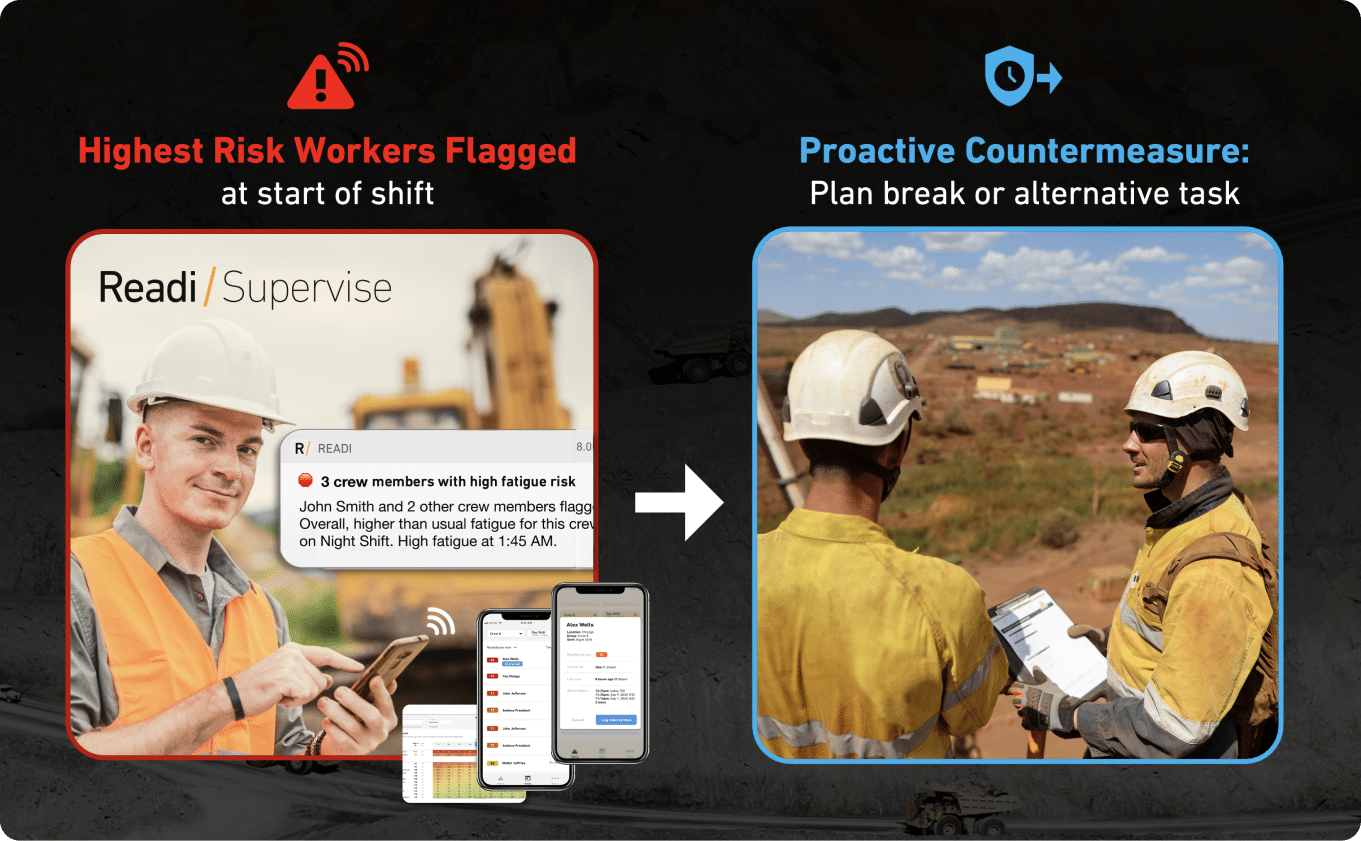
Readi fits into that workflow by giving operations and safety teams on-demand visibility into workforce fatigue risk and performance. That view helps with resource allocation, task planning, worker training, and scheduling, and it gives supervisors a clearer basis for action when risk appears 18 hours in advance.
A mine site needs a clear map of roles, tasks, and time blocks where a brief lapse can cause injury, equipment loss, or production disruption. The first pass should focus on exposure, not personal blame: who works alone, who controls mobile plant, who handles maintenance after breakdowns, and who faces a long drive before or after duty.
This review should track more than total duty hours. Risk often clusters around roster edges and disruptions: pre-dawn starts, second or third consecutive nights, overtime added at short notice, split sleep after callouts, and return trips after a full swing. In remote operations, the gap between time off and true rest can shrink fast.
The next pass should use evidence already inside the operation. Near-miss reports, mobile-equipment events, maintenance rework, delay codes, unscheduled absence, turnover hot spots, and supervisor notes can reveal where alertness management needs stronger controls. A useful starting point is a plain one: fatigue reflects sleep loss, circadian strain, workload, and environment; that makes it a fit-for-duty issue with direct safety and productivity impact.
Crew-level review also helps. Compare day and night crews, examine event timing by hour, note who faces repeated schedule changes, and flag work groups with frequent commute burden or extra overtime. That process gives site leaders a sharper picture of where fatigue-related safety measures belong first.
Roster design sets the ceiling for alertness before a worker reaches the pit, plant, or workshop. A schedule may satisfy site rules and still create unsafe exposure when it combines pre-dawn starts, long shifts, extra hours, camp transfers, and short turnaround periods.
Mining rosters work best when planners look at the full sleep window, not only the posted start and finish time. For alertness management and driver fatigue prevention, the key questions are practical: when a worker can actually sleep, how long that sleep can last, and how often the roster forces the body clock into low-alertness periods.
Night shifts, swing shifts, callouts, and travel time belong in the same review because each one affects sleep opportunity. Remote mining sites add another layer: long bus rides, camp noise, shared accommodation, and early muster times can reduce rest even when the roster shows enough hours off duty.
Schedule review also benefits from better data. Readi gives operations teams on-demand visibility into workforce fatigue risk and performance, supports decisions on task planning and resource allocation, and can flag higher-risk patterns 18 hours in advance so supervisors can adjust crew assignments before fatigue reaches a critical point.
Sleep is the main recovery control on a mine site. When workers do not get enough of it, reaction time slows, attention slips, judgment weakens, and normal tasks such as haul truck driving, shovel operation, and maintenance checks carry more risk.
Time off does not always equal sleep. Good fatigue mitigation strategies protect the hours before bed, the sleep period itself, and the first part of recovery after a shift.
FIFO and camp conditions often reduce sleep quality even when the roster meets company rules. Shared rooms, bus departures, room temperature, meal timing, phone use, and social noise can turn a planned seven-hour sleep chance into five fragmented hours.
Worker education should cover the basics of fatigue causes and treatment so crews and supervisors can spot higher-risk fatigue early. Training should explain sleep debt, night work, quick shift changes, long commutes, alcohol use, illness, medication effects, and untreated sleep problems that keep recovery from taking place.
That training needs a practical standard. One short night before a low-demand day task does not present the same risk as several poor sleep periods before a night haul, a maintenance shutdown, or a long drive on site roads. Supervisors need enough knowledge to ask better questions about rest, enough authority to act when sleep loss is clear, and enough consistency in site rules so sleep remains part of normal operational control.
Even with stronger rosters and better sleep habits, crews still need the skill to notice impairment before a routine task turns into an exposure. On mine sites, the first clues often appear as small changes in pace, sequence, communication, and vehicle control.
Self-checks have limits. Fatigue can reduce the ability to judge one’s own condition, so detection cannot sit with the worker alone. Peers, dispatchers, maintenance leads, and front-line supervisors all need training on what normal performance looks like in each role and what signs call for action, especially after night work, extended overtime, or a disrupted changeout.
Reporting paths need to stay simple and routine. A worker should know how to raise a concern at pre-start, by radio, through a supervisor check-in, or in a private message without fear of blame or lost trust. Short scripts help: who receives the report, what temporary controls apply, how the concern gets logged, and when a task must stop. Many site controls break down for one reason: crews notice the warning signs, but no one knows who has authority to act.
After crews learn the signs, site leaders need a response plan with defined triggers and approved options. A written playbook removes guesswork when an operator reports poor sleep, a supervisor sees clear impairment, or a schedule change creates a high-risk window.
The response should fit both the fatigue level and the job hazard. A lapse in a warehouse, a missed radio call in a control room, and a haul truck error on a decline ramp do not carry the same exposure, so the control measure should scale to the risk. Strong fatigue-related safety measures set out who makes the decision, which tasks require removal at once, and what temporary controls can keep lower-risk work safe.
These steps need a place in site policy before an event occurs. Supervisors should not have to rely on personal judgment alone in the middle of a night shift, after an unplanned callout, or during a weather delay. Many companies review broad fatigue management techniques when they shape internal response options, but mine sites need controls that reflect local conditions such as remote access roads, long bus trips, heat, dust, vibration, and limited spare labor on back shift.
Data can sharpen those decisions. Readi gives operations teams and supervisors direct view into crew fatigue risk and performance, which helps with resource allocation, task selection, worker coaching, and roster decisions. That kind of alertness management supports earlier action, reduces false starts, and helps mines place the right control on the right task at the right time.
A mine site that relies on incident counts or camera clips will always work from the back end of the problem. Strong fatigue mitigation strategies use daily exposure data as part of fatigue risk assessment so site leaders can see where risk builds across crews, rosters, routes, and job types.
The most useful leading indicators tend to sit in plain view once teams decide to track them with discipline:
Lagging measures still have a place. Near misses, equipment contact, absenteeism, and supervisor notes show where controls broke down, but they do not give crews much room to adjust the plan for the next shift.
The practical value of predictive fatigue management comes from the ability to pull several inputs into one view. Schedule history, overtime records, commute exposure, task timing, and worker feedback can support better forecasts, reduce false starts, and help operations teams make decisions with less guesswork.
Readi gives supervisors and operations leaders on-demand visibility into fatigue risk and workforce performance. That supports earlier choices on resource allocation, task planning, worker coaching, and schedule changes, which strengthens alertness management and other workplace fatigue solutions at the point where they can still change the day’s work plan.
A fatigue policy should remove guesswork from high-risk decisions. It should define reporting rules, fit-for-duty expectations, supervisor authority, escalation paths, and documentation standards so each fatigue risk assessment leads to a consistent response instead of a personal judgment call.
Trust sits at the center of the policy. Workers report concerns sooner when they know a fatigue disclosure will lead to support, task control, or transport help rather than blame. On remote mine sites, where crews often feel pressure from production targets, contractor demands, and long travel days, that trust determines whether fatigue-related safety measures reach the field in time.
Preventative fatigue strategies hold up when they sit inside normal site routines. Dispatch, scheduling, pre-start meetings, travel planning, and contractor oversight should all include simple checks for schedule strain, recent sleep opportunity, and task consequence. That approach turns fatigue management techniques into part of operational control, not a separate safety topic that only appears after an event.
Readi supports this step with on-demand visibility into fatigue risk and workforce performance for operations teams and frontline supervisors. The platform informs decisions on resource allocation, task planning, worker training, and scheduling; it also helps supervisors understand fatigue patterns across crews and track whether controls improve conditions over time.
Culture takes shape through repeated use. Superintendents need to back a delayed start when risk is high, dispatchers need to respect fit-for-duty limits, and contractor leads need to follow the same standards as site management. A written policy without daily follow-through will not hold up under production pressure.
Lasting results depend on leadership support, routine use in field workflows, and regular review of both leading and lagging indicators. Annual training can explain the rules, but daily practice is what makes shift work fatigue management credible on a mine site.
What are effective strategies to manage fatigue in the workplace? The best results come from a full set of controls, not a single rule. Strong fatigue mitigation strategies usually include smarter rosters, practical fatigue management techniques, supervisor checks, worker education on sleep habits, simple self-report steps, and written fatigue-related safety measures for high-consequence tasks.
In mining, that plan also needs site-specific controls. Haul roads, fixed plant maintenance, control rooms, contractor travel, and camp life each add their own fatigue load, so preventative fatigue strategies need to match the work, the time of day, and the level of consequence.
How can mining companies mitigate fatigue during long shifts? Long shifts need controls before, during, and after duty. The first step is to cut avoidable roster strain such as short turnarounds, overtime clusters, unplanned callouts, and long post-shift travel.
What role does sleep play in fatigue management? Sleep is the main recovery control. When sleep quantity or sleep quality drops, attention, judgment, memory, and reaction time all decline, even when the schedule still meets minimum legal limits.
FIFO and camp settings often cut sleep quality in quiet but important ways: room noise, early light, heat, shared facilities, social pressure after shift, and poorly timed caffeine. For that reason, worker education should cover fatigue causes and treatment, not just hours of work.
What are the signs of fatigue that teams should watch for? Teams should watch for slow radio replies, missed checklist steps, reduced scan patterns, memory gaps, head nods, irritability, lane drift, and delayed equipment response. A change from a worker’s normal pace or judgment often shows up before a clear error.
Self-assessment has limits. Many workers do not see their own impairment in real time, so peer input, supervisor observation, and clear escalation rules need a formal place in the process.
How can organizations implement fatigue mitigation policies? Start with a site map that shows where risk concentrates: night haulage, shutdown maintenance, early starts, long bus rides, and tasks with high consequence if attention drops. From there, assign decision rights for frontline supervisors, dispatch, operations leaders, and contractors so each group knows when to pause work, reassign tasks, or remove a worker from a safety-critical role.
A workable policy also needs fit-for-duty expectations, incident review steps, documentation rules, and routine review of precursor data such as short recovery windows, repeated night exposure, absenteeism, and self-reported fatigue. For operations that already use cameras or formal fit-for-duty checks, Readi adds daily visibility into workforce fatigue risk and performance and can forecast risk 18 hours in advance, which supports better crew placement, task plans, and supervisor action.
Mining operations that treat fatigue as a daily operational risk, with the same rigor applied to ground control or equipment maintenance, build stronger defenses than those that rely on compliance rules or post-event review alone. Each layer covered here reinforces the others:
Readi supports that layered approach by forecasting fatigue risk up to 18 hours in advance, giving operations and safety teams time to adjust plans before exposure reaches the field.
Book a demo to explore how predictive fatigue management software can improve safety and productivity across your operation.