


ELD driver coaching is most useful when it improves understanding and safe work practices, rather than focusing only on correcting log errors.
See how Readi connects ELD data with personalized fatigue prediction
Key Takeaways
- Coach with specific examples and driver context.
- Look for process causes as well as individual training needs.
- Agree on next steps and follow up.
- Discuss Readi forecasts within a supportive, policy-led process.
Set a clear purpose
Define goals such as accurate records, fewer repeat errors, smoother inspections, and safer decisions. Explain that an ELD records duty status and driving activity; it does not show whether a driver slept well or is alert. Review the applicable FMCSA hours-of-service requirements or local rules as part of the training.
Build a simple coaching process
Use a consistent sequence: identify the record or pattern, confirm the facts, talk with the driver, agree on a next step, and document follow-up. Review issues while details are fresh. Ask the driver what happened before deciding whether the cause was unclear training, dispatch pressure, a technical issue, or a deliberate choice.
Start with common tasks: duty-status changes, certification, annotations, unidentified driving, and malfunction procedures. Keep coaching focused on one improvement at a time. A driver coaching approach works best when it is specific and respectful.
Include fatigue in the conversation
A compliant log does not confirm that a driver is rested. Discuss repeated night work, changing start times, short recovery opportunities, and demanding sequences without assuming that a single record proves fatigue. Ask whether route timing, detention, or dispatch changes made rest difficult. A fatigue policy for trucking fleets can establish reporting and response expectations.
ELD records can be part of a wider fatigue risk management system. Connecting ELD integrations with other safety information gives teams more context; driver fatigue management technology can add a predictive view where appropriate.
Make coaching useful to drivers and supervisors
Set expectations for who reviews records, how quickly follow-up happens, and which issues require escalation. Keep notes concise: the issue, context, agreed action, and review date. Recognize improvement, and look for patterns at the route or terminal level. Repeated issues may point to workflow or scheduling problems that training alone will not solve.
Measure behavior change
Track repeat log errors, correction rates, follow-up completion, and related safety trends. Review the measures with operations and drivers so the process remains fair. Update training when the same confusion appears across the fleet.
Make recognition part of a supportive reporting culture
Warning signs are important, but prevention also depends on whether drivers can raise concerns without fear of blame. Explain which steps to take when someone feels too sleepy to continue, who to contact, and how dispatch will help find a safe option. Train supervisors to ask neutral questions about workload, timing, and conditions rather than assume the cause. Review schedules that repeatedly put people in difficult circumstances and make operational changes where possible. Keep educational messages practical: sleep is the primary protection, and a driver who feels unsafe should stop safely and report it. Include near misses and lessons learned in regular safety discussions. A consistent response helps drivers trust the process and gives the company better information about recurring pressure points.
How Readi can support earlier fatigue conversations
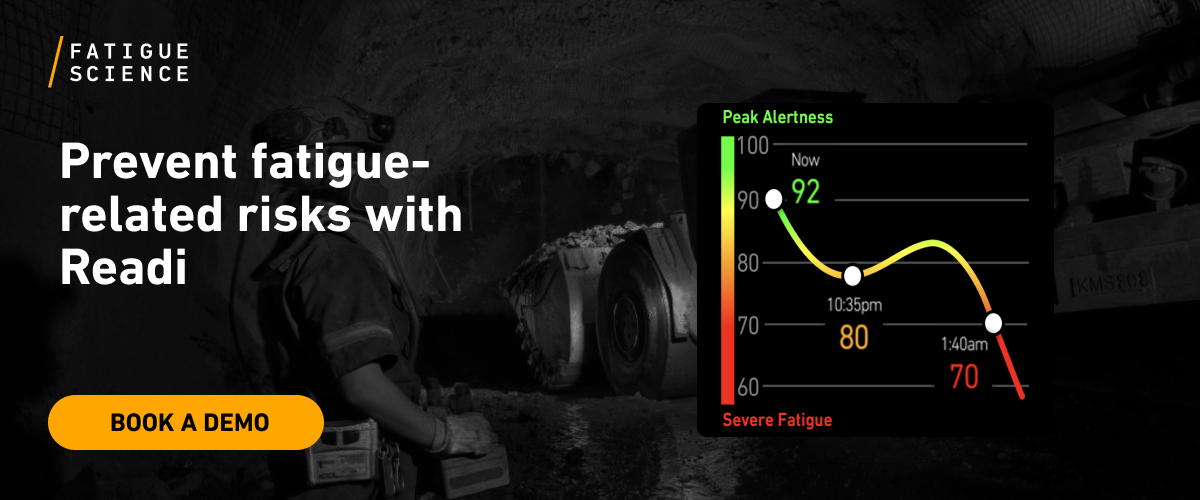
Visible signs such as repeated yawning or lane drift can appear after a driver is already struggling. Readi by Fatigue Science is designed to help fleets look ahead by forecasting personalized fatigue risk across the upcoming shift. Where a fleet uses Readi, an authorized supervisor can review the forecast alongside schedule and route context, then follow the organization’s process for planning or checking in.
A forecast is a signal for informed review, not a diagnosis or a conclusion about a person. Keep conversations private and respectful, give drivers a clear way to share context, and document any operational response. Readi can complement a fatigue risk management system and existing camera or telematics tools.
ELD driver coaching: a coaching process drivers can trust
ELD driver coaching: practical steps and decision criteria
For ELD driver coaching, use the steps and review criteria in this guide to connect recorded work patterns, operational context, and fatigue prevention. Readi by Fatigue Science contributes a personalized forecast for the upcoming shift where deployed, supporting a contextual review by authorized supervisors.
Use a consistent conversation structure
Coaching should be private, specific, and focused on improvement. Start with an observable example and ask the driver to describe what happened. Listen for data-entry confusion, unclear policy, equipment issues, route pressure, or scheduling constraints. Confirm the facts before discussing expectations. Agree on a next step and explain what support is available. Avoid making assumptions about intent or fatigue from a single record. When the issue may involve a wider process, bring it to the appropriate operations owner rather than placing the burden only on the driver.
Track whether coaching resolves the issue, but avoid turning the scorecard into a ranking system. Pair individual follow-up with aggregate review so recurring causes can be addressed. FMCSA HOS guidance can support compliance education, and NIOSH driver fatigue resources can inform broader awareness.
Copy-and-use coaching script
Open: “I’d like to review this record with you so we can understand what happened and make the process work.”
Ask: “Can you walk me through the route, timing, and any issues that affected the shift?”
Clarify: “Here’s what the record shows. Is anything missing or inaccurate?”
Agree: “What is one step that would help next time? I’ll follow up with dispatch on the scheduling issue you raised.”
Close: “We’ll check back on [date]. If you feel too tired to drive safely, use the reporting process and stop safely.”
Example: coaching a repeated late log
Review several examples together, check whether the device or instructions are confusing, and ask if the route sequence contributes. If training is needed, provide it; if the workflow is at fault, assign a process fix. Readi by Fatigue Science may support a related conversation about upcoming shift fatigue forecasts, but the coach should explain the purpose, protect privacy, and follow company policy. Readi is not a disciplinary score or diagnosis.
Sources and further reading
Written by Fatigue Science, a provider of predictive fatigue risk management technology for fleet and industrial teams. Last updated: November 24, 2026.
ELD driver coaching: practical review and action
ELD driver coaching in day-to-day fleet operations
Begin by writing down the question the team needs to answer. coaching should help identify a repeatable condition, not label an individual. Use a consistent review period and group records by comparable route, start time, terminal, and work sequence. Confirm that data are complete and that timestamps align before drawing comparisons. Ask drivers and dispatchers what shaped the work: the same log issue appearing across several drivers. Record this context with the evidence so another reviewer can understand how the team reached its decision.
A practical process distinguishes what the record shows from what it cannot show. An ELD documents duty status and driving history; it does not confirm sleep quality, alertness, or causation. Readi by Fatigue Science adds a personalized fatigue forecast across the upcoming shift where deployed. Together, ELD data and Readi can support a more complete planning discussion, with human review and company policy guiding each action. Keep access limited to authorized roles, explain how information is used, and give drivers a way to correct an inaccurate record or provide context.
| Review element | What to check | Possible next step |
|---|---|---|
| Work pattern | record accuracy, driver explanations, process causes, and agreed follow-up | Confirm whether the pattern repeats across comparable shifts. |
| Operating context | the same log issue appearing across several drivers | Discuss with the driver and operations before drawing a conclusion. |
| Forward planning | Upcoming schedule, forecast timing, route demands, and available response options. | Use Readi’s forecast of fatigue risk across an upcoming shift alongside ELD and schedule information. This connects retrospective work patterns to a forward-looking planning signal. Define who reviews it, how a driver can provide context, and what responses are available. Keep a human supervisor responsible for the decision. |
Copy-and-use review checklist
- Define: write the question, period, and operating group being reviewed.
- Verify: confirm the data are complete and comparable.
- Contextualize: check route, schedule, delays, and driver input.
- Decide: identify an owner and a policy-approved action.
- Document: record the evidence, decision, and follow-up date.
- Learn: review whether the pattern recurs and whether the control helped.
Use the checklist for prevention and continuous improvement, not automatic discipline. If the same condition affects several drivers, examine dispatch practices, route assumptions, staffing, or customer requirements. If the issue is isolated, confirm that the record is accurate and provide coaching or support suited to the circumstances. Use Readi’s forecast of fatigue risk across an upcoming shift alongside ELD and schedule information. This connects retrospective work patterns to a forward-looking planning signal. Define who reviews it, how a driver can provide context, and what responses are available. Keep a human supervisor responsible for the decision.
Example: Use a respectful conversation, assign next steps, then check whether the cause recurs.
For example, if a review surfaces the same log issue appearing across several drivers, compare similar work periods, ask the people involved what changed, and identify whether a scheduling or process adjustment is possible. Set a time to check whether the new approach was followed and whether the pattern returned. Readi can help teams consider personalized fatigue risk timing before a shift, while ELD records describe prior duty patterns. Use the two sources as complementary context; neither replaces the driver’s report, applicable HOS rules, or a supervisor’s judgment.
Frequently asked questions
How should a supervisor coach an ELD error?
Confirm the record, ask for context, explain the correct procedure, agree on a specific next step, and document the outcome.
Is ELD coaching only about compliance?
It should address accurate logs and safe work practices. Fatigue risks may exist even when hours-of-service rules are met.
What makes coaching effective?
Timely, specific conversations that focus on one behavior and include follow-up.