
Key Takeaways
- Driver fatigue signs in trucking include frequent yawning, lane drifting, inconsistent speed, missed exits, slower reaction times, increased irritability, and microsleeps with head nodding.
- Fatigue impairs driving performance before symptoms become visible, with 16-17 hours of continuous wakefulness causing measurable decline in attention and response time comparable to 0.08% blood alcohol impairment.
- Hours-of-service compliance does not prevent fatigue because regulations fail to account for sleep quality, circadian timing, or accumulated sleep debt from multiple nights of insufficient rest.
- Predictive fatigue management tools that forecast risk in advance of shift allow dispatchers to adjust assignments before fatigued drivers reach the road, with one pilot showing a 42% reduction in fatigue-linked telematics events.
Driver Fatigue Signs in Trucking: What Every Fleet Needs to Know
Driver fatigue signs in trucking include frequent yawning, lane drifting, delayed reaction times, microsleeps, and difficulty remembering recent miles driven. Recognizing these truck driver fatigue symptoms early is critical for preventing drowsy driving incidents and protecting both drivers and the public on the road.
See how Readi integrates with major ELDs for personalized driver fatigue prediction. Read the whitepaper.
Long-haul driver fatigue develops gradually, which makes it especially dangerous. A driver may not realize their alertness has dropped until they've already missed a road sign or drifted across a lane marker. For fleet safety and operations leaders, understanding the impact of fatigue on driving performance is the first step toward building a stronger fatigue management in trucking program. Explore driver fatigue management technology built for safety-sensitive operations. Learn how ReadiScore works and how it represents predicted fatigue risk.
The signs of drowsy driving fall into physical, cognitive, and behavioral categories. Physical symptoms include heavy eyelids, head nodding, and constant yawning. Cognitive signs show up as wandering thoughts, trouble focusing, and gaps in memory about recent stretches of road. Behavioral indicators are often the most visible to telematics and camera systems:
- Inconsistent speed or unintended acceleration changes
- Overcorrecting steering inputs
- Missing exits or failing to respond to traffic signals
- Harsh braking events triggered by delayed reactions
These behavioral patterns frequently appear in telematics data as safety events, but by the time a camera or alert captures them, the driver has already been operating at reduced capacity. This gap between when fatigue risk begins and when it becomes visible on the road is a core challenge in fatigue risk management.
Several factors make trucking operations especially prone to fatigue. Night driving disrupts the body's circadian rhythm, the internal clock that regulates sleep and wake cycles. Early morning start times cut into restorative sleep. Irregular schedules and shift rotations prevent drivers from building consistent sleep patterns. Monotonous highway conditions reduce mental stimulation, which accelerates drowsiness. And delivery pressure can lead drivers to push through fatigue rather than stop and rest.
Sleep requirements for truckers are no different from the general adult population. Most adults need seven to nine hours of quality sleep per 24-hour period. When drivers consistently fall short of this range, sleep debt accumulates. Even moderate sleep debt, the equivalent of losing one to two hours per night over several days, can impair reaction time and decision-making to levels comparable to alcohol intoxication.
Preventing driver fatigue requires more than telling drivers to "get more sleep." Effective driver alertness strategies combine scheduling practices, education, and technology. Fleets that take fatigue management in trucking seriously tend to focus on a few key areas:
- Building schedules that account for circadian low points, particularly between 2:00 a.m. and 6:00 a.m.
- Providing drivers with education on sleep hygiene and the real effects of sleep debt
- Using ELD data and telematics to identify patterns of high-risk driving behavior
- Integrating predictive tools that can flag fatigue risk before a driver starts their route
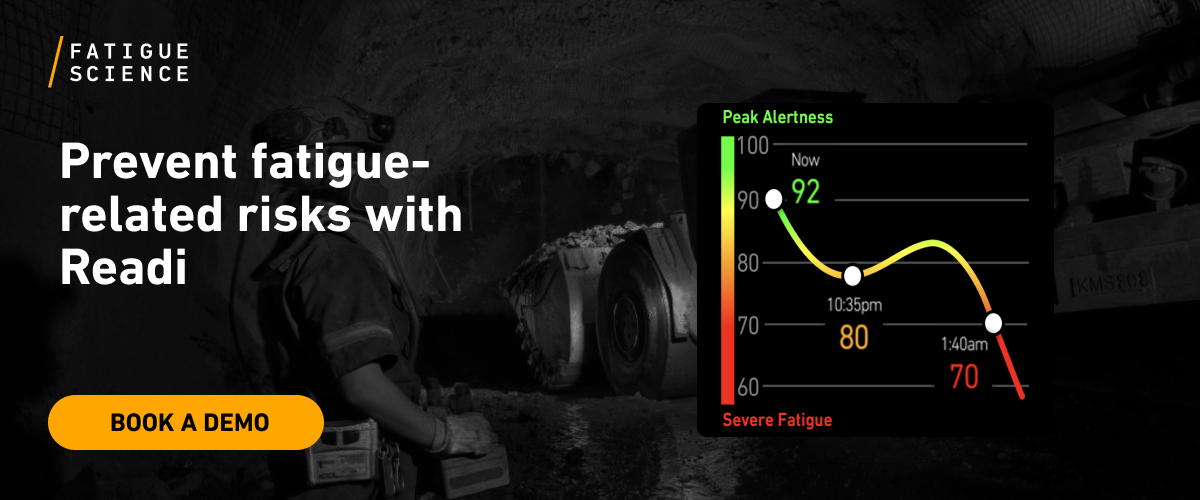
Most fleet safety programs today rely on reactive systems like dash cams, in-cab alerts, and post-event coaching. These tools are valuable, but they capture risk after it has already appeared on the road. Predictive fatigue management adds an earlier signal. For example, Readi uses sleep and schedule data pulled from existing ELD systems to forecast fatigue risk in advance of shift, giving dispatchers and safety managers the ability to intervene before a fatigued driver gets behind the wheel.
The cost of ignoring driver fatigue signs in trucking extends beyond safety incidents. Fatigue-linked harsh braking and rapid acceleration events increase fuel consumption and accelerate vehicle wear. Fatigue-related crashes carry the risk of catastrophic liability, regulatory scrutiny, and damage to a fleet's safety record. Driver turnover also rises when fatigued drivers feel unsupported or pushed past safe limits.
A strong approach to fatigue risk management treats fatigue as an operational risk, not just a compliance checkbox tied to hours-of-service rules. HOS regulations set maximum driving windows, but they do not account for sleep quality, circadian timing, or accumulated sleep debt. A driver can be fully HOS-compliant and still be dangerously fatigued.
Recognizing driver fatigue signs in trucking is the starting point. Building systems that predict and prevent fatigue before it reaches the cab is the next step toward a safer, more productive fleet operation.
Why Fatigue Is a Leading Risk Factor in Trucking
Fatigue risk often enters a crash report under a different label
FMCSA estimates fatigue plays a role in about 13% of large truck crashes. Earlier research has placed the number much higher, with some studies suggesting involvement in up to 40% of truck collisions. Part of the gap comes from attribution: visible signs of drowsy driving may show up as missed traffic control, roadway departure, or failure to slow for congestion, while the sleep loss behind the event never gets recorded with the same clarity.
The impact of fatigue on driving follows the same pattern seen with alcohol impairment at a 0.08% blood alcohol concentration. A fatigued driver may scan less often, fixate longer on one point, accept smaller gaps in traffic, and take more time to process brake lights, lane closures, or sudden speed changes ahead. Those effects raise risk in a passenger car; in an 80,000-pound combination vehicle, the margin for recovery shrinks fast.
- Fatigue accumulates across days: one short night may not trigger obvious truck driver fatigue symptoms, but several nights below normal sleep requirements for truckers can cut alertness sharply.
- Countermeasures have limits: caffeine, radio volume, and open windows may reduce the feeling of sleepiness for a brief period, but they do not restore judgment, visual attention, or response speed.
- A legal rest period may still fall short: a driver can meet hours-of-service rules and still start work after poor sleeper berth sleep, long prior wakefulness, or a shift that begins during a circadian low point.
This is where fatigue management in trucking starts to separate into two different approaches. Compliance-based programs track duty hours, breaks, and log status. Predictive fatigue risk management looks at sleep timing, schedule design, prior wakefulness, and circadian phase to estimate expected alertness before the truck moves. Fleets that treat fatigue as an operational risk can adjust dispatch plans, route assignments, and recovery time earlier, before telematics events or crash outcomes define the problem for them.
The Top 7 Signs of Driver Fatigue Behind the Wheel
Fatigue rarely arrives all at once. It tends to surface first through small changes in eye control, attention, and pacing, then through clear driving errors that other motorists, supervisors, and in-cab systems can spot.
1. Frequent Yawning and Heavy Eyelids
Repeated yawns, longer blinks, and eye rubbing point to falling alertness before a driver reaches a full sense of drowsiness. These early truck driver fatigue symptoms often get brushed aside because the vehicle may still seem under control.
2. Lane Drifting and Hitting Rumble Strips
A truck that touches lane markers or rolls onto the shoulder on a straight stretch of road often reflects a short lapse in attention. Camera footage in these cases commonly shows a late steering correction after the vehicle has already moved out of position.
3. Difficulty Maintaining Consistent Speed
Sleep loss often shows up through uneven pedal control: speed creeps up, drops off, then changes again with no clear traffic or grade reason. In fleet systems, those patterns can surface as abrupt deceleration, hard braking, or uneven throttle use rather than a direct fatigue alert.
4. Missed Exits, Signs, or Turns
- A skipped exit, delayed turn, or last-second lane change on a familiar route points to reduced route awareness.
- Trouble recalling the last interchange or sign cluster suggests the mind has shifted into an automatic state that can lead into a microsleep.
5. Slower Reaction Times and Delayed Braking
Fatigue slows the brain before it slows the truck. A driver may see brake lights, congestion, or a merging vehicle on time, yet still take longer to process the threat and move to the brake, which increases stopping distance and crash exposure.
6. Increased Irritability or Restlessness
Not every sign appears through steering or speed. Some drivers become unusually impatient in traffic, short on the radio, or physically unsettled in the seat because sleep deprivation weakens impulse control and emotional regulation.
7. Microsleeps and Head Nodding
Microsleeps last from one to ten seconds, and during that span the driver has no awareness of the road. A chin drop, brief eye closure, or sudden jerk awake marks a point where safe operation has already broken down.
How Fatigue Affects Driving Performance Before Symptoms Appear
Signs of drowsy driving start after impairment
Fatigue changes driving performance before a driver notices classic warning signs. After 16 to 17 hours of continuous wakefulness, measurable decline can show up in attention control, working memory, and response selection; a driver may still feel capable while the brain processes traffic, spacing, and road changes more slowly than normal. Readi overview brochure.
Two biological forces raise risk even when a route looks routine:
- Circadian timing: Alertness tends to drop between 2:00 to 6:00 AM and again between 1:00 to 3:00 PM. Those windows increase long-haul driver fatigue risk even after a prior sleep period.
- Accumulated sleep loss: Less than 7 hours of sleep across several nights reduces cognitive effectiveness in a compounding way. A short stop or one longer break may ease discomfort, but it does not fully restore performance.
That pattern creates a problem for fleets that rely on visible truck driver fatigue symptoms alone. A supervisor who waits for obvious signs of drowsy driving, such as swerving or missed cues, acts after the impairment has already entered the cab. The impact of fatigue on driving starts earlier, often during route planning, duty assignment, and dispatch timing.
Readi supports fatigue management in trucking with an earlier operational view. By using sleep and schedule data to forecast elevated risk in advance of shift, it gives supervisors usable input for resource allocation, task planning, worker training, and scheduling before fatigue shows up as a roadside event.
What Causes Fatigue in Long-Haul Trucking Operations
Legal Rest Time and Real Recovery Are Not the Same
Fatigue in long-haul trucking often starts before a route begins. A driver can log a full off-duty period and still miss the sleep requirements for truckers because rest in a sleeper berth may come in short, broken blocks due to lot noise, reefers, heat, vibration, or repeated interruptions.
Time awake also shapes alertness in ways a logbook does not capture. A driver may wake early, sit through hours at a shipper, handle fueling and paperwork, then leave late in the day or overnight after a long span without real recovery. That gap helps explain why fatigue management in trucking cannot rely on hours-of-service status alone.
- Appointment pressure: Narrow delivery windows can cut into time for meals, wind-down, and uninterrupted sleep.
- Dock delays: Long waits at shipping and receiving sites push rest later and can force sleep at the wrong time of day.
- Parking shortages: Drivers often spend extra time searching for a legal space, then sleep in loud, crowded areas that reduce sleep quality.
Health and lifestyle factors can deepen the problem. Sleep apnea, insomnia, poor food access on the road, and low physical activity can all increase long-haul driver fatigue even when a driver appears compliant on paper. In practice, many truck driver fatigue symptoms come from a mix of biological strain, schedule disruption, and operating conditions rather than one single cause.
What Fleets Can Do to Prevent Driver Fatigue Before It Reaches the Road
Practical fatigue management in trucking controls
A fleet has far more options before dispatch than after a safety event. The strongest driver alertness strategies start with a forward-looking view of long-haul driver fatigue: expected sleep opportunity, time awake, trip timing, and schedule sequence all shape whether a driver begins the day sharp or already impaired.
Scientifically validated fatigue models turn those inputs into a usable risk signal for operations and safety teams. Readi gives supervisors that view in advance of shift, which creates time to change a load assignment, shift a departure window, add a recovery period, or move a high-consequence task to a driver with better expected cognitive effectiveness.
- Design schedules around real sleep opportunity: quick turnarounds, repeated early starts, and fast flips from day work to night work cut into sleep requirements for truckers even when hours-of-service records look compliant.
- Use rest policies that protect sleep quality: detention, poor sleeper-berth conditions, traffic noise, and limited parking can turn legal off-duty time into poor recovery; protected layover windows and planned stop locations help reduce that loss.
- Give supervisors a standard response path: fatigue risk management works best when a high-risk score triggers a consistent check of recent sleep, route difficulty, task criticality, and available alternatives instead of a subjective judgment call.
This approach improves the return on existing safety systems without adding more review burden. Telematics, dash-cams, HOS data, and coaching programs remain useful, but they become more precise when teams can sort safety events against a prior fatigue signal and act before truck driver fatigue symptoms develop into lane departures, missed traffic cues, or delayed braking.
Frequently Asked Questions About Driver Fatigue Signs in Trucking
What are the most common signs of driver fatigue?
Common driver fatigue signs in trucking often include blank stretches of memory, fixed staring, repeated steering corrections, missed traffic signals, and delayed recognition of routine road cues. These truck driver fatigue symptoms usually start with reduced attention and then progress to visible control problems, which gives fleets and drivers a narrow window to respond before performance falls further.
How does fatigue affect driving performance?
Fatigue reduces visual scanning, slows information processing, and weakens judgment during merges, braking decisions, and changing road conditions. The impact of fatigue on driving often appears as poor following distance, late response to brake lights, weak speed control on open highway segments, and a lower ability to recover from small errors.
What strategies can fleets implement to reduce driver fatigue?
- Model risk before dispatch: Use sleep history, wakefulness duration, route timing, and shift sequence to identify elevated fatigue risk before assignment decisions.
- Protect real sleep opportunity: Build policies that account for loading delays, safe parking shortages, nighttime duty, and sleeper-berth disruption instead of relying on minimum legal rest alone.
- Route risk into supervisor workflows: Send high-risk cases to dispatch, safety, or terminal leadership early so fatigue management in trucking starts before a harsh braking clip, lane departure, or post-incident review.
What are the consequences of ignoring fatigue signs while driving?
Once signs of drowsy driving go unaddressed, a driver can move from reduced awareness to a full lapse of control within seconds. The result can include catastrophic collisions, cargo loss, preventable injuries, regulatory exposure, higher insurance costs, and more legal pressure after an incident.
How can truck drivers manage fatigue effectively on the road?
Strong driver alertness strategies start before the wheels move, with protected sleep, realistic trip planning, and honest communication about rest limits. On the road, drivers should treat visual fixation, trouble recalling recent miles, and repeated driving corrections as stop signals, and they should raise possible sleep issues such as sleep apnea before long-haul driver fatigue turns into a safety event.
Fleets that already use cameras, telematics, and ELD systems have strong tools for capturing what happens on the road. Adding a predictive layer changes when intervention happens. Readi forecasts fatigue risk in advance of shift, giving dispatchers and safety teams a window to adjust assignments, protect sleep opportunity, and reduce the events that drive up review time, fuel costs, and incident exposure. In a large U.S. logistics pilot, fleets using Readi saw a 42% reduction in fatigue-linked in-cab telematics events compared to an identical driver group.
Knowing the signs of driver fatigue is necessary. Acting on that knowledge before a driver reaches the cab is where risk reduction starts.
Book a demo to explore how predictive fatigue management software can improve safety and productivity across your fleet.
Frequently asked questions
How do you handle driver fatigue in trucking?
Fleets handle driver fatigue by combining schedules built around circadian low points, protected sleep opportunity, and predictive tools that forecast risk before dispatch. Readi uses sleep and schedule data from existing ELD systems to flag elevated fatigue risk in advance of shift.
How many hours do truckers sleep?
Truckers have the same sleep requirement as other adults: seven to nine hours of quality sleep per 24-hour period. Drivers who sleep less than seven hours across several nights build sleep debt that slows reaction time and weakens decision-making.
What is trucker syndrome?
"Trucker syndrome" is not a medical diagnosis, but the term often describes the combined effects of chronic sleep loss, irregular schedules, and long sedentary hours. Sleep apnea, insomnia, and poor food access on the road can add to long-haul driver fatigue.
Does following the hours-of-service rules prevent driver fatigue?
No, hours-of-service rules set maximum driving windows but do not measure sleep quality, circadian timing, or accumulated sleep debt. A driver can stay fully HOS-compliant and still start a shift impaired by broken sleeper berth rest or a long stretch of wakefulness.
Related resources