
Product News


Fleet hours of service compliance is the set of policies, processes, and technologies that fleets use to keep commercial drivers within FMCSA hours of service regulations for driving time, on-duty limits, and mandatory rest periods. It covers ELD compliance and HOS record-keeping requirements, driver training, violation prevention, and the enforcement consequences that follow when rules are broken.
For fleet managers and safety leaders, maintaining fleet management compliance with HOS rules is both a legal obligation and an operational priority. The FMCSA designed driver hours of service rules to reduce fatigue-related crashes by capping the number of hours a driver can operate a commercial vehicle before taking a required rest break. When fleets fail to follow these rules, the consequences extend beyond fines. HOS violations consequences include driver out-of-service orders, negative CSA scores, increased insurance premiums, and heightened liability exposure in the event of a crash.
A strong fleet hours of service compliance program typically includes several core elements:
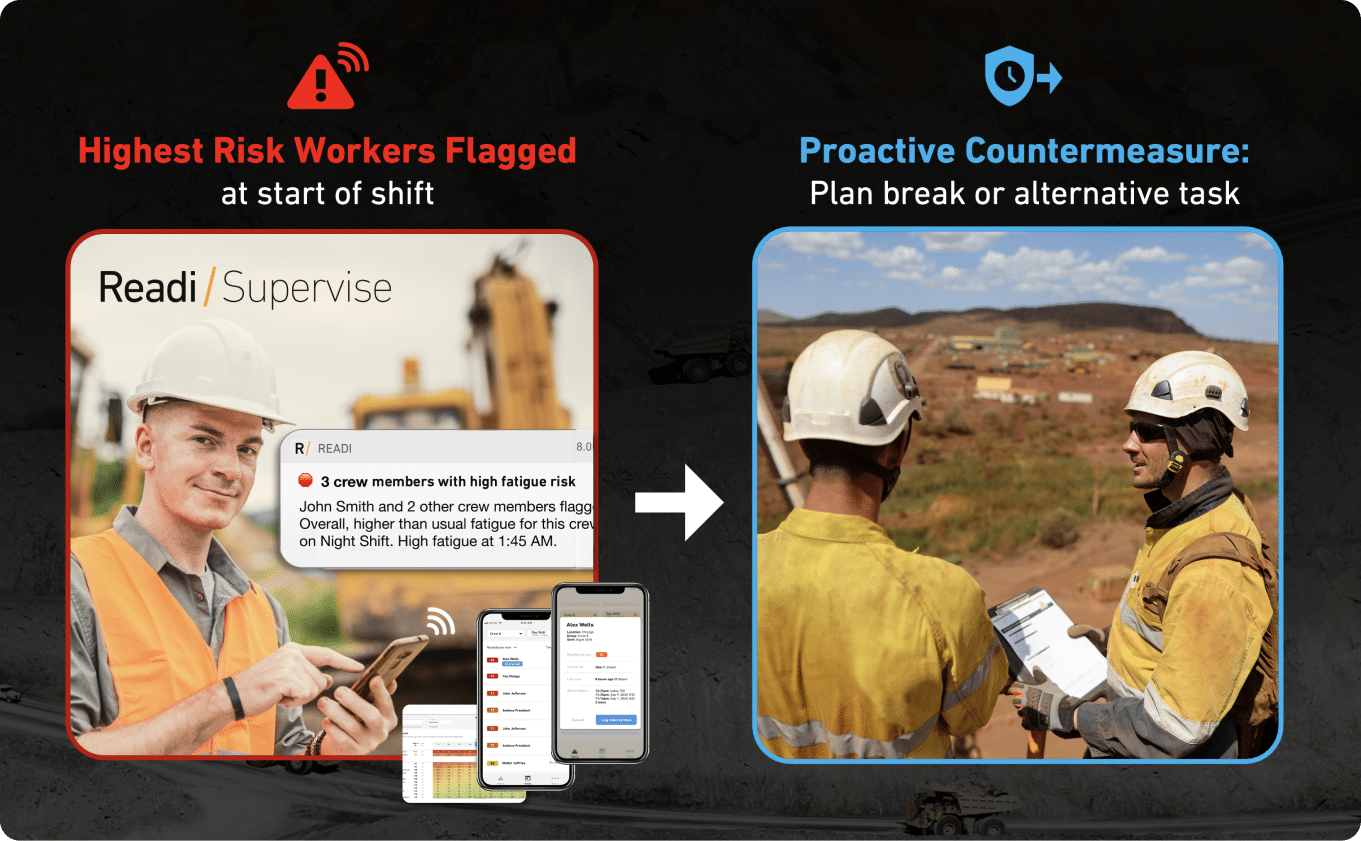
Compliance alone, though, does not eliminate fatigue risk. A driver can be fully compliant with every HOS rule and still report for a shift carrying significant sleep debt from poor off-duty rest. This gap between regulatory compliance and actual fatigue risk is where many fleets remain exposed. Tools like Readi address this gap by forecasting cognitive fatigue levels for 18 hours using sleep and schedule data pulled directly from existing ELD systems, giving supervisors a leading indicator that HOS logs cannot provide.
HOS compliance software helps fleets automate log monitoring, flag unassigned driving time, and generate audit-ready reports. But the most effective programs pair compliance technology with fatigue risk controls that account for circadian rhythms, cumulative sleep loss, and the specific demands of night driving and irregular schedules. This combination moves a fleet from simply meeting the regulatory minimum to actively managing the human factors that cause the incidents HOS rules were designed to prevent.
Fleet hours of service compliance begins with operating discipline before dispatch releases a load. Teams need one shared reading of FMCSA hours of service regulations, one approval path for exceptions, and one pre-trip review that checks available drive time, on-duty capacity, and weekly hours against the actual route.
Clean logs do not prove full alertness. Driver hours of service rules limit exposure to excessive work, but they do not show how much sleep a driver obtained before a 1 a.m. departure, after a hotel stay near a noisy yard, or during a week of shifting start times. For that reason, fleets should treat HOS as one control inside a wider fatigue risk process.
The sections that follow stay focused on the points where fleets usually lose control: rule interpretation, ownership by role, HOS record-keeping requirements, role-based HOS compliance training, system use, and pattern review. That includes the practical calls that shape risk each day, such as who clears unassigned drive time, who approves a split sleeper option, who rejects a weak route plan, and who reviews repeated exception use.
Strong fleet management compliance depends on hours data that moves with operations instead of sitting in an audit folder. Dispatch should see whether a stop sequence will push the 14-hour window after warehouse delays; safety staff should track terminals with repeat break issues; supervisors should compare HOS pressure with harsh braking, lane departure alerts, and high-risk start times. Readi can support that process with fatigue visibility 18 hours in advance, which gives managers more context before a legal schedule becomes a safety problem.
For most interstate property carriers, FMCSA hours of service regulations focus on three controls: daily driving time, total duty window, and cumulative weekly hours. Fleet managers need these limits in plain language because many HOS failures begin with a load plan that never fit the legal clock.
A driver may use up to 11 hours of driving only after 10 consecutive hours off duty. Once the shift starts, the 14-hour window starts too; breaks, meal stops, and other off-duty periods during the day usually do not extend that window in normal operations.
After 8 cumulative hours of driving, the driver must take a 30-minute non-driving break before more driving can occur. Weekly limits add another control point: carriers that operate 7 days a week follow the 70-hour/8-day cap, while carriers that do not operate every day follow the 60-hour/7-day cap.
These rules exist to limit long wake periods, compressed rest, and cumulative work exposure that can lower attention on the road. A legal route still needs review when it stacks night driving, detention time, and repeated early starts into the same work cycle.
Once the rule set is clear, ownership needs to match the workflow. In fleet hours of service compliance, a bad log often appears in the cab, but the cause may trace back to trip planning, a late dispatch, a customer delay, or a weak handoff between teams.
This role split keeps HOS compliance training practical. Drivers need log discipline and break timing; dispatch needs schedule judgment; compliance staff need audit control; supervisors need to stop unsafe pressure before it shapes behavior on the road.
Many HOS problems begin long before a driver reaches the last hour of the day. A run may look legal in a planning system and still fall apart after dock wait time, a route change, or a poor assumption about how much work fits inside one duty period.
That is where fleet management compliance needs stronger coordination. Hours-of-service review should sit next to ELD oversight, inspection records, CSA exposure, driver qualification controls, and daily operating plans. When one group owns paperwork and another group owns schedule pressure, FMCSA hours of service regulations become harder to uphold in real conditions.
For fleets that already rely on telematics safety events and camera review, Readi adds operational value in a different place. It gives supervisors and operations teams on-demand visibility into workforce fatigue risk, which helps with task planning, resource allocation, worker training, and schedule decisions when a legal trip still carries elevated fatigue exposure.
Daily fleet hours of service compliance depends on a repeatable review at the point of assignment. A dispatcher or supervisor should confirm whether the trip fits the driver’s remaining capacity in real conditions, not only in a route plan.
This HOS compliance checklist should sit inside normal fleet management compliance workflow, not in a separate audit file. Dispatch, safety, and operations need the same view of the driver’s legal availability so the load plan, the log, and the supporting documents all match.
A route may fit FMCSA hours of service regulations and still deserve extra review. Overnight linehaul, compressed turn times, long detention exposure, and repeated early report times can raise the chance of errors, harsh braking, and missed decisions even when the ELD shows a legal trip.
Managers should flag runs with thin time margins or poor sleep opportunity and route those schedules for review before release. That step turns HOS compliance software and ELD data into a prevention tool. It also gives safety leaders a way to connect driver hours of service rules with day-to-day transportation safety decisions, which is where compliance control and proactive fatigue management start to work as one process.
For fleet hours of service compliance, the ELD serves as the official time record for most FMCSA-regulated operations. It creates a standard record of duty status from vehicle movement, timestamps, and driver status selections, which cuts calculation errors, missing entries, and backfilled paper logs that often create trouble at roadside inspections.
An ELD gives the office a clearer view of driver hours, but it does not judge whether the log tells the full story. A device cannot decide whether a yard move was valid, whether personal conveyance was used correctly, whether a detention delay pushed a route out of bounds, or whether a driver forgot to certify the log before the review window closed.
HOS record-keeping requirements are straightforward at the fleet level: keep complete logs, keep the related trip documents, keep them available for review, and fix gaps while the trip facts are still easy to verify. Clean files protect the carrier during DOT audits, but they also help safety staff spot recurring form-and-manner issues before they grow into repeated violations.
The best fleets use ELD data to shape decisions before the truck leaves the yard. A dispatcher can see that a driver has little room left in the 14-hour window after a long shipper delay; a supervisor can shift a pickup, add a relay, or reject a load that looked possible on the original schedule. That is where HOS compliance software adds value to fleet management compliance: it supports legal dispatch, faster exception review, and better control over preventable HOS violations consequences.
A clean ELD file also has limits. Night routes, rotating start times, and back-to-back early departures can leave a driver less alert even when the log shows full compliance with driver hours of service rules, which is why HOS review should sit alongside fatigue risk checks rather than stand alone.
A fleet cannot treat HOS instruction as a one-time event at hire. Strong programs use short refreshers throughout the year and tie each session to recent log issues, route changes, customer detention patterns, and roadside findings.
Each job role affects a different part of fleet hours of service compliance, so each group needs its own material:
Rule review helps with recall, but real judgment comes from practice with live operating conditions. Build sessions around actual lanes, terminal start times, known delay points, weather disruptions, and overnight runs. A useful case may involve a driver who arrives on time at pickup, loses three hours at a dock, then faces a narrow decision window on the return leg. Another may involve a dispatcher who sees enough legal hours on the screen but misses the effect of four straight early-start days.
Supervisors should also practice document checks that mirror real enforcement pressure. That includes log edits, missing certifications, supporting documents, and exception notes that fail to match the trip. For fleets that already use HOS compliance software, these exercises should happen inside the same dashboards and workflows that staff use each day.
The best HOS compliance training uses brief, repeated review instead of long annual sessions. That approach helps teams catch small errors before they turn into citations, out-of-service orders, or unsafe schedule pressure on drivers. Repetition also sharpens one decision that affects every fleet: whether a trip can work in real conditions, not just in a clean dispatch plan.
Fleets cut penalties and service disruption when they catch risk at load planning, not after a roadside inspection or internal review. Once a truck leaves the yard, a weak plan often turns into expired drive time, a missed break, or a route that no longer fits the driver’s remaining hours.
Most failures start with a run that looks workable in a spreadsheet and falls apart in live operations. A planner may count miles and miss gate queues, live-load dwell, fuel stops, traffic near receivers, or weather that was visible before dispatch. That gap pushes drivers into the 14-hour limit, creates missed 30-minute breaks after eight cumulative hours of driving, and leads teams to misuse the adverse driving conditions exception for delays that were foreseeable.
Schedules near the edge need extra review on overnight lanes, early starts, and back-to-back duty days. A route may stay inside driver hours of service rules and still leave little margin for alert driving when sleep opportunity shrinks or the hardest segment lands in a low-circadian window.
Technology should act as a gate before a load reaches the cab. Dispatch screens need current drive time, the remaining on-duty window, weekly totals, and route-delay history in one view so planners can change the assignment while options remain open. That use of ELD compliance and HOS data supports prevention, not just HOS record-keeping requirements.
For high-hazard fleets that already use cameras, telematics, and fit-for-duty checks, Readi adds on-demand visibility into fatigue risk and workforce performance for supervisors and operations teams. That view supports resource allocation, task planning, worker training, and scheduling decisions, with fatigue risk flagged 18 hours in advance.
In fleet hours of service compliance, a violation should never sit in the file as a one-time paperwork issue. HOS violations consequences can include civil penalties, out-of-service orders at roadside, CSA score damage, deeper FMCSA review, insurance pressure at renewal, customer concern during scorecard reviews, and service failures when a driver or load cannot continue as planned.
The effect can last well past the inspection date. A single HOS violation can affect a carrier’s Safety Measurement System results for 24 months, which means weak control in one week can stay visible through multiple shipper reviews, insurance conversations, and compliance audits.
A strong review process looks for repeated pressure, not just repeated citations. One missed break may point to a driver mistake; ten missed breaks on the same customer lane usually point to a schedule that does not work under real conditions.
ELD compliance and HOS review become more useful when they sit beside telematics safety data. Harsh braking, lane departures, camera alerts, speeding late in the duty day, and high-risk start times can show where legal operations still carry elevated fatigue exposure.
This is where fleet management compliance becomes a broader risk process. HOS data shows where the rule broke or nearly broke; fatigue-related indicators show where the operation should change next. Safety teams can then adjust dispatch plans, reduce detention-heavy assignments, revise customer appointment windows, or add recovery time before the same pattern turns into a crash, cargo loss, or public incident.
For most property-carrying fleets, the rule set starts with five limits: up to 11 hours of driving after 10 consecutive hours off duty; no driving after the 14th consecutive hour on duty; a 30-minute non-driving break after 8 cumulative hours of driving; no driving after 60 hours on duty in 7 days or 70 hours in 8 days; and split sleeper use only when the required rest periods meet FMCSA conditions. Fleets also need a clear process for the short-haul exemption HOS rule and for adverse driving conditions, because both exceptions fail quickly when the trip facts do not match the rule.
Daily control starts before a load leaves the yard. A strong HOS compliance checklist should confirm remaining drive time, the open duty window, the next required break, rolling weekly totals, ELD certification status, and any unresolved unassigned drive time before dispatch releases the trip. Fleets with the fewest preventable violations also test the route against real trip conditions such as loading delays, gate time, weather, and customer appointment pressure.
Penalties vary by the type of violation and the enforcement result, but the operational damage often shows up first. A missed break or an overrun duty window can stop a trip at roadside, force a delivery change, add audit work, and expose patterns that draw more inspections later. Once the same problem appears across several drivers or terminals, the cost shifts from a single event to a fleet problem.
Most fleets need a chain of review rather than one owner. The work usually breaks down like this:
The best tool set supports both control and proof. That usually means a compliant ELD platform, a dashboard that flags unresolved log problems, route planning that shows available hours before assignment, document storage that supports HOS record-keeping requirements, and reporting that helps managers spot pressure points by terminal, account, or shift type. Some fleets also use the FMCSA ETHOS tool to test duty scenarios and train staff on how rule combinations work before those mistakes show up on the road.
No. A legal log does not show whether a driver slept well, slept at the right biological time, or carried sleep debt from several poor rest periods. That gap becomes more serious in overnight work, rotating schedules, and runs with repeated early dispatch times. Readi adds an 18-hour risk forecast, so supervisors can compare legal availability with likely alertness when they plan a route, assign a task, or review a high-risk start time.
Short-haul status should be checked trip by trip, not assumed by fleet type. Before a fleet uses the exemption, it should confirm that the driver operates within the 150 air-mile radius, returns to the normal work-reporting location, and stays inside the allowed workday. When any condition breaks, the driver should move into full record of duty status requirements for that day, with time records and dispatch notes that show exactly when the change took place.
HOS compliance gives fleets a legal foundation, but the regulations were built around maximum allowable work hours, not around whether a driver is alert enough to handle the next 200 miles. Fleets that pair strong compliance programs with fatigue risk visibility can act on a different question: does this schedule create safe conditions for this driver on this day? That question requires data that ELDs and logs were never designed to provide.
Readi forecasts fatigue risk in advance of shift and pulls data directly from existing ELD systems, giving supervisors and dispatchers a view of driver alertness that sits alongside the compliance data they already use. For fleets that have invested in cameras, telematics, and HOS compliance software, that added layer helps connect legal hours with real-world readiness before a trip starts.
Book a demo to explore how predictive fatigue management software can improve safety and productivity across your fleet.